Issue · Education

Education (Early Childhood)

Every education bill, vote, and legislator stance in United States, automatically classified by Maddy, our AI policy reader.

Total bills
69
119th Congress
Top supporter
Adam B. Schiff
100% support rate
Top opponent
Alex Padilla
25% support rate
Ranked legislators
10
5 support · 5 oppose
Key legislators

Who's moving early childhood in United States

Legislators moving early childhood in United States
Legislator Party Stance Support rate Votes
Adam B. Schiff
Adam B. Schiff Senate
D
Strong +
100% 4
Amy Klobuchar
Amy Klobuchar Senate
D
Strong +
100% 4
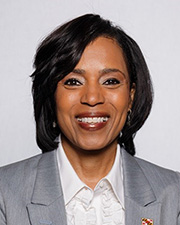
Angela D. Alsobrooks
Angela D. Alsobrooks Senate
D
Strong +
100% 4
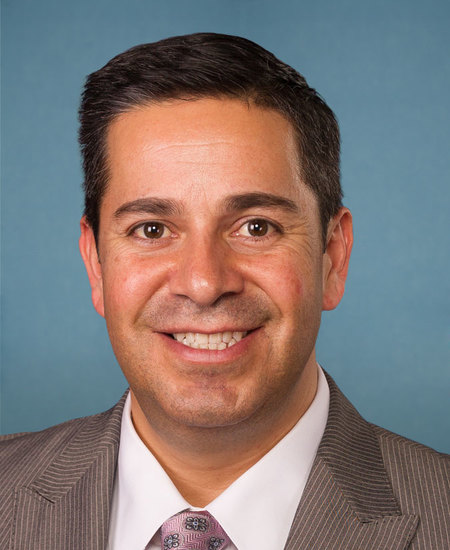
Ben Ray Luján
Ben Ray Luján Senate
D
Strong +
100% 4
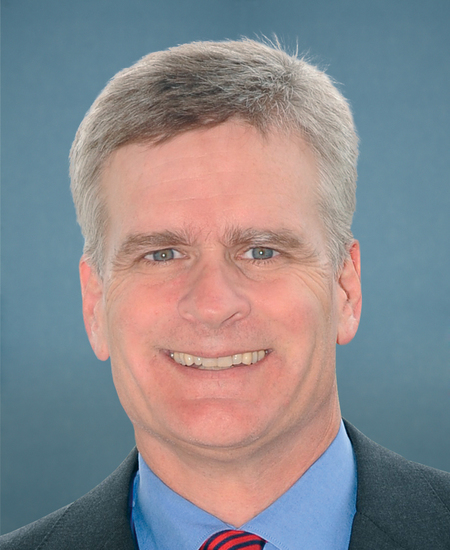
Bill Cassidy
Bill Cassidy Senate
R
Strong +
100% 4
Alex Padilla
Alex Padilla Senate
D
Oppose
25% 4
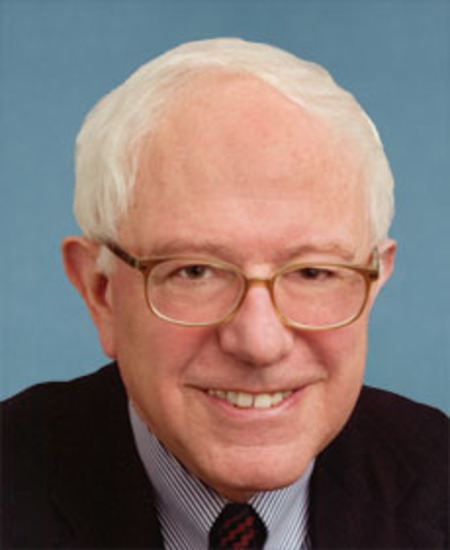
Bernard Sanders
Bernard Sanders Senate
I
Oppose
25% 4
Edward J. Markey
Edward J. Markey Senate
D
Oppose
25% 4
Elizabeth Warren
Elizabeth Warren Senate
D
Oppose
25% 4
Jon Ossoff
Jon Ossoff Senate
D
Oppose
25% 4
Showing 21–30 of 69 bills

All education bills

in committee · United States · House Feb 20, 2026

HR 7637: Head Start for America’s Children Act

The Head Start for America's Children Act amends the Head Start Act to enhance early childhood education services for low-income children, with specific provisions to improve culturally responsive programming for Native American and Native Hawaiian communities. It increases funding for Head Start programs, including $91.575 million for transportation, $37.5 million for workforce development, and $863 million for extended operations to provide full calendar year services. The bill updates definitions throughout the law to use more inclusive language, replacing "limited English proficient" with "children who are developing English proficiency," and establishes new requirements for staff compensation and benefits to improve recruitment and retention. Native American Head Start programs and migrant/seasonal programs are exempt from certain requirements, such as the full calendar year service requirement.
Sub-Topics Early Childhood
in committee · United States · House Jan 20, 2026

HR 7160: First Home Affordability Act

The First Home Affordability Act establishes a refundable tax credit for first-time homebuyers purchasing a primary residence in the U.S. The credit equals 2% of the home's purchase price (capped at $25,000 per purchase), with special provisions increasing the credit to 10% for teachers, childcare workers, and first responders. The credit is reduced for higher-income households relative to local area median income and home prices, and requires the homebuyer to be at least 18 years old. Homebuyers must meet specific criteria including no prior home ownership in the past three years and using a federally backed mortgage. If the home is sold within the credit period, a portion of the credit may need to be repaid to the IRS.
in committee · United States · House Dec 3, 2025

HR 6403: Homeless Children and Youth Act of 2025

HR 6403 expands eligibility for homeless children and youth services to include those verified as homeless through other federal programs (like Head Start, domestic violence assistance, or youth services), with verification timelines extended from 14 to 30 days. The bill requires annual public reporting of detailed homeless data - including age, disability status, and length of homelessness - to HUD, and prohibits service providers from prioritizing specific subpopulations without local data justification. It directly affects homeless youth under 24, unaccompanied youth, and families with children, ensuring consistent access to education, housing, and support services across federal programs.
in committee · United States · House Mar 31, 2025

HR 2527: Early Detection of Vision Impairments for Children Act of 2025

HR 2527, the Early Detection of Vision Impairments for Children Act of 2025, provides federal grants to states, territories, tribes, and urban Indian organizations to establish statewide vision screening and intervention programs for children. The bill requires grantees to implement vision screenings in medical, home, educational, and early learning settings, develop data systems for tracking outcomes, and improve access to care for underserved children in rural and low-income communities. It also authorizes technical assistance grants through the CDC to help develop screening systems, share best practices, and conduct research on vision care programs. The bill allocates $5 million annually for fiscal years 2026-2030 to fund these activities, targeting early detection to prevent vision-related learning and developmental challenges.
in committee · United States · House Jan 23, 2025

HR 646: Build Housing with Care Act of 2025

HR 646, the Build Housing with Care Act of 2025, establishes a HUD grant program to fund the co-location of affordable housing developments with child care facilities. It directly affects housing developers, child care providers, and residents of affordable housing by requiring grants to support projects in "child care deserts" (areas with severe child care shortages), prioritizing low-income, rural, or Head Start-serving providers. Key provisions mandate that projects must not evict residents, include resident engagement plans, and ensure child care providers serve low-income families or dual-language learners. The bill authorizes $100 million annually (2025-2030) and requires annual reports tracking child care slots created, resident usage, and demographic data.
in committee · United States · Senate May 13, 2025

S 1745: Dismantling Ideological Policies for Semiconductors and Science Act

This bill would repeal numerous diversity, equity, and inclusion (DEI) requirements in federal STEM programs established under the CHIPS and Science Act. It targets provisions requiring outreach to underrepresented communities, diversity considerations in research programs, data collection on faculty demographics, and DEI-focused funding programs. The bill also repeals the NSF Chief Diversity Officer position and modifies programs to focus on STEM achievements for historically Black colleges and universities (HBCUs) and Tribal Colleges or Universities (TCUs) without race-based activities. The bill would affect federal agencies like the National Science Foundation, Department of Energy, and National Institute of Standards and Technology that administer STEM programs.
Sub-Topics Early Childhood
in committee · United States · House Jan 13, 2025

HR 336: HEADWAY Act

Head start Education And Development Workforce Advancement and Yield Act or the HEADWAY Act This bill allows some teachers in Early Head Start programs to teach while in the process of earning their Child Development Associate (CDA) credential and completing training. Currently, the Department of Health and Human Services (HHS) must ensure that all teachers providing direct services to children and families in Early Head Start centers (1) have a minimum of a CDA credential and have been trained in early childhood development, and (2) have been trained in early childhood development with a focus on infant and toddler development. The bill revises this requirement by requiring at least one teacher per classroom (instead of all teachers) to have a CDA credential and training. In particular, the bill requires HHS to ensure that (1) each additional teacher providing direct services to children and families is in the process of earning a CDA credential and completing training, and (2) the Early Head Start agency provides a mentor to oversee the progress and guide the work of a teacher who is in the process of earning a CDA credential and completing training.
in committee · United States · House Jun 12, 2025

HR 3985: Helping Student Parents Succeed Act

HR 3985, the Helping Student Parents Succeed Act, requires colleges and universities participating in federal student aid programs to create and publicly share clear policies supporting expectant and parenting students. The bill mandates institutions to provide detailed information on lactation accommodations, processes for requesting pregnancy-related or parental accommodations, financial aid details (including dependent care allowances and dependency status changes), and access to support services like childcare, housing, healthcare, and counseling. This directly affects student parents at participating higher education institutions by standardizing and making accessible the resources they need. The law ensures schools disclose all available support without favoring specific services and outlines procedures for addressing complaints under Title IX and disability laws.
in committee · United States · House Jan 28, 2025

HR 746: America First Act

The America First Act (HR 746) would restrict access to numerous federal benefits and programs for certain non-citizens by requiring citizenship verification and denying eligibility to individuals with specific immigration statuses. It affects programs including Medicaid, Medicare, Head Start, WIC, school meals, housing assistance, tax credits, and community development funds by denying benefits to people granted parole, temporary protected status (TPS), deferred action (including DACA), asylum, or who are unlawfully present. The bill also reduces funding for schools in "sanctuary jurisdictions" and limits refugee resettlement for certain Haitian immigrants. It mandates that federal agencies verify immigration status before providing benefits and prohibits use of federal funds for services to certain non-citizens.
in committee · United States · House Oct 17, 2025

HR 5774: Every Child Deserves a Head Start Act of 2025

This bill restores the pre-January 20, 2025, administrative structure of the Head Start program within the Department of Health and Human Services. It establishes a central Office of Head Start with 12 regional offices, requiring the Secretary to maintain all prior staffing levels, organizational structure, and functions. The bill prohibits the Secretary from restructuring the office or reducing staff without providing 60 days' notice to Congress and the public, ensuring continuity in program oversight. It directly affects the Office of Head Start, its regional offices, and HHS staff managing Head Start operations.
Sub-Topics Early Childhood
Showing 21 to 30 of 69 bills
Previous 1 2 3 4 7 Next