Issue · Criminal Justice

Criminal Justice

Every criminal justice bill, vote, and legislator stance in United States, automatically classified by Maddy, our AI policy reader.

Total bills
956
119th Congress
Top supporter
Alan Armstrong
86% support rate
Top opponent
Amy Klobuchar
13% support rate
Ranked legislators
10
5 support · 5 oppose
Key legislators

Who's moving criminal justice in United States

Legislators moving criminal justice in United States
Legislator Party Stance Support rate Votes
AA
Alan Armstrong Senate
R
Strong +
86% 44
Mitch McConnell
Mitch McConnell Senate
R
Strong +
84% 160
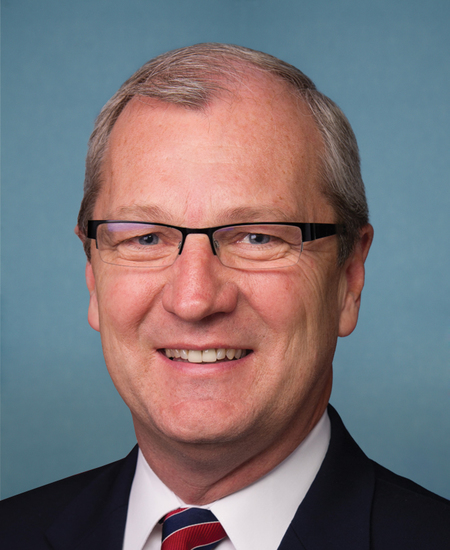
Kevin Cramer
Kevin Cramer Senate
R
Strong +
80% 169
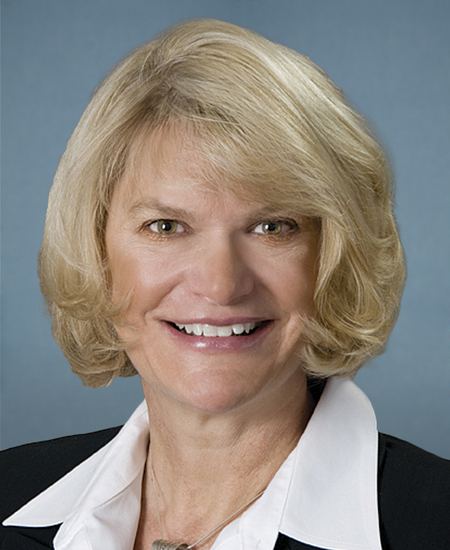
Cynthia M. Lummis
Cynthia M. Lummis Senate
R
Strong +
80% 167
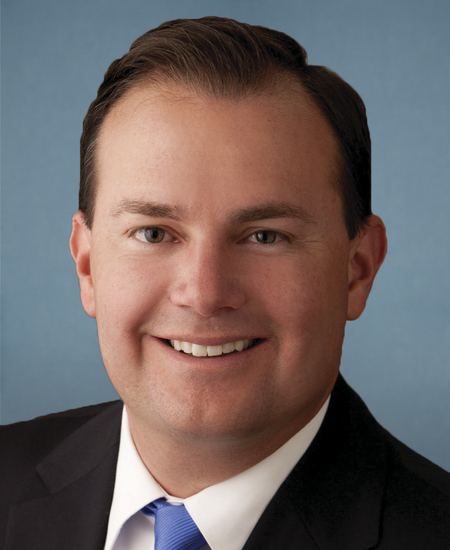
Mike Lee
Mike Lee Senate
R
Support
77% 170
Amy Klobuchar
Amy Klobuchar Senate
D
Strong −
13% 169
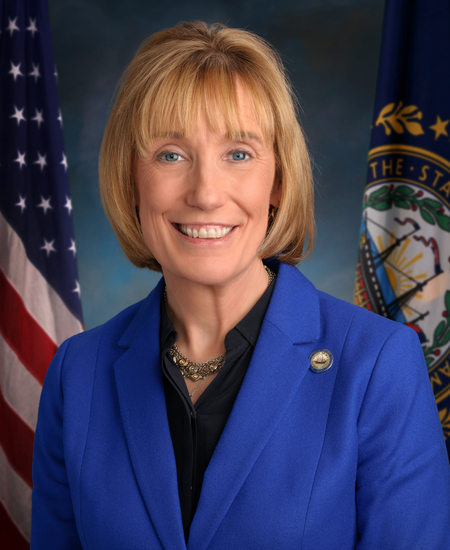
Margaret Wood Hassan
Margaret Wood Hassan Senate
D
Strong −
13% 169
Catherine Cortez Masto
Catherine Cortez Masto Senate
D
Strong −
13% 162
Brian Schatz
Brian Schatz Senate
D
Strong −
16% 171
Andy Kim
Andy Kim Senate
D
Strong −
16% 171
Showing 921–930 of 956 bills

All criminal justice bills

in committee · United States · House May 29, 2025

HR 3621: Public Safety and Mental Health Reporting Act

This bill requires the U.S. Attorney General, in collaboration with the Department of Health and Human Services, to collect annual data on law enforcement interactions with people experiencing mental illness starting in 2026. It mandates standardized guidelines for gathering this data and strictly limits its use to anonymized research or statistics - prohibiting any information that could identify individuals. The Attorney General must publish an annual summary of the findings for Congress and the public. The data collection is authorized for fiscal years 2026 through 2036, using the definition of "mental illness" established in existing law (34 U.S.C. §10651(a)(7)).
Sub-Topics Law Enforcement Tags Data Reporting Public Safety
in committee · United States · Senate May 12, 2025

S 1712: Criminal History Access Act of 2025

S 1712, the Criminal History Access Act of 2025, amends federal law to allow state "peace officer standards and training agencies" (agencies that set hiring and training standards for police officers) to access criminal history records for background checks. The bill adds these agencies to the list of entities authorized under Title 28 of U.S. Code to obtain such records. It requires the Attorney General to update federal regulations within 180 days of enactment to implement this change. This procedural amendment directly affects state law enforcement certification bodies by expanding their access to federal criminal history data.
in committee · United States · House May 23, 2025

HR 3612: End For-Profit Prisons Act of 2025

The End For-Profit Prisons Act of 2025 would end federal contracts with for-profit companies for core prison services - such as housing, safety, and discipline - in federal prisons and community confinement facilities. It requires the Bureau of Prisons and U.S. Marshals Service to transition to using federal employees for these services within 6 years (for prisons) and 8 years (for community confinement), with limited exceptions for state/local facilities meeting all standards. The bill also mandates annual facility inspections, regular reports on prison demographics (including race and gender), and new reentry support for released prisoners, such as information on job programs and benefits like Medicaid. These changes directly affect federal correctional agencies, for-profit prison operators, and incarcerated individuals.
in committee · United States · House May 23, 2025

HR 3596: Rape Shield Enhancement Act of 2025

HR 3596, the Rape Shield Enhancement Act of 2025, requires the Judicial Conference to submit reports to Congress within 180 days of enactment. These reports would examine potential amendments to three federal court rules (Rules 412, 26, and 16) to further limit the admissibility of an alleged victim’s sexual history in court and strengthen privacy protections for any such evidence that is admitted. The bill specifically aims to narrow discovery requests into victims’ private records and prevent unnecessary disclosure of sensitive information in sexual assault cases. It does not change current law but mandates studies to identify possible rule updates for federal courts. The direct effect is on federal court procedures in sexual assault cases, focusing on victim privacy and evidence handling.
in committee · United States · House Sep 18, 2025

HRES 741: Acknowledging that in the aftermath of September 11, 2001, individuals experienced hate and were targeted by the government on account of their faith, race, national origin and immigration status, and suggesting various forms of relief to support those affected.

This resolution acknowledges that after the September 11, 2001, attacks, Arab, Muslim, Middle Eastern, South Asian, and Sikh communities faced widespread hate, government targeting, and discrimination - including policies like the 2002 National Security Entry-Exit Registration System and mass detentions without evidence. It calls for an independent commission to review these historical policies, document their impact, and recommend changes to dismantle ongoing discriminatory practices. The resolution also urges funding for community-based organizations to provide hate crime prevention, mental health support, and culturally accessible alternatives to law enforcement, while requesting health studies on the effects of profiling and hate.
passed · United States · House May 14, 2025

HRES 405: Providing for consideration of the bill (H.R. 2240) to require the Attorney General to develop reports relating to violent attacks against law enforcement officers, and for other purposes; providing for consideration of the bill (H.R. 2243) to amend title 18, United States Code, to improve the Law Enforcement Officer Safety Act and provisions relating to the carrying of concealed weapons by law enforcement officers, and for other purposes; and providing for consideration of the bill (H.R. 2255) to allow Federal law enforcement officers to purchase retired service weapons, and for other purposes.

HRES 405 is a procedural resolution that sets the rules for the House to debate and vote on three related bills. It waives objections and limits debate to one hour for H.R. 2240 (requiring reports on attacks against law enforcement), H.R. 2243 (amending officer safety laws and concealed carry rules), and H.R. 2255 (allowing federal officers to purchase retired service weapons). This resolution does not change the bills' content but streamlines their consideration process.
in committee · United States · House Jan 30, 2026

HR 7278: Cost of Police Misconduct Act of 2026

HR 7278, the Cost of Police Misconduct Act of 2026, requires federal, state, and local law enforcement agencies receiving Byrne JAG program funds to collect and report detailed data on misconduct settlements and judgments. Agencies must track information like the type of allegation (e.g., use of force, racial profiling), costs paid, officer demographics, and funding sources, then submit annual reports to the Attorney General. Non-compliant states or localities face up to a 10% reduction in Byrne JAG or Cops on the Beat program funding. The Attorney General will create a public, searchable database of this aggregated data (excluding personal identifiers) and issue annual reports with recommendations for reducing misconduct. The bill mandates a GAO study after two years of data collection to analyze trends and costs across agencies.
in committee · United States · Senate Jul 22, 2025

S 2386: Preventing Authoritarian Policing Tactics on America’s Streets Act

This bill restricts federal law enforcement's use during protests by requiring officers to visibly display their agency and name or rank during crowd control, riot control, or arrests at demonstrations. It limits federal involvement to Federal property or immediate adjacent areas (sidewalks/public streets), with exceptions for written state/local requests or when the Insurrection Act is invoked. The bill also prohibits unmarked vehicles for civilian arrests and mandates public websites publish deployment details within 24 hours, including locations of detained individuals. It makes arrests unlawful if officers violate these identification or location rules. The bill directly affects federal law enforcement officers and military personnel responding to public demonstrations.
Sub-Topics Law Enforcement
in committee · United States · Senate Apr 3, 2025

S 1295: BOP SCAN Mail Act

The BOP SCAN Mail Act requires the Bureau of Prisons to implement digital mail scanning at all federal correctional facilities to detect and prevent synthetic drugs like fentanyl from entering prisons through inmate mail. Within 180 days of enactment, the BOP Director must evaluate scanning technology and submit a strategy to Congress for achieving 100% mail scanning, including providing inmates digital mail copies within 24 hours and physical copies within 30 days if no drugs are detected. The strategy must cover equipment, training, a 2025-2027 budget, and annual progress reports on drug detection and program efficiency. This directly affects 122 federal prisons, their 38,000 employees, and over 150,000 inmates by addressing a 600% rise in drug-related overdoses linked to mail-sent contraband.
Sub-Topics Corrections
in committee · United States · House Oct 31, 2025

HRES 844: Expressing support for the designation of October 2025 as "Crime Prevention Month".

This non-binding resolution (HRES 844) expresses the U.S. House of Representatives' support for designating October 2025 as "Crime Prevention Month." It encourages federal agencies to fund evidence-based crime prevention programs - like youth mentorship, mental health services, and neighborhood safety initiatives - and urges state/local governments to adopt strategies such as Crime Prevention Through Environmental Design. The resolution also commends community workers and calls on all citizens to participate in public safety activities during October. It has no legal effect but aims to raise awareness and foster collaboration across communities, government, and private sectors to reduce crime.
Showing 921 to 930 of 956 bills
Previous 1 92 93 94 96 Next