Issue · Criminal Justice

Criminal Justice

Every criminal justice bill, vote, and legislator stance in United States, automatically classified by Maddy, our AI policy reader.

Total bills
985
119th Congress
Top supporter
Alan Armstrong
86% support rate
Top opponent
Amy Klobuchar
13% support rate
Ranked legislators
10
5 support · 5 oppose
Key legislators

Who's moving criminal justice in United States

Legislators moving criminal justice in United States
Legislator Party Stance Support rate Decisive votes
AA
Alan Armstrong Senate
R
Strong +
86% 28
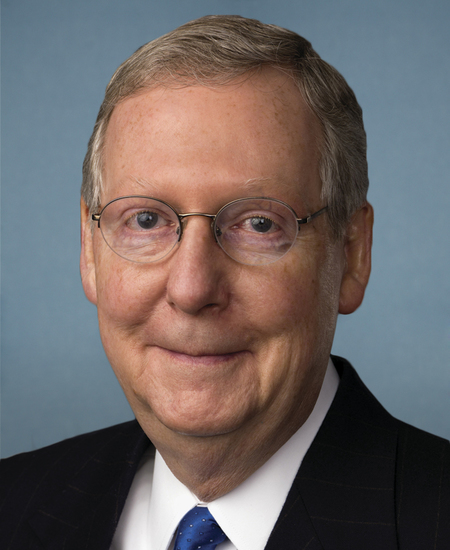
Mitch McConnell
Mitch McConnell Senate
R
Strong +
84% 31
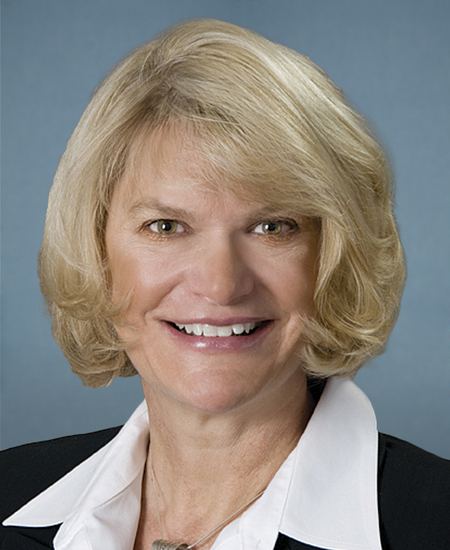
Cynthia M. Lummis
Cynthia M. Lummis Senate
R
Strong +
80% 30
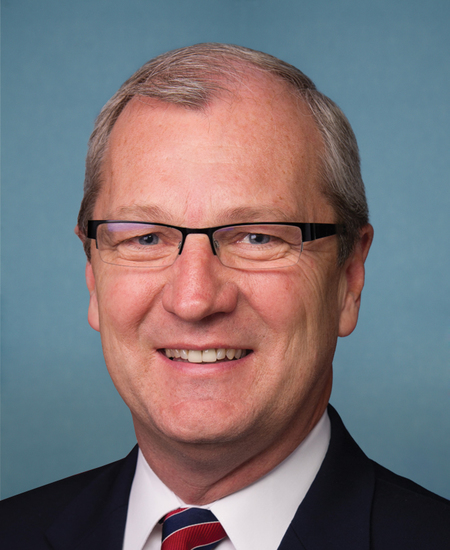
Kevin Cramer
Kevin Cramer Senate
R
Strong +
80% 30
Bernie Moreno
Bernie Moreno Senate
R
Support
77% 31
Amy Klobuchar
Amy Klobuchar Senate
D
Strong −
13% 31
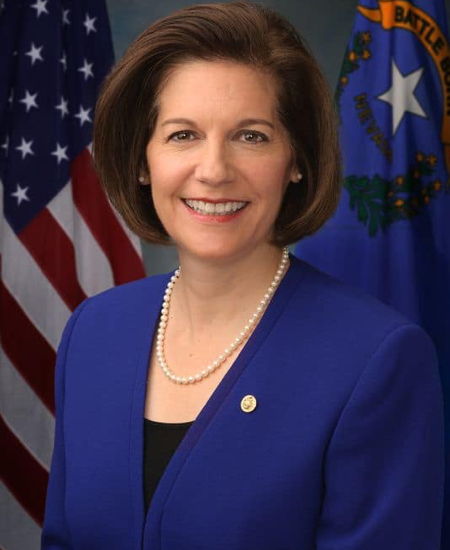
Catherine Cortez Masto
Catherine Cortez Masto Senate
D
Strong −
13% 31
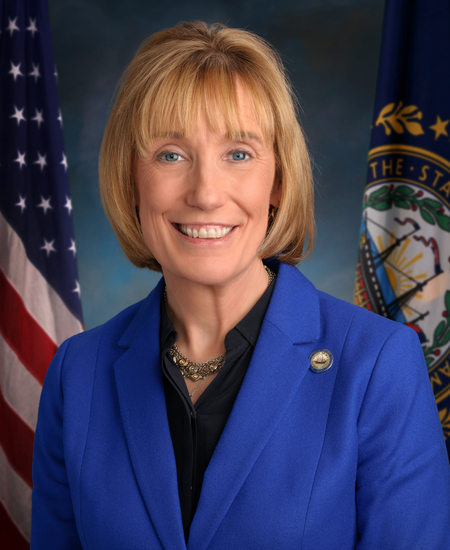
Margaret Wood Hassan
Margaret Wood Hassan Senate
D
Strong −
13% 31
Andy Kim
Andy Kim Senate
D
Strong −
16% 31
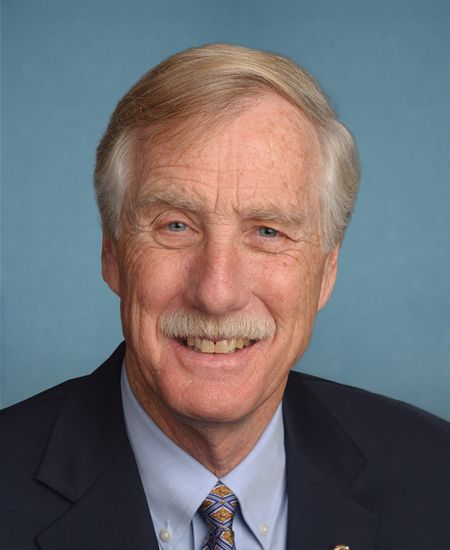
Angus S. King, Jr.
Angus S. King, Jr. Senate
I
Strong −
16% 31
Showing 791–800 of 985 bills

All criminal justice bills

in committee · United States · Senate Sep 2, 2025

S 2689: District of Columbia Police Home Rule Act

This bill repeals a provision allowing the President to assume emergency control of the District of Columbia's police force. It directly affects the District of Columbia government and its police department by removing the federal override power during emergencies. The key mechanism is eliminating Section 740 of the District of Columbia Home Rule Act, which previously permitted the President to take temporary control of DC police operations. The change shifts full emergency management authority over police to local DC leadership. This is a procedural adjustment to the existing Home Rule framework.
Sub-Topics Policing Tags Emergency Management
in committee · United States · Senate Dec 11, 2025

S 3430: PURE Act

This bill removes the requirement to test methamphetamine purity for sentencing under federal law. It amends the Controlled Substances Act to eliminate purity thresholds in sentencing guidelines for methamphetamine offenses, as current methamphetamine is consistently over 80% pure (95.1% in 2024), making purity testing unnecessary. The bill directs the U.S. Sentencing Commission to review and update sentencing guidelines for methamphetamine cases to maintain deterrent severity while focusing on factors like victim impact or weapon use. It directly affects federal prosecutors, courts, and defendants in methamphetamine trafficking cases by streamlining prosecutions and reducing laboratory burdens.
Sub-Topics Drug Policy Sentencing
in committee · United States · House Jan 14, 2026

HR 7072: FAIR Justice Act

HR 7072, the FAIR Justice Act, aims to prevent political interference in federal prosecutions by prohibiting certain high-level government officials from requesting criminal investigations or prosecutions for political reasons. It directly affects the President, Vice President, their senior staff, and specific executive branch appointees (as defined in federal law). The bill requires officials who receive such politically motivated requests to report them to the Department of Justice Inspector General within 45 days, and imposes penalties including fines or up to five years in prison for violations. This legislation creates new legal safeguards against using the Justice Department for political advantage.
Sub-Topics Corrections
in committee · United States · House Jan 6, 2026

HR 6954: January 6th Truth and Transparency Act

HR 6954, the January 6th Truth and Transparency Act, requires the Congressional Research Service to issue regular reports tracking individuals pardoned for January 6, 2021, Capitol-related offenses under Presidential Proclamation 10887. The reports, submitted every 180 days starting 60 days after enactment, must list pardoned individuals and document any subsequent arrests, convictions, or law enforcement encounters involving force. These reports will be made publicly available on the Library of Congress website and provided to specific congressional committees, including House Administration and Senate Rules committees. The bill directly affects those granted pardons under the specified proclamation by establishing a transparency mechanism to monitor their post-pardon conduct.
Sub-Topics Law Enforcement
in committee · United States · House Jul 23, 2025

HR 4678: RAP Act of 2025

The RAP Act of 2025 amends federal evidence rules to generally prohibit the use of a defendant's creative or artistic expression (such as music, poetry, or visual art) as evidence in criminal or civil trials. It directly affects defendants whose artistic works might otherwise be presented against them, making such evidence inadmissible unless the government proves specific conditions by "clear and convincing evidence." These conditions require showing the expression was intended literally, directly relates to the specific facts of the case, is uniquely relevant, and has distinct probative value not available through other admissible evidence. If admitted under the exception, courts must redact the evidence and provide special jury instructions. The law aims to protect artistic expression from being misused in legal proceedings.
in committee · United States · House Nov 18, 2025

HR 6092: Constitutional Accountability Act

HR 6092, the Constitutional Accountability Act, amends Section 1983 of federal law (42 U.S.C. 1983) to expand liability for constitutional violations by law enforcement. It directly affects local governments, police departments, and private entities contracting with law enforcement by removing the current barrier that requires proving a "municipal policy" under the *Monell* doctrine. The bill makes these entities liable for officers' actions - similar to how private employers are held responsible for employees - without needing to show policy or custom, and waives state sovereign immunity under the 14th Amendment. This change aims to strengthen accountability for police misconduct by enabling lawsuits against the employing entity itself.
in committee · United States · Senate Feb 12, 2026

S 3891: ICE Accountability Act

The ICE Accountability Act establishes an independent Commission to monitor U.S. immigration enforcement agencies (including ICE and CBP) for compliance with civil rights and liberties laws. The Commission will observe operations, review records like body camera footage, accept public complaints, and issue monthly public reports; it can issue findings of serious violations and refer cases to prosecutors for potential criminal charges. The Commission has subpoena power to access agency records and can take legal action against noncompliant agencies, imposing daily penalties of $500,000 for ongoing violations. The Commission, staffed by four non-governmental monitors appointed by congressional leaders, will operate for up to four years or until agencies achieve sustained compliance with oversight requirements.
in committee · United States · Senate May 22, 2025

S 1897: A bill to amend the Omnibus Crime Control and Safe Streets Act of 1968 to establish the Adverse Childhood Experiences Response Team grant program, and for other purposes.

This bill creates a federal grant program to help communities address adverse childhood experiences (ACEs), such as exposure to trauma or violence, affecting children. It provides $10 million annually (2026-2029) for grants to states, local governments, tribes, and community organizations to establish "Adverse Childhood Experiences Response Teams." These teams would develop protocols for trauma-informed care, build partnerships with mental health providers, integrate law enforcement with crisis services, and train first responders - focusing on preventing harm and improving access to support for affected children. The program directly supports communities working to mitigate trauma impacts through coordinated, cross-system collaboration.
in committee · United States · House Feb 26, 2025

HR 1633: Workforce Reentry Act

HR 1633, the Workforce Reentry Act, creates federal grants to help formerly incarcerated individuals (ex-offenders) find and maintain jobs after release. It provides two funding mechanisms: pay-for-performance contracts (using at least 30% of funds) where grantees earn payments based on meeting specific job placement and earnings targets, and competitive grants for skills training, job placement, and mentoring services. Grantees must coordinate with existing workforce systems, use evidence-based programs, and cannot directly fund housing or treatment (only coordinate with other providers). The bill requires annual reporting on participant outcomes like program completion and employment rates, plus a 5-year independent evaluation to assess recidivism reduction and job success.
in committee · United States · Senate Dec 15, 2025

S 3485: Safer Detention Act of 2025

This bill (S 3485) expands home detention options for elderly or terminally ill nonviolent offenders already serving prison sentences. It amends the Second Chance Act to allow courts, after considering sentencing factors, to substitute home detention for the remaining prison time if an offender meets specific criteria (e.g., age, nonviolent offense) and submits a request. Key changes include shortening the required sentence reduction from two-thirds to one-half of the original term (minus credits) and establishing clear timelines: courts must act within 30 days of a request or after exhausting all appeals regarding the Bureau of Prisons' failure to process the request. The bill directly affects eligible incarcerated individuals, not the general public.
Sub-Topics Corrections Sentencing
Showing 791 to 800 of 985 bills
Previous 1 … 79 80 81 … 99 Next