Issue · Criminal Justice

Criminal Justice

Every criminal justice bill, vote, and legislator stance in United States, automatically classified by Maddy, our AI policy reader.

Total bills
985
119th Congress
Top supporter
Alan Armstrong
86% support rate
Top opponent
Amy Klobuchar
13% support rate
Ranked legislators
10
5 support · 5 oppose
Key legislators

Who's moving criminal justice in United States

Legislators moving criminal justice in United States
Legislator Party Stance Support rate Decisive votes
AA
Alan Armstrong Senate
R
Strong +
86% 28
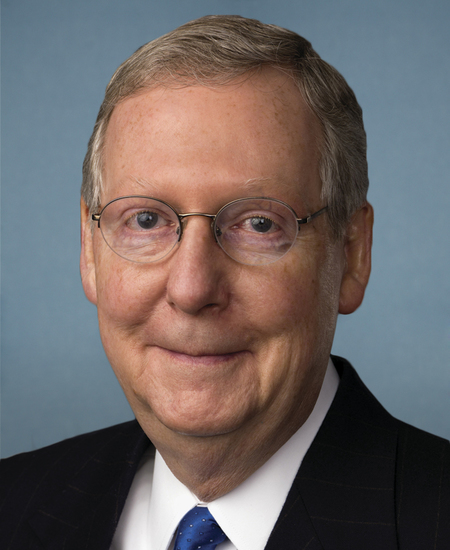
Mitch McConnell
Mitch McConnell Senate
R
Strong +
84% 31
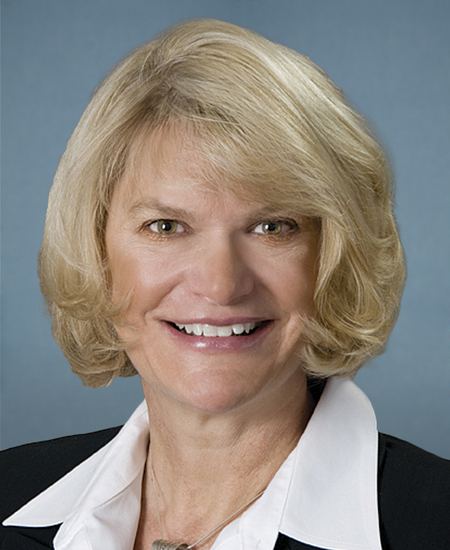
Cynthia M. Lummis
Cynthia M. Lummis Senate
R
Strong +
80% 30
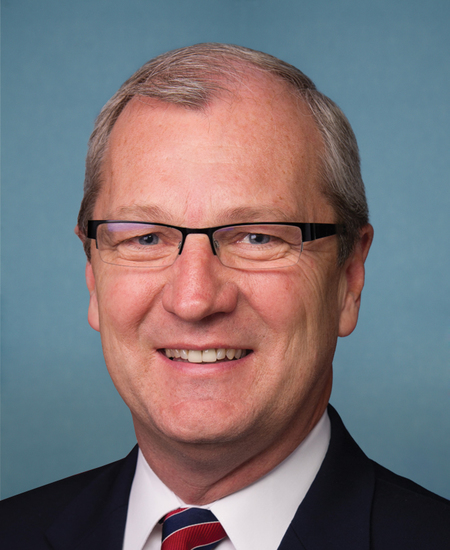
Kevin Cramer
Kevin Cramer Senate
R
Strong +
80% 30
Bernie Moreno
Bernie Moreno Senate
R
Support
77% 31
Amy Klobuchar
Amy Klobuchar Senate
D
Strong −
13% 31
Catherine Cortez Masto
Catherine Cortez Masto Senate
D
Strong −
13% 31
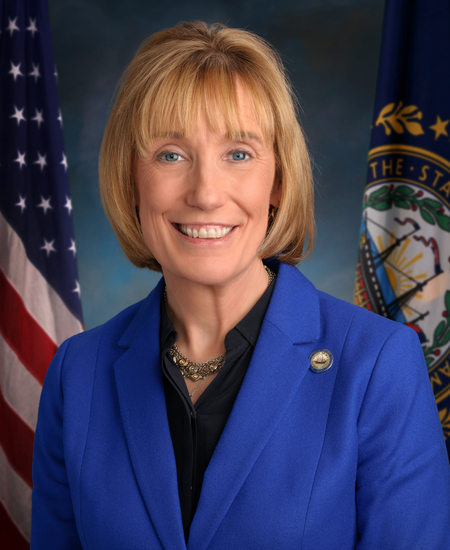
Margaret Wood Hassan
Margaret Wood Hassan Senate
D
Strong −
13% 31
Andy Kim
Andy Kim Senate
D
Strong −
16% 31
Angus S. King, Jr.
Angus S. King, Jr. Senate
I
Strong −
16% 31
Showing 741–750 of 985 bills

All criminal justice bills

in committee · United States · Senate Jun 26, 2025

S 2196: Strengthening Protections for Domestic Violence and Stalking Survivors Act of 2025

This bill expands federal protections for domestic violence and stalking survivors by broadening key definitions. It adds current and former dating partners to the definition of "intimate partner" and includes their children under domestic violence protections. The bill also creates a new federal definition for "misdemeanor crime of stalking" that explicitly includes causing fear for a victim's pet, service animal, or emotional support animal, and prohibits firearm possession for those convicted of such stalking offenses. These changes directly affect survivors of dating violence and stalking, as well as individuals convicted of misdemeanor stalking under federal, state, or tribal law.
in committee · United States · House Mar 18, 2025

HR 2194: Ending Drug Trafficking in Our Communities Act

This bill reauthorizes the High Intensity Drug Trafficking Areas (HIDTA) program, providing $400 million annually from fiscal years 2026 through 2031 to support federal efforts in designated high-drug-trafficking regions. It requires the program director to identify and develop evidence-based "promising practices" for HIDTA programs, focusing on tracking drug trafficking sources, coordinating multi-level responses to drug-related crimes, and implementing substance use disorder prevention strategies. These practices must be reviewed for effectiveness and shared with all HIDTA regions starting in 2026. The bill directly affects HIDTA-designated communities and federal agencies managing drug enforcement coordination.
Sub-Topics Drug Policy
in committee · United States · Senate Apr 3, 2025

S 1273: Combatting Money Laundering in Cyber Crime Act of 2025

Combatting Money Laundering in Cyber Crime Act of 2025 This bill expands the investigative authority of the U.S. Secret Service, extends reporting requirements related to public-private information sharing, and requires the Government Accountability Office (GAO) to evaluate existing requirements to combat money laundering and related crimes. Specifically, the bill authorizes the Secret Service to investigate money laundering and structured transactions (i.e., structuring currency transactions to evade currency reporting requirements). Additionally, the bill extends the requirement for the Financial Crimes Enforcement Network (FinCEN) to report on the efforts of the FinCEN Exchange. The FinCEN Exchange is a voluntary public-private information sharing partnership among law enforcement agencies, national security agencies, financial institutions, and FinCEN to combat money laundering and related crimes, including the financing of terrorism. The bill also extends the requirement for the U.S. executive director at the International Monetary Fund to support the increased use of the fund's administrative budget to help members prevent money laundering and the financing of terrorism. The requirement expires on December 20, 2025. Finally, the bill directs the GAO to report on implementation of provisions of the Anti-Money Laundering Act of 2020 that expanded information sharing with tribal authorities and expanded reporting requirements related to money laundering and terrorist financing. The GAO must focus on evaluating the ability of law enforcement to identify and deter money laundering in cybercrimes.
Sub-Topics Law Enforcement
in committee · United States · Senate Jan 15, 2026

S 3683: Stop Excessive Force in Immigration Act of 2026

S 3683 establishes strict limits on force used by federal immigration officers, requiring non-deadly force only when no safer alternative exists and prohibiting deadly force except under DOJ standards. It mandates body cameras for all officers within 180 days, requires annual de-escalation and civil rights training, and bans equipment like flashbangs without supervisor-approved tactical plans. The bill creates new reporting requirements for the DHS and DOJ, including semiannual congressional reports on force incidents, assaults on officers, and equipment use. These provisions directly affect all federal immigration enforcement personnel, aiming to increase accountability and transparency in enforcement operations.
in committee · United States · Senate Apr 8, 2025

S 1322: Family Notification of Death, Injury, or Illness in Custody Act of 2025

This bill requires detention agencies (like jails, prisons, and police facilities) to notify family members or emergency contacts when an individual in their custody dies, is seriously injured, or becomes seriously ill. Agencies must collect emergency contact information during intake, provide timely notifications (within 12 hours for death, "as soon as practicable" for serious illness/injury), and include specific details like cause of death or medical condition. It defines "serious illness or injury" to include situations like suicide attempts, terminal diagnoses, or unconsciousness requiring immediate treatment. The bill also mandates compassionate notification methods (trained staff, written follow-up) and gives individuals the right to update contact information or complete medical directives.
Sub-Topics Policing
in committee · United States · Senate Apr 30, 2025

S 1531: Assault Weapons Ban of 2025

Assault Weapons Ban of 2025 This bill makes it a crime to knowingly import, sell, manufacture, transfer, or possess a semiautomatic assault weapon (SAW) or large capacity ammunition feeding device (LCAFD). The prohibition does not apply to a firearm that is (1) manually operated by bolt, pump, lever, or slide action, except for certain shotguns; (2) permanently inoperable; (3) an antique; (4) only capable of firing rimfire ammunition; or (5) a rifle or shotgun specifically identified by make and model. The bill also exempts from the prohibition the following, with respect to a SAW or LCAFD: importation, sale, manufacture, transfer, or possession related to certain law enforcement efforts, or authorized tests or experiments; importation, sale, transfer, or possession related to securing nuclear materials; and possession by a retired law enforcement officer. The bill permits continued possession, sale, or transfer of a grandfathered SAW, which must be securely stored. A licensed gun dealer must conduct a background check prior to the sale or transfer of a grandfathered SAW between private parties. The bill permits continued possession of, but prohibits sale or transfer of, a grandfathered LCAFD. Newly manufactured LCAFDs must display serial number identification. Newly manufactured SAWs and LCAFDs must display the date of manufacture. The bill also allows a state or local government to use Edward Byrne Memorial Justice Assistance Grant Program funds to compensate individuals who surrender a SAW or LCAFD under a buy-back program.
in committee · United States · Senate Dec 15, 2025

S 3482: First Step Implementation Act of 2025

The First Step Implementation Act of 2025 makes significant changes to sentencing and corrections policies. It modifies drug sentencing by expanding the definition of "serious drug felony or serious violent felony" and creates a process for courts to reduce sentences for people convicted as adults for crimes committed before age 18. The bill also establishes automatic sealing of juvenile nonviolent offense records after 3 years of clean record and provides procedures for expunging certain juvenile records upon reaching age 18. Additionally, it requires the Attorney General to correct inaccurate or incomplete criminal records and gives individuals the right to challenge the accuracy of their records. These provisions primarily affect individuals with juvenile records or those convicted of drug offenses under previous sentencing guidelines.
in committee · United States · Senate Jun 25, 2025

S 2165: 3D Printed Gun Safety Act of 2025

This bill makes it illegal to distribute online digital instructions (like 3D printer files) that can automatically program a 3D printer to create a firearm or complete a firearm receiver. It directly affects individuals who share such files online, including those creating or distributing "ghost gun" schematics. The key mechanism prohibits the internet distribution of these specific digital files under federal law, aiming to prevent untraceable firearms. This addresses the concern that 3D-printed guns lack serial numbers, making them difficult for law enforcement to trace after crimes.
in committee · United States · Senate Jul 29, 2025

S 2527: FBI Whistleblower Protection Enhancement Act of 2025

This bill strengthens protections for FBI employees who report misconduct or wrongdoing. It prohibits the FBI from punishing staff for whistleblowing, testifying about violations, or cooperating with internal investigations, including during probationary periods. New FBI hires must receive written information about whistleblower rights within 180 days of appointment, and the Attorney General must ensure clear procedures for reporting retaliation. The bill also clarifies the appeals process for employees claiming retaliation, requiring decisions to follow specific legal standards. These changes directly affect all FBI employees who might report safety, security, or ethical concerns.
in committee · United States · Senate Apr 9, 2025

S 1401: Targeting Child Predators Act of 2025

The Targeting Child Predators Act of 2025 amends federal law to strengthen confidentiality for ongoing investigations into child predators. It requires recipients of certain administrative subpoenas (issued by the Secretary of Homeland Security) to keep the subpoena's existence and details secret for up to 180 days, unless a federal official certifies disclosure would endanger the investigation (e.g., by threatening safety, causing flight, destroying evidence, or intimidating witnesses). The bill also establishes a new court process for reviewing these confidentiality orders, requiring federal officials to provide specific justifications and courts to rule quickly on whether disclosure would jeopardize the investigation. This directly affects entities like financial institutions and online platforms that may receive such subpoenas.
Sub-Topics Courts
Showing 741 to 750 of 985 bills
Previous 1 … 74 75 76 … 99 Next