Issue · Criminal Justice

Criminal Justice

Every criminal justice bill, vote, and legislator stance in United States, automatically classified by Maddy, our AI policy reader.

Total bills
985
119th Congress
Top supporter
Alan Armstrong
86% support rate
Top opponent
Amy Klobuchar
13% support rate
Ranked legislators
10
5 support · 5 oppose
Key legislators

Who's moving criminal justice in United States

Legislators moving criminal justice in United States
Legislator Party Stance Support rate Decisive votes
AA
Alan Armstrong Senate
R
Strong +
86% 28
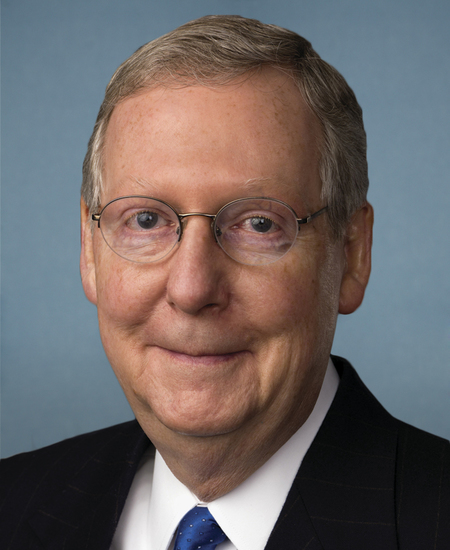
Mitch McConnell
Mitch McConnell Senate
R
Strong +
84% 31
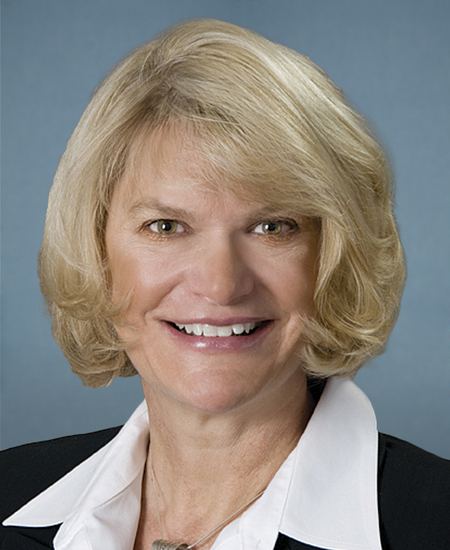
Cynthia M. Lummis
Cynthia M. Lummis Senate
R
Strong +
80% 30
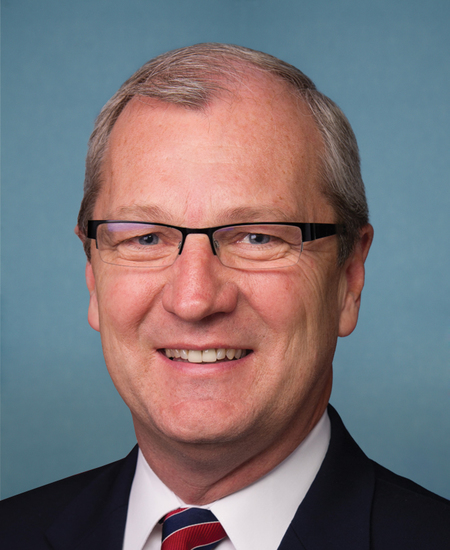
Kevin Cramer
Kevin Cramer Senate
R
Strong +
80% 30
Bernie Moreno
Bernie Moreno Senate
R
Support
77% 31
Amy Klobuchar
Amy Klobuchar Senate
D
Strong −
13% 31
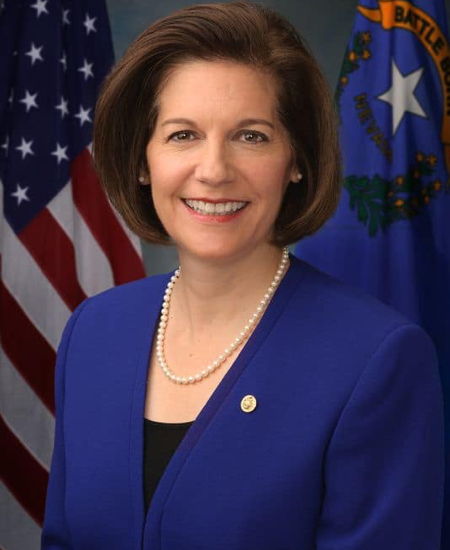
Catherine Cortez Masto
Catherine Cortez Masto Senate
D
Strong −
13% 31
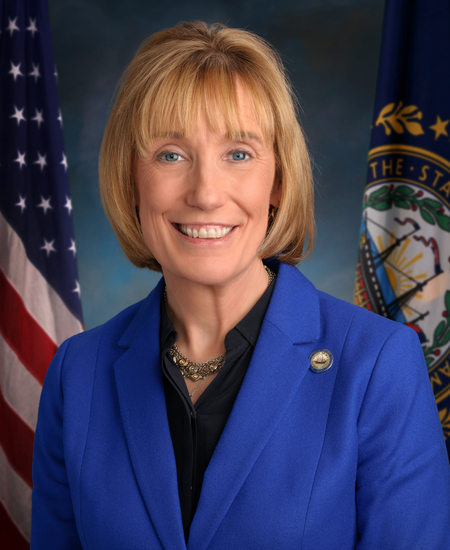
Margaret Wood Hassan
Margaret Wood Hassan Senate
D
Strong −
13% 31
Andy Kim
Andy Kim Senate
D
Strong −
16% 31
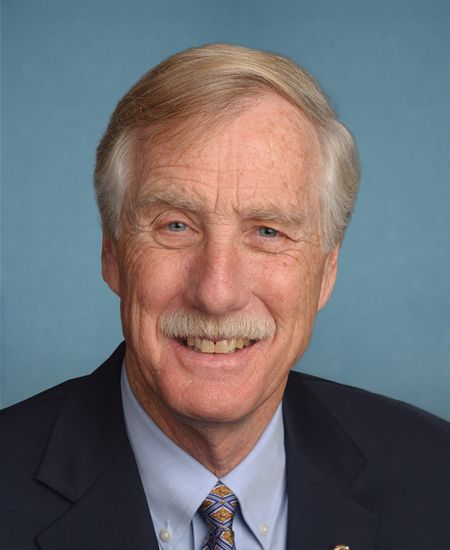
Angus S. King, Jr.
Angus S. King, Jr. Senate
I
Strong −
16% 31
Showing 731–740 of 985 bills

All criminal justice bills

in committee · United States · House Jan 9, 2025

HR 277: Matthew Lawrence Perna Act of 2025

This bill protects individuals charged with nonviolent political protests by preventing pretrial detention for such offenses (unless involving violence), requiring faster trials, and allowing lawsuits for wrongful detention. It also restricts government use of national security powers against U.S. citizens unless they act as foreign agents, mandates disclosure of surveillance investigations upon citizen request, and gives defendants in D.C. trials the right to choose their trial location. Key provisions directly affect people arrested for peaceful protest activities, aiming to limit government overreach in such cases. The bill does not change sentencing guidelines but emphasizes judges should follow standard sentencing ranges for these offenses.
in committee · United States · House Aug 15, 2025

HJRES 115: Terminating the emergency determined by the President on August 11, 2025, in the Executive Order titled "Declaring a crime emergency in the District of Columbia".

This bill (HJRES 115) terminates a presidential emergency declaration made on August 11, 2025, which claimed a "crime emergency" in Washington, D.C. It directly affects the District of Columbia by ending federal restrictions that prevented D.C. from using $1 billion in locally-raised funds for public safety, law enforcement, fire services, and schools. The resolution cites that the emergency declaration was legally flawed - section 740 of the DC Home Rule Act does not permit federalizing the Metropolitan Police Department - and notes that D.C. violent crime has reached a 30-year low. The bill formally ends the emergency under the DC Home Rule Act, restoring D.C.'s authority over its own budget and public safety resources.
Sub-Topics Law Enforcement Policing Violent Crime Tags Emergency Management
in committee · United States · Senate Dec 1, 2025

S 3289: Crime Gun Tracing Modernization Act of 2025

The Crime Gun Tracing Modernization Act of 2025 requires the Bureau of Alcohol, Tobacco, Firearms and Explosives (ATF) to create electronic, searchable databases for firearm records that licensed dealers already must maintain, including details on import, production, shipment, sale, and disposition. It mandates that dealers provide electronic access to these records and allows them to turn over non-electronic records after 10 years without active transactions. The databases must be searchable by firearm details (like model, serial number, and caliber) but not by personal information, and access is restricted to law enforcement investigations, foreign intelligence purposes, or compliance inspections. The bill also requires annual audits by the Comptroller General and congressional reporting to ensure ATF compliance.
in committee · United States · Senate Mar 14, 2025

S 1076: Preventing Illegal Weapons Trafficking Act of 2025

This bill requires federal agencies to develop a strategy within 120 days to prevent the trafficking of machinegun conversion devices - parts that convert regular firearms into machineguns. The strategy must improve detection, coordination between federal and local law enforcement, tracing of devices used in crimes, and address emerging threats like 3D-printed devices. It mandates annual reports to Congress on implementation progress and requires the Attorney General to include specific data on these devices in annual firearms trafficking reports. The bill directly affects federal agencies (ATF, FBI, Homeland Security), state/local law enforcement, and aims to disrupt trafficking networks.
in committee · United States · House Sep 18, 2025

HR 5453: RRLEF Act of 2025

The RRLEF Act of 2025 requires applicants for Edward Byrne Memorial Justice Assistance Grant Program funds to certify they do not purchase firearms from "covered licensed dealers." A "covered dealer" is defined as one traced with 25+ firearms used in crimes within two of the last three years. The bill mandates the ATF publicly publish an annual list of these dealers and notify law enforcement if their transferred firearms are used in crimes. This directly affects state/local law enforcement agencies seeking federal grant funding by restricting their firearm purchasing options.
in committee · United States · Senate Apr 9, 2025

S 1370: GOSAFE Act

The GOSAFE Act prohibits the import, sale, manufacture, transfer, or possession of gas-operated semi-automatic firearms and large capacity ammunition feeding devices (those holding more than 10 rounds). It defines gas-operated firearms as those using gas pressure to cycle the action and requires the Attorney General to publish a list of prohibited firearms within 180 days. The bill includes exemptions for single-shot weapons, muzzle-loaders, firearms with permanently fixed magazines under 10 rounds, and certain other specific types. Manufacturers must now seek approval for new semi-automatic firearms through a process requiring detailed documentation, and the bill establishes a Firearm Safety Trust Fund to cover administrative costs. Violations of these provisions can result in fines up to $5,000 or up to 12 months in prison.
in committee · United States · Senate Nov 7, 2025

S 3167: No Troops in Our Streets Act of 2025

This bill gives Congress the power to end military deployments for domestic law enforcement by requiring a specific joint resolution of disapproval with precise details about location, duration, and legal authority. It amends existing law to explicitly allow Congress to terminate exceptions to the Posse Comitatus Act (which restricts military involvement in civilian policing) and National Guard activations under Section 12406. The bill includes $900 million for state/local law enforcement in fiscal year 2026 - split between community violence prevention, emergency aid, and hiring officers - to support the shift away from federal military involvement. It directly affects federal military operations, state/local governments, and Congress's ability to override executive decisions on troop deployments.
Sub-Topics Law Enforcement
in committee · United States · House Oct 8, 2025

HR 5721: Protect Our Judiciary Act of 2025

HR 5721, the Protect Our Judiciary Act of 2025, amends federal law to prohibit protests near judicial buildings. It makes it illegal to picket, parade, or use loud vehicles like sound trucks near buildings occupied by judges, jurors, witnesses, or court officers. Violators face fines or up to one year in prison. The bill directly affects individuals engaging in demonstrations near these locations, expanding existing restrictions to specifically include noise-making devices and other public demonstrations.
in committee · United States · House Jun 17, 2025

HR 4024: Filling Public Safety Vacancies Act

HR 4024, the Filling Public Safety Vacancies Act, allocates $162 million in federal funds for law enforcement agencies to hire or rehire additional officers under the Safe Streets Act. This funding directly affects state and local law enforcement agencies that receive grants under the program. Key provisions require agencies using these funds to conduct mandatory background checks and psychological evaluations for new officers, with the grant money covering these costs. The bill focuses on providing resources for officer recruitment while establishing specific hiring requirements for agencies utilizing the funds.
Sub-Topics Appropriations Firearms Law Enforcement Tags Public Safety
passed · United States · House Sep 16, 2026

HR 2978: GUARD Act

HR 2978, the GUARD Act, allows state, local, and tribal law enforcement agencies to use existing federal grant funds for investigating elder financial fraud, "pig butchering" investment scams, and general financial fraud. The bill directs these funds toward hiring specialized staff, training on blockchain tools and transnational fraud, purchasing investigative software, improving data collection, and creating financial sector liaisons to coordinate with banks. It requires annual reports from law enforcement on fund usage and outcomes, and mandates federal agencies to submit comprehensive reports to Congress on scam statistics, enforcement actions, and funding allocation. The legislation directly affects law enforcement agencies and aims to strengthen efforts against fraud targeting vulnerable populations, particularly elderly individuals.
Showing 731 to 740 of 985 bills
Previous 1 … 73 74 75 … 99 Next