Issue · Criminal Justice

Criminal Justice

Every criminal justice bill, vote, and legislator stance in United States, automatically classified by Maddy, our AI policy reader.

Total bills
985
119th Congress
Top supporter
Alan Armstrong
86% support rate
Top opponent
Amy Klobuchar
13% support rate
Ranked legislators
10
5 support · 5 oppose
Key legislators

Who's moving criminal justice in United States

Legislators moving criminal justice in United States
Legislator Party Stance Support rate Decisive votes
AA
Alan Armstrong Senate
R
Strong +
86% 28
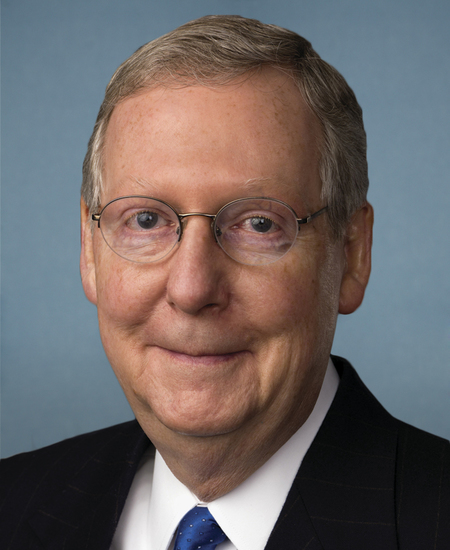
Mitch McConnell
Mitch McConnell Senate
R
Strong +
84% 31
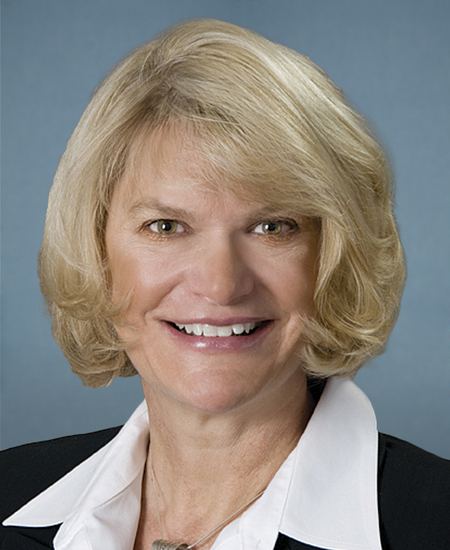
Cynthia M. Lummis
Cynthia M. Lummis Senate
R
Strong +
80% 30
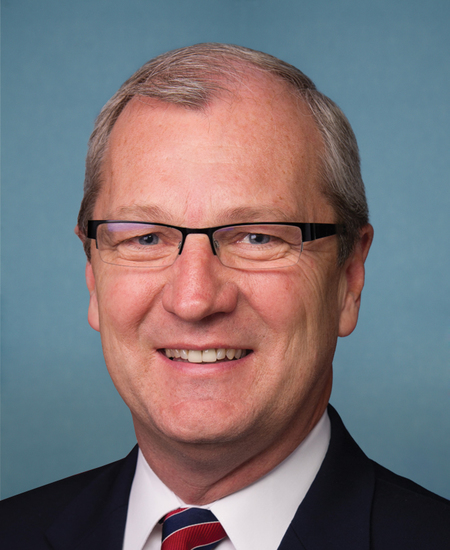
Kevin Cramer
Kevin Cramer Senate
R
Strong +
80% 30
Bernie Moreno
Bernie Moreno Senate
R
Support
77% 31
Amy Klobuchar
Amy Klobuchar Senate
D
Strong −
13% 31
Catherine Cortez Masto
Catherine Cortez Masto Senate
D
Strong −
13% 31
Margaret Wood Hassan
Margaret Wood Hassan Senate
D
Strong −
13% 31
Andy Kim
Andy Kim Senate
D
Strong −
16% 31
Angus S. King, Jr.
Angus S. King, Jr. Senate
I
Strong −
16% 31
Showing 711–720 of 985 bills

All criminal justice bills

in committee · United States · House Oct 6, 2025

HR 5698: District of Columbia Clemency Home Rule Act

This bill transfers authority over clemency (pardon, sentence reduction, or fine remission) for crimes under District of Columbia law from federal or existing local mechanisms to the District of Columbia government itself. It requires the District to enact its own law specifying who can grant clemency and under what terms, directly affecting individuals convicted under DC criminal laws seeking clemency. The bill ensures existing clemency authority held by the President or DC Mayor before enactment remains unaffected, and the new authority applies to all crimes committed before, during, or after the law’s passage. It does not change current clemency procedures but shifts the governing authority to the District’s elected officials through local legislation.
in committee · United States · Senate Feb 5, 2025

S 402: Words Matter for the District of Columbia Courts Act

This bill (S 402) updates outdated terminology in District of Columbia court codes to use more respectful and current language. It replaces "substantially retarded persons" and similar phrases with "persons with moderate intellectual disabilities" in three specific court sections: the U.S. District Court (§11-501(2)(D)), Superior Court (§11-921(a)(4)(D)), and Family Court (§11-1101(a)(15)). These changes directly affect how DC courts refer to individuals with intellectual disabilities in legal contexts. The bill makes concrete policy adjustments to modernize court terminology without altering legal procedures or rights.
Sub-Topics Courts
passed · United States · Senate Mar 14, 2025

S 960: Justice for Murder Victims Act

S 960, the "Justice for Murder Victims Act," removes the maximum time limit for prosecuting homicide offenses under federal law, allowing prosecutors to file charges regardless of how long passed between the act causing death and the victim's death. However, it limits the death penalty to cases where the victim died within 1 year and 1 day of the act causing death. The bill amends Title 18, U.S. Code, to apply this change to all homicide prosecutions occurring after enactment, while also modifying penalties for first-degree murder to reflect the 1-year-and-1-day time limit for the death penalty. This directly affects federal prosecutors, defendants facing homicide charges, and victims' families seeking justice for delayed prosecutions.
Sub-Topics Violent Crime
in committee · United States · House Jun 5, 2025

HR 3773: PROTECT Act of 2025

HR 3773 (PROTECT Act of 2025) amends federal law to recognize tribal courts as having authority equivalent to state courts for certain electronic evidence cases. It requires that warrants for electronic communications stored 180 days or less must follow procedures from the Indian Civil Rights Act (25 U.S.C. 1302(a)(2)) when issued by tribal courts. The bill also expands tribal jurisdiction over controlled substance offenses (like drug trafficking or possession) and firearms offenses (such as possession by domestic violence offenders) by defining these terms for tribal courts. This directly affects tribal courts and tribal law enforcement by standardizing legal procedures for evidence handling and broadening their authority under federal law. The changes align tribal court processes with federal and state standards for digital evidence and criminal jurisdiction.
Sub-Topics Civil Rights Courts Domestic Violence Tags Tribal Nations
in committee · United States · House Dec 17, 2025

HR 6810: MAIL Theft Act of 2025

This bill requires federal agencies to improve coordination in investigating organized postal theft. Within 180 days of enactment, the Attorney General, Homeland Security Secretary, Postmaster General, and other relevant agencies must develop a strategy to share information about theft networks and assist state/local law enforcement in building cases. It defines "organized postal crime" as coordinated theft, fraud, or embezzlement of mail for resale in interstate commerce. The strategy must include better information sharing between agencies like the Postal Inspection Service, Customs, and Secret Service, and a joint report to Congress will detail the plan. The bill directly affects federal agencies involved in postal crime investigations and state/local prosecutors handling these cases.
Sub-Topics Law Enforcement
in committee · United States · House Jan 22, 2026

HR 7190: To end detention and electronic monitoring, and redirect funding to community-based wrap-around services.

HR 7190 would end immigration detention and electronic monitoring by requiring the immediate release of all detained noncitizens on their own recognizance within six months and repealing all federal laws authorizing detention. It prohibits using federal funds for detention facilities, ankle monitors, or immigration enforcement activities after specific deadlines (six months for monitors, two years for detention contracts). Instead, it establishes a new grant program to fund community-based wrap-around services - including housing, healthcare, mental health support, legal aid, and job training - provided voluntarily by non-profit organizations without surveillance or data sharing with federal agencies. The bill directly affects noncitizens currently held in detention or under electronic monitoring.
in committee · United States · House May 19, 2025

HR 3500: More Funding for COPS Act

HR 3500 increases annual funding for the COPS ON THE BEAT grant program to $1.16 billion per year for fiscal years 2026 through 2030, replacing a prior funding level. This bill directly affects local law enforcement agencies that receive COPS grants to hire community policing officers. The key provision amends the funding amount in the 1968 crime control law, ensuring higher annual support for community policing initiatives. The change provides stable, increased funding for these programs over the next five fiscal years.
in committee · United States · House Jan 9, 2025

HR 286: Preserving Safe Communities by Ending Swatting Act of 2025

Preserving Safe Communities by Ending Swatting Act of 2025 This bill makes it a crime to intentionally convey false or misleading information in circumstances where the information may reasonably be expected to cause an emergency response and the information indicates the occurrence of criminal conduct or a threat to health or safety (commonly referred to as swatting ).
in committee · United States · Senate Jun 26, 2025

S 1829: STOP CSAM Act of 2025

The STOP CSAM Act of 2025 strengthens protections for child victims of sexual abuse and exploitation by expanding definitions of abuse to include psychological abuse and kidnapping, and by imposing new reporting requirements on internet service providers. The bill requires providers with over 1 million monthly users to report apparent child sexual abuse material to the CyberTipline within 60 days, with penalties for noncompliance including fines up to $1 million for large providers. It creates new civil remedies allowing victims to sue providers who host or promote child pornography, and establishes protections for "covered persons" (children under 18 who are victims or witnesses) by limiting public disclosure of their personal information. The bill also enhances law enforcement's ability to investigate online child exploitation while maintaining privacy safeguards for victims.
in committee · United States · House Jun 30, 2025

HR 4252: Extreme Risk Protection Order Expansion Act of 2025

This bill creates a federal grant program to help states, tribes, and local governments implement Extreme Risk Protection Orders (ERPOs), which temporarily remove firearms from individuals who may pose a danger to themselves or others. The grants fund law enforcement training on ERPO use, development of court protocols, public awareness campaigns, and ensure ERPOs are recognized across jurisdictions. The bill also amends federal law to include ERPOs in background checks through the National Instant Criminal Background Check System and requires states to have due process protections in place, including notice and hearing requirements for ERPOs. States receiving grants must submit annual reports on ERPO usage, including demographic data and outcomes.
Showing 711 to 720 of 985 bills
Previous 1 … 71 72 73 … 99 Next