Issue · Criminal Justice

Criminal Justice (Firearms)

Every criminal justice bill, vote, and legislator stance in United States, automatically classified by Maddy, our AI policy reader.

Total bills
140
119th Congress
Top supporter
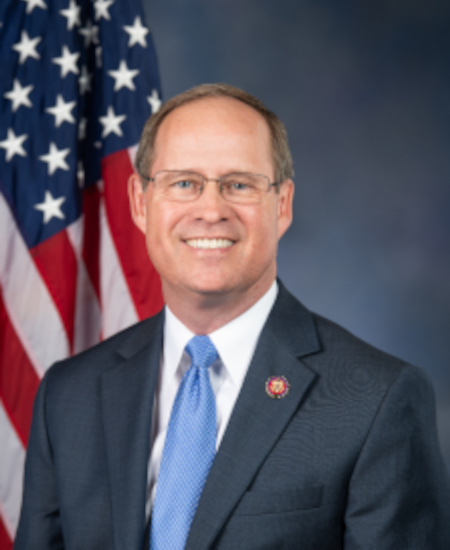
Gregory F. Murphy
75% support rate
Top opponent
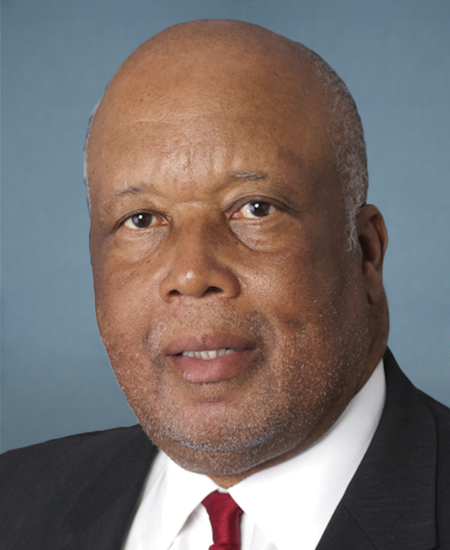
Bennie G. Thompson
20% support rate
Ranked legislators
10
5 support · 5 oppose
Key legislators

Who's moving firearms in United States

Legislators moving firearms in United States
Legislator Party Stance Support rate Votes
Gregory F. Murphy
Gregory F. Murphy House · District 3
R
Support
75% 4
Mike Johnson
Mike Johnson House · District 4
R
Support
75% 4
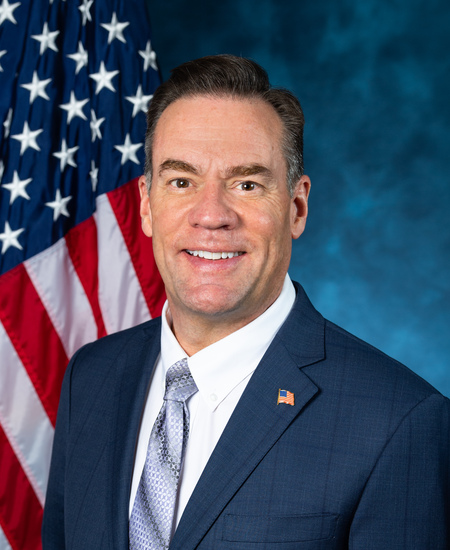
Russ Fulcher
Russ Fulcher House · District 1
R
Support
75% 4
Wesley Hunt
Wesley Hunt House · District 38
R
Support
75% 4
Adelita S. Grijalva
Adelita S. Grijalva House · District 7
D
Support
67% 3
Bennie G. Thompson
Bennie G. Thompson House · District 2
D
Strong −
20% 5
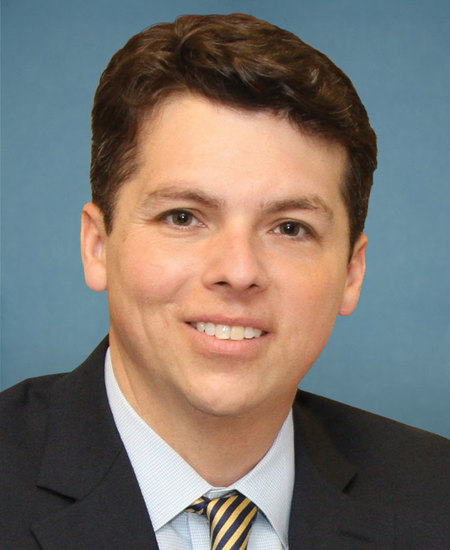
Brendan F. Boyle
Brendan F. Boyle House · District 2
D
Strong −
20% 5
Derek Tran
Derek Tran House · District 45
D
Strong −
20% 5
Eugene Simon Vindman
Eugene Simon Vindman House · District 7
D
Strong −
20% 5
Greg Landsman
Greg Landsman House · District 1
D
Strong −
20% 5
Showing 61–70 of 140 bills

All criminal justice bills

in committee · United States · House Aug 15, 2025

HR 4991: Disarming Felons Act

HR 4991, the Disarming Felons Act, prohibits the sale or transfer of firearms to, and possession of firearms by, adults who committed an act as a juvenile (aged 15-17) that would have been a felony if committed as an adult. The bill amends existing federal law (18 U.S.C. §§ 922(d) and 922(g)) to add this new category to the list of prohibited firearm transactions and possession. It directly affects individuals who were juveniles at the time of a serious offense but are now adults, restricting their access to firearms. The law creates a specific legal barrier to firearm access based on the severity of a juvenile offense, without altering penalties for the offense itself.
in committee · United States · House May 13, 2025

HR 3373: GHOST Act of 2025

HR 3373, the GHOST Act of 2025, requires entities shipping certain firearm parts (barrels, slides, or bolts) across state lines to register shipments with the Attorney General within 5 business days. This includes providing sender/recipient details, shipping method, and proof of delivery via certified mail or recipient signature. The bill creates a confidential database for law enforcement access but prohibits public disclosure under the Freedom of Information Act. Violations carry fines or up to 1 year in prison for single shipments, and up to 10 years for shipping 50+ parts in one transaction.
passed · United States · House Jun 2, 2026

HR 1041: Veterans 2nd Amendment Protection Act

HR 1041, the Veterans 2nd Amendment Protection Act, prevents the Department of Veterans Affairs (VA) from automatically sending veterans' personal information to the national background check system (NICS) solely because a court has appointed a fiduciary (like a guardian) to manage their benefits. This directly affects veterans who have a fiduciary appointed due to mental health or cognitive challenges but are not deemed a danger to themselves or others. The bill requires a court order finding the veteran poses a danger before any such information can be shared with the NICS. It changes VA procedures to block unnecessary barriers to firearm ownership for veterans who qualify for fiduciary support without a judicial determination of danger.
in committee · United States · House Jan 16, 2025

HR 543: Iron Pipeline Review Act

HR 543, titled the "Iron Pipeline Review Act" (though the bill focuses on firearms trafficking, not pipelines), requires the Bureau of Alcohol, Tobacco, Firearms, and Explosives (ATF) to submit annual reports to Congress on firearms trafficking along Interstate 95. The reports must analyze firearm origins, effectiveness of anti-trafficking measures, relevant laws, and include recommendations for law enforcement improvements and legislative/funding proposals. This bill directly affects federal, state, and local law enforcement agencies by mandating data collection and analysis to inform future anti-trafficking efforts. It does not create new laws or funding but establishes a reporting mechanism to assess current trafficking patterns and responses.
in committee · United States · House Jun 24, 2025

HR 4111: MASS Act

HR 4111, the MASS Act, requires states to implement standardized firearms licensing systems. It mandates that individuals must hold a valid license when purchasing, owning, or possessing firearms or ammunition, with first-time buyers needing safety training. States must establish processes to deny or revoke licenses for prohibited individuals (e.g., those with domestic violence convictions, criminal histories, or extreme risk protection orders) and require dealers to conduct background checks, maintain records, and verify licenses before sales. The bill also provides federal grants to help states implement these requirements, with states needing to report on their progress.
in committee · United States · House Feb 21, 2025

HR 1456: Gun Trafficker Detection Act

HR 1456, the Gun Trafficker Detection Act, requires private firearm owners (non-licensed individuals) to report lost or stolen firearms to the Attorney General within 48 hours via a new web portal. It imposes civil penalties of up to $1,000 for first violations and $5,000 for repeat violations, and prohibits individuals with two or three penalty assessments from receiving firearms for 1 year or 5 years, respectively. The bill mandates law enforcement agencies to use 5% of crime grant funds to study lost/stolen firearm data collection and updates the National Instant Background Check System to include these new restrictions. It directly affects private gun owners and law enforcement agencies, focusing on reporting compliance and background check adjustments.
in committee · United States · House Jun 25, 2025

HR 4143: 3D Printed Gun Safety Act of 2025

HR 4143, the 3D Printed Gun Safety Act of 2025, prohibits the online distribution of digital instructions (like 3D printer files) that can automatically create firearms or firearm parts. It directly affects individuals or entities sharing such code over the internet, not people using 3D printers to make guns. The law aims to prevent "ghost guns" made without serial numbers - making them untraceable by law enforcement, as seen in cases like the 2023 DC police seizure of 407 untraceable firearms. By banning the spread of these digital schematics, the bill targets a specific gap in firearm regulation.
in committee · United States · House Jan 7, 2025

HR 223: Preventing Unjust Red Flag Laws Act of 2025

This bill (HR 223) prohibits federal funding for implementing or enforcing "red flag laws," which allow courts to temporarily remove firearms from individuals without proper court review. It blocks all federal money from being used by any federal agency or to assist state/local governments in carrying out these laws. The bill does not ban red flag laws themselves but prevents federal financial support for their enforcement.
in committee · United States · House Apr 17, 2025

HR 2948: Safer Neighborhoods Gun Buyback Act of 2025

HR 2948, the Safer Neighborhoods Gun Buyback Act of 2025, authorizes $360 million annually from 2025-2027 to fund gun buyback programs across the country. The bill creates a grant program for states, local governments, tribal governments, and eligible gun dealers to collect firearms from individuals using "smart prepaid cards" that cannot be used to purchase guns. Participants would pay 125% of a gun's market value (with possible increases for modified weapons) and must destroy all collected firearms and ammunition within 30 days. The program requires criminal background checks on all collected weapons and prohibits reselling any guns obtained through the initiative, with a new federal criminal provision making it illegal to use these cards for firearm transactions.
Sub-Topics Firearms
in committee · United States · House Jan 16, 2025

HR 544: To provide a private right of action against the maker of any component of a ghost gun, and any person who facilitated a sale of the ghost gun, for injury or death resulting from the use of the ghost gun.

HR 544 creates a new federal civil lawsuit pathway allowing individuals injured or families of those killed by ghost guns to sue the maker of any component or anyone who facilitated the sale. It directly affects victims, their families, and states/political subdivisions where the injury occurred, targeting manufacturers and sellers of unserialized firearms (defined as ghost guns lacking required serial numbers). The bill establishes a private right of action in U.S. district court for damages, including consequential losses, while including limited defenses for self-defense or police actions responding to imminent threats. This policy change modifies civil liability for ghost gun-related harm without altering criminal law or gun ownership rights.
Sub-Topics Courts Firearms Policing
Showing 61 to 70 of 140 bills
Previous 1 6 7 8 14 Next