Issue · Criminal Justice

Criminal Justice (Courts)

Every criminal justice bill, vote, and legislator stance in United States, automatically classified by Maddy, our AI policy reader.

Total bills
146
119th Congress
Top supporter
Adam B. Schiff
100% support rate
Top opponent
Amy Klobuchar
0% support rate
Ranked legislators
10
5 support · 5 oppose
Key legislators

Who's moving courts in United States

Legislators moving courts in United States
Legislator Party Stance Support rate Votes
Adam B. Schiff
Adam B. Schiff Senate
D
Strong +
100% 3
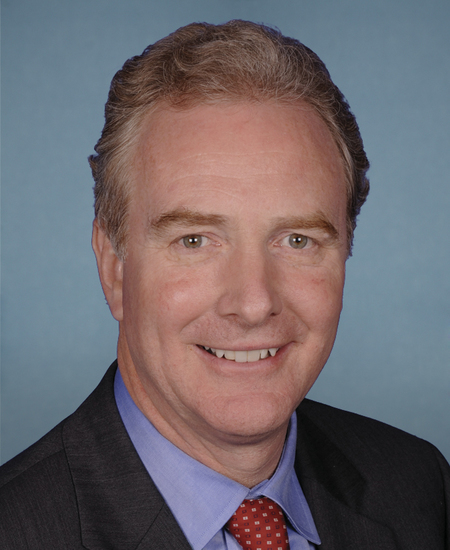
Chris Van Hollen
Chris Van Hollen Senate
D
Strong +
100% 3
Christopher Murphy
Christopher Murphy Senate
D
Strong +
100% 3
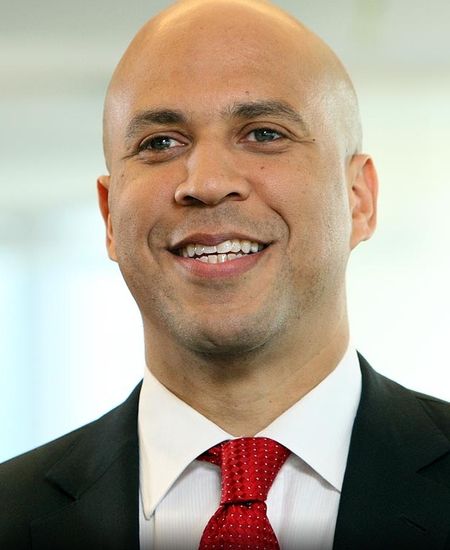
Cory A. Booker
Cory A. Booker Senate
D
Strong +
100% 3
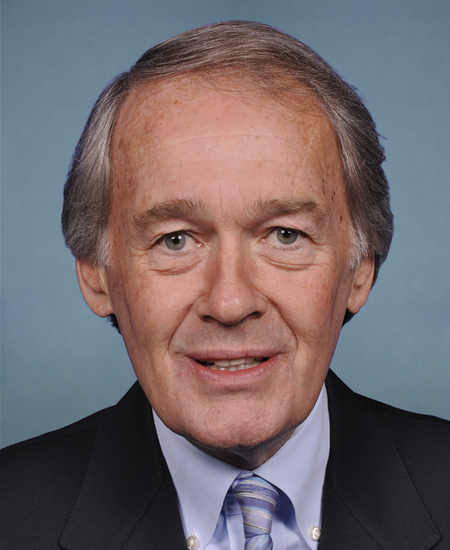
Edward J. Markey
Edward J. Markey Senate
D
Strong +
100% 3
Amy Klobuchar
Amy Klobuchar Senate
D
Strong −
0% 3
Andy Kim
Andy Kim Senate
D
Strong −
0% 3
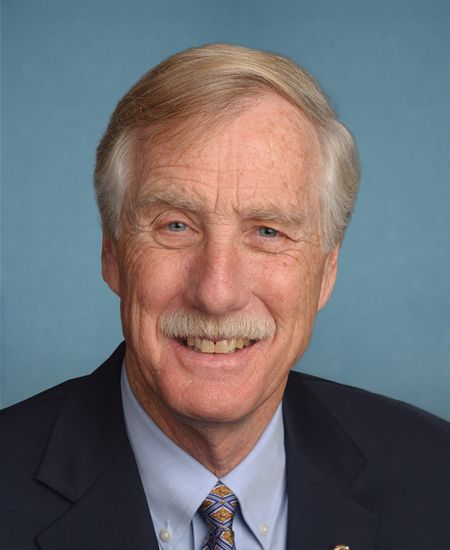
Angus S. King, Jr.
Angus S. King, Jr. Senate
I
Strong −
0% 3
Ashley Moody
Ashley Moody Senate
R
Strong −
0% 3
Ben Ray Luján
Ben Ray Luján Senate
D
Strong −
0% 3
Showing 61–70 of 146 bills

All criminal justice bills

in committee · United States · House Jan 16, 2025

HR 544: To provide a private right of action against the maker of any component of a ghost gun, and any person who facilitated a sale of the ghost gun, for injury or death resulting from the use of the ghost gun.

HR 544 creates a new federal civil lawsuit pathway allowing individuals injured or families of those killed by ghost guns to sue the maker of any component or anyone who facilitated the sale. It directly affects victims, their families, and states/political subdivisions where the injury occurred, targeting manufacturers and sellers of unserialized firearms (defined as ghost guns lacking required serial numbers). The bill establishes a private right of action in U.S. district court for damages, including consequential losses, while including limited defenses for self-defense or police actions responding to imminent threats. This policy change modifies civil liability for ghost gun-related harm without altering criminal law or gun ownership rights.
Sub-Topics Courts Firearms Policing
in committee · United States · House Mar 3, 2025

HR 1811: Judicial Ethics Enforcement Act of 2025

HR 1811, the Judicial Ethics Enforcement Act of 2025, creates an Office of Inspector General (IG) specifically for the federal judicial branch to investigate misconduct by judges and court staff. The IG would conduct audits, investigate alleged violations of judicial ethics rules (excluding Supreme Court decisions' merits), prevent fraud/waste, and report findings to the Chief Justice and Congress. The bill explicitly prohibits the IG from reviewing court rulings, disciplining judges, or investigating matters related to a judge's decision-making. This bill directly affects all federal judges, court employees, and judicial entities like the Judicial Conference, establishing a new oversight mechanism within the courts.
Sub-Topics Courts Judges
in committee · United States · House Jan 28, 2025

HR 780: Alexandra’s Law Act of 2025

HR 780, the Alexandra’s Law Act of 2025, amends the Controlled Substances Act to require courts to advise defendants convicted of drug-related offenses involving synthetic opioids (like fentanyl analogues) that caused death about the lethal risks of illicit drugs. It creates new evidence rules: prior convictions for similar drug offenses involving death can be used to prove a defendant knew the substance contained fentanyl analogues, and court advisements from state cases may be admitted in federal courts. The law directly affects individuals convicted of drug sales or distribution linked to overdose deaths involving these substances. It excludes minors from these evidentiary provisions, focusing on holding accountable those who knowingly distribute dangerous synthetic drugs.
Sub-Topics Courts Drug Policy
in committee · United States · House Sep 2, 2025

HR 5090: HONOR Act

HR 5090, the HONOR Act, amends military law to make it a punishable offense for service members to knowingly share intimate images or AI-generated forgeries of others without consent. It specifically targets nonconsensual distribution of images showing genitals, pubic areas, or sexual conduct (including AI-altered images), whether the person was a minor or not, if done to cause harm or without consent. The bill defines key terms like "intimate visual depiction" and "digital forgery," while exempting lawful law enforcement activities and medical/legal disclosures. This directly affects all U.S. military personnel under the Uniform Code of Military Justice, imposing penalties through court-martial for violations.
in committee · United States · House Jun 26, 2025

HR 4166: Strengthening Protections for Domestic Violence and Stalking Survivors Act of 2025

This bill expands legal protections for domestic violence and stalking survivors by broadening key definitions. It adds current and former dating partners to the definition of "intimate partner" and includes children of dating partners in domestic violence protections. The bill also creates a new federal definition for "misdemeanor crime of stalking," requiring a course of harassment causing fear for specific people (including intimate partners, family, or shared-residence individuals) or their pets/service animals. Convictions under this new definition would trigger firearm restrictions, with specific safeguards for due process in court proceedings. These changes directly affect survivors in dating relationships and their children, strengthening federal protections for vulnerable individuals.
passed · United States · Senate Dec 17, 2025

S 3021: ENFORCE Act

The ENFORCE Act strengthens federal laws against child exploitation by clarifying what constitutes producing child pornography and removing time limits for prosecuting certain crimes involving child sexual abuse material. It adds these offenses to sex offender registration requirements, prohibits reproducing abusive images during legal proceedings, and creates a presumption for detainment before trial for violations. The bill directly affects federal prosecutors, courts handling these cases, sex offenders subject to registration, and victims whose images are involved. Key changes include ensuring evidence remains under court control and allowing victims access to depictions in the same manner as victims of child pornography cases.
in committee · United States · House Feb 9, 2026

HR 7445: Evergreen Community Safety Act of 2026

HR 7445, the Evergreen Community Safety Act of 2026, requires large electronic communication service providers (with 1 million+ users) to disclose customer communications or records to law enforcement within 72 hours of a court order. Courts may extend this deadline in 7-day increments for complex or voluminous data requests. The bill also shortens the deadline for providers to challenge disclosure orders to 48 hours and allows individuals harmed by non-compliance to sue for damages and injunctive relief. This directly affects major tech companies and internet service providers meeting the user threshold, streamlining but tightening data disclosure processes for law enforcement.
in committee · United States · House Jul 23, 2025

HR 4695: Facial Recognition Act of 2025

The Facial Recognition Act of 2025 regulates law enforcement use of facial recognition technology by requiring court orders for most searches of reference photo databases, with limited exceptions for emergencies or specific situations like identifying victims or those in AMBER alerts. The bill mandates annual accuracy and bias testing of facial recognition systems by the National Institute of Standards and Technology, requires removal of photos from arrest databases for certain individuals (like minors or those not charged), and establishes detailed reporting requirements for all facial recognition use. It prohibits using facial recognition for immigration enforcement or to track people's constitutional rights, and creates civil remedies for violations. The bill applies to federal, state, and local law enforcement agencies, with potential funding reductions for states that fail to comply with its requirements.
in committee · United States · House Aug 8, 2025

HR 4946: Epstein Crime Victims Act

HR 4946, the Epstein Crime Victims Act, expands rights for crime victims by requiring prosecutors to notify them about plea bargains, deferred prosecutions, or agreements not to prosecute. It directly affects victims in cases where prosecutors enter such agreements. The bill amends federal law to add "nonprosecution agreement" to notification requirements and creates a new right for victims to sue the government in court if they aren’t notified promptly. This provides victims with a concrete legal remedy when their notification rights are violated. The law applies broadly to all federal criminal cases involving these agreements, not just cases related to Jeffrey Epstein.
in committee · United States · Senate Sep 4, 2025

S 2724: Safe at Home Act

The Safe at Home Act requires federal agencies and courts to accept a designated address from state address confidentiality programs instead of an individual's actual home address. It directly affects participants in these programs - such as victims of domestic violence, witnesses, or others needing safety protections - who use the designated address for all federal interactions. Key provisions include prohibiting federal penalties for using the designated address, mandating agencies to update regulations within one year, and establishing strict procedures for disclosing physical addresses only in limited circumstances (e.g., court-ordered disclosure for criminal investigations). The law ensures physical addresses acquired through these procedures remain confidential under the Freedom of Information Act, with specific safeguards for how they can be used.
Showing 61 to 70 of 146 bills
Previous 1 6 7 8 15 Next