Issue · Criminal Justice

Criminal Justice

Every criminal justice bill, vote, and legislator stance in United States, automatically classified by Maddy, our AI policy reader.

Total bills
985
119th Congress
Top supporter
Alan Armstrong
86% support rate
Top opponent
Amy Klobuchar
13% support rate
Ranked legislators
10
5 support · 5 oppose
Key legislators

Who's moving criminal justice in United States

Legislators moving criminal justice in United States
Legislator Party Stance Support rate Decisive votes
AA
Alan Armstrong Senate
R
Strong +
86% 28
Mitch McConnell
Mitch McConnell Senate
R
Strong +
84% 31
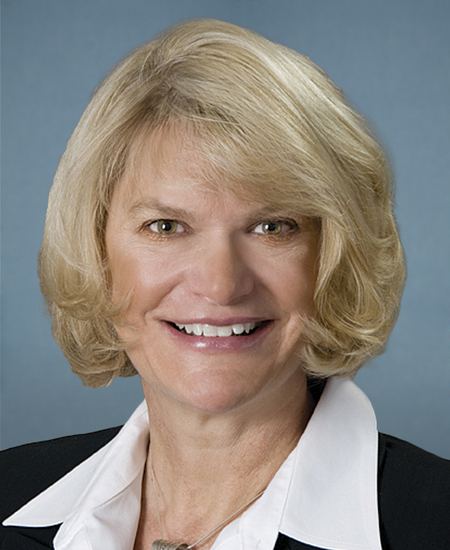
Cynthia M. Lummis
Cynthia M. Lummis Senate
R
Strong +
80% 30
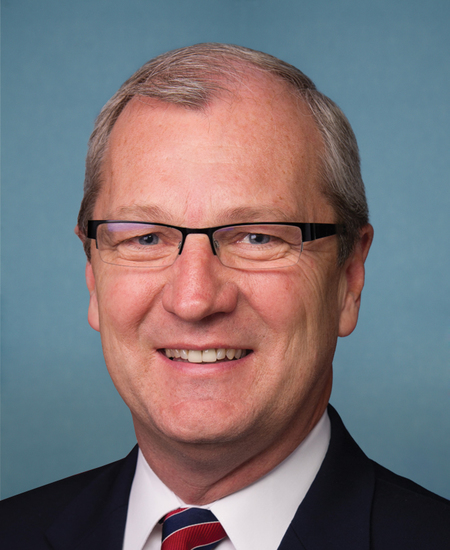
Kevin Cramer
Kevin Cramer Senate
R
Strong +
80% 30
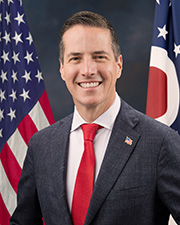
Bernie Moreno
Bernie Moreno Senate
R
Support
77% 31
Amy Klobuchar
Amy Klobuchar Senate
D
Strong −
13% 31
Catherine Cortez Masto
Catherine Cortez Masto Senate
D
Strong −
13% 31
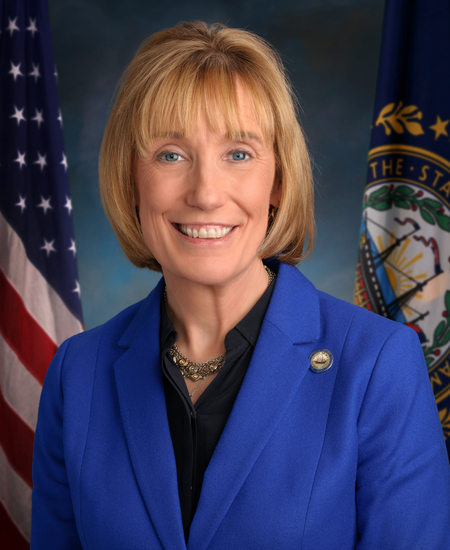
Margaret Wood Hassan
Margaret Wood Hassan Senate
D
Strong −
13% 31
Andy Kim
Andy Kim Senate
D
Strong −
16% 31
Angus S. King, Jr.
Angus S. King, Jr. Senate
I
Strong −
16% 31
Showing 541–550 of 985 bills

All criminal justice bills

passed · United States · House Jan 13, 2026

HR 6715: Child Predators Accountability Act

This bill amends U.S. Code sections 2251(a), 2260(a), and 2256 to clarify and strengthen laws against child sexual exploitation. It explicitly adds "or be depicted engaging in" to definitions of sexual exploitation and sexually explicit depictions involving minors, making it a crime to distribute material showing minors in such conduct - even if the minor did not physically participate. The law directly affects prosecutors, defendants accused of distributing child sexual abuse material, and minors depicted in such images. The key change ensures that intentionally including minors in sexually explicit visual depictions (via photos or videos) is prosecutable under existing federal law.
Sub-Topics Human Trafficking
in committee · United States · House Jun 12, 2025

HR 3968: School Violence Prevention Act

HR 3968, the School Violence Prevention Act, creates a federal grant program to fund school-based violence prevention programs in communities with severe gun violence. It authorizes $25 million annually (2025-2031) for grants to partnerships between state/local education agencies and community nonprofits in areas experiencing high homicide rates (e.g., 35+ homicides annually) or double the national violent crime arrest rate for youth. Grants must support evidence-based programs for K-12 students - including trauma-informed counseling, conflict resolution skills, mental health access, and community engagement - while requiring annual data collection on outcomes like graduation rates. All programs must be evaluated by grantees and independent researchers, with reports shared publicly and submitted to Congress every three years.
in committee · United States · House Aug 5, 2025

HR 4882: Gun Safety Board and Research Act

The Gun Safety Board and Research Act establishes a 22-member board within the Department of Health and Human Services to conduct and fund research on firearm violence reduction. The board must create a research program using at least half of its $5 million annual funding (rising to $25 million yearly), focusing on topics like domestic violence, suicide prevention, mass shootings, and health care costs, while publishing annual reports with policy recommendations and research gaps. It directly affects public health researchers, law enforcement, victims' advocates, and policymakers by generating evidence-based insights for federal, state, and local action. The board includes diverse expertise - from trauma surgery to firearm manufacturing - and must evaluate existing laws' effectiveness, avoiding advocacy while detailing concrete research priorities.
in committee · United States · House Dec 11, 2025

HR 6625: RISE from Trauma Act

The RISE from Trauma Act establishes new federal grant programs to support community-based approaches for preventing and mitigating trauma, particularly for children and youth who have experienced or are at risk of experiencing trauma. It authorizes $600 million annually (2026-2033) for local coordinating bodies that bring together representatives from health, education, criminal justice, and community organizations to develop trauma-informed strategies. The bill also creates hospital-based intervention programs to reduce readmissions for trauma survivors, reauthorizes school-based trauma support services, and funds training for front-line providers to better identify and respond to trauma. The legislation focuses on evidence-based approaches to build resilience and address trauma in communities facing high rates of violence, substance use, and other trauma-inducing conditions.
Sub-Topics Hospitals
in committee · United States · House Jun 10, 2025

HR 18: Bipartisan Background Checks Act of 2025

This bill requires private firearm transfers between individuals to go through a licensed dealer who must conduct a background check. It applies to most private sales but includes exceptions for transfers between family members (like parents and children), law enforcement, emergencies preventing harm, and temporary loans at shooting ranges or for hunting. Dealers must provide background check notices in both English and Spanish. The law aims to prevent prohibited individuals from obtaining firearms through private transactions while maintaining existing state authority on firearm laws.
in committee · United States · Senate May 20, 2025

S 1563: Retired Law Enforcement Officers Continuing Service Act

This bill creates a federal grant program allowing state, local, tribal, and territorial law enforcement agencies to hire retired officers for specific non-enforcement tasks like crime scene analysis, forensics, cyber investigations, and reviewing evidence. Agencies can use funds to train civilian staff and have retired officers perform these defined tasks, such as analyzing camera footage or providing IT expertise. The program includes accountability measures requiring annual audits by the Justice Department Inspector General, mandatory exclusion of agencies with unresolved audit findings for two years, and priority for applicants with clean audit histories. It directly affects law enforcement agencies seeking to leverage retired officers' skills while preventing misuse of grant funds.
in committee · United States · House Apr 8, 2025

HR 2752: Ensuring Safer Schools Act of 2025

HR 2752, the Ensuring Safer Schools Act of 2025, amends federal grant programs to prioritize hiring veterans and retired law enforcement officers as school resource officers (SROs). The bill requires COPS grants to give preferential consideration for applications focused on recruiting these individuals, adds annual mental health screenings and training for SROs, and defines "veteran or retired law enforcement officer" for grant eligibility. It also mandates coordination between the Department of Veterans Affairs and schools to connect veterans with SRO roles. This directly affects schools receiving COPS grants, veterans seeking SRO positions, and local law enforcement agencies partnering with schools. The law changes how federal funds are administered for school safety roles, not school policies.
in committee · United States · Senate Feb 10, 2025

S 500: CAREER Act of 2025

This bill reauthorizes and updates the CAREER Act, focusing on supporting individuals with substance use disorders through employment and recovery services. It increases annual funding for treatment, recovery, and workforce support grants from $5 million to $12 million (2026-2030), prioritizing areas with the highest 2018-2022 drug overdose deaths, unemployment, and low job market participation. The bill allows up to 5% of grant funds for transportation to work, job training, or recovery services, and extends the Recovery Housing Pilot Program through 2030. It directly affects communities and individuals impacted by substance use disorders by linking federal funding to measurable local needs.
in committee · United States · House Apr 1, 2025

HR 2564: Protect Victims of Digital Exploitation and Manipulation Act of 2025

HR 2564, the Protect Victims of Digital Exploitation and Manipulation Act of 2025, makes it a federal crime to create or distribute AI-generated intimate images of identifiable people without their consent. The bill specifically targets digital forgeries (like AI-altered images appearing authentic) depicting private body parts, sexual acts, or bodily fluids, affecting victims of non-consensual deepfakes. Key provisions include criminal penalties of up to 5 years in prison for reckless distribution, while exempting law enforcement, medical use, and reporting unlawful content. It also limits liability for platforms that don’t recklessly distribute such content, defining "identifiable individual" as someone recognizable by face, features, or connected information. The law applies to U.S. citizens involved in the offense or as victims.
in committee · United States · Senate Jul 8, 2025

S 2212: VISIBLE Act

S 2212, the VISIBLE Act, requires immigration enforcement officers to visibly display their agency name and either their last name or unique badge number during all public-facing immigration enforcement activities in the United States. This applies to officers from U.S. Customs and Border Protection, U.S. Immigration and Customs Enforcement, and other authorized personnel during actions like stops, arrests, raids, or warrant service. The bill mandates that this identification be clearly legible from 25 feet away on outermost clothing, prohibits non-medical face coverings that obscure it (except in covert operations or hazardous conditions), and requires annual reports to Congress on compliance and disciplinary actions. It aims to increase transparency during immigration enforcement interactions where the public may be present.
Showing 541 to 550 of 985 bills
Previous 1 … 54 55 56 … 99 Next