Issue · Criminal Justice

Criminal Justice

Every criminal justice bill, vote, and legislator stance in United States, automatically classified by Maddy, our AI policy reader.

Total bills
985
119th Congress
Top supporter
Alan Armstrong
86% support rate
Top opponent
Amy Klobuchar
13% support rate
Ranked legislators
10
5 support · 5 oppose
Key legislators

Who's moving criminal justice in United States

Legislators moving criminal justice in United States
Legislator Party Stance Support rate Decisive votes
AA
Alan Armstrong Senate
R
Strong +
86% 28
Mitch McConnell
Mitch McConnell Senate
R
Strong +
84% 31
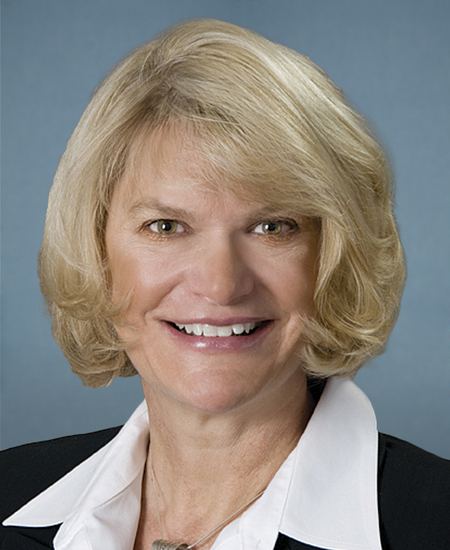
Cynthia M. Lummis
Cynthia M. Lummis Senate
R
Strong +
80% 30
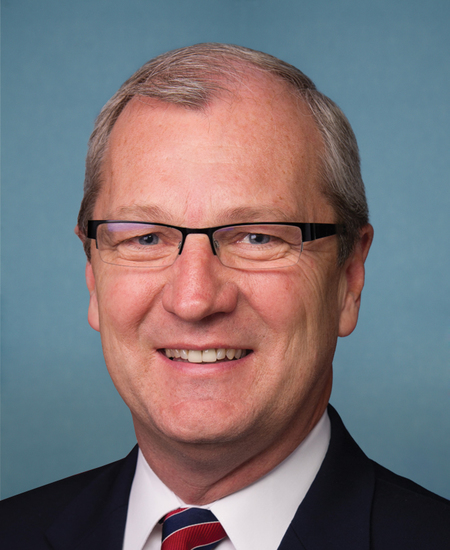
Kevin Cramer
Kevin Cramer Senate
R
Strong +
80% 30
Bernie Moreno
Bernie Moreno Senate
R
Support
77% 31
Amy Klobuchar
Amy Klobuchar Senate
D
Strong −
13% 31
Catherine Cortez Masto
Catherine Cortez Masto Senate
D
Strong −
13% 31
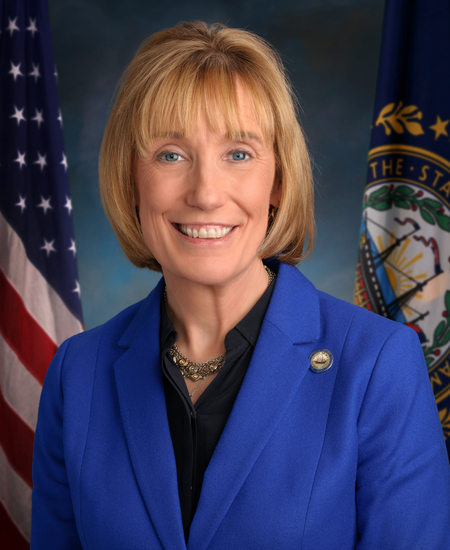
Margaret Wood Hassan
Margaret Wood Hassan Senate
D
Strong −
13% 31
Andy Kim
Andy Kim Senate
D
Strong −
16% 31
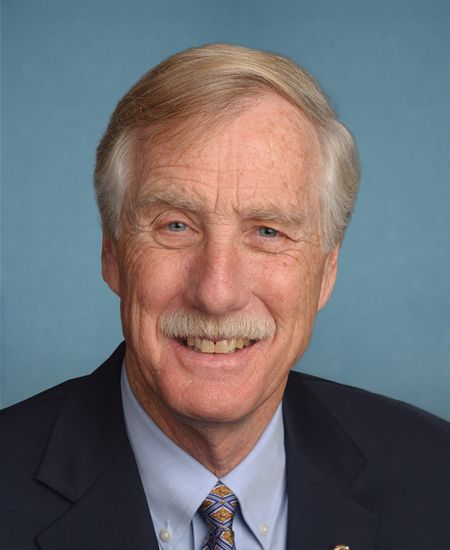
Angus S. King, Jr.
Angus S. King, Jr. Senate
I
Strong −
16% 31
Showing 521–530 of 985 bills

All criminal justice bills

in committee · United States · House Feb 21, 2025

HR 1456: Gun Trafficker Detection Act

HR 1456, the Gun Trafficker Detection Act, requires private firearm owners (non-licensed individuals) to report lost or stolen firearms to the Attorney General within 48 hours via a new web portal. It imposes civil penalties of up to $1,000 for first violations and $5,000 for repeat violations, and prohibits individuals with two or three penalty assessments from receiving firearms for 1 year or 5 years, respectively. The bill mandates law enforcement agencies to use 5% of crime grant funds to study lost/stolen firearm data collection and updates the National Instant Background Check System to include these new restrictions. It directly affects private gun owners and law enforcement agencies, focusing on reporting compliance and background check adjustments.
in committee · United States · House Nov 7, 2025

HR 5941: Restoring Access for Detainees Act

HR 5941, the Restoring Access for Detainees Act, requires U.S. Immigration and Customs Enforcement (ICE) to provide immigration detainees in DHS custody with specific communication access. It mandates 200 free monthly minutes for general outgoing calls, unlimited free minutes for contacting legal counsel, courts, consulates, or oversight offices, and special initial contact provisions during arrival or transfer. Detention facilities must allow uninterrupted legal communication time, cannot restrict minutes for legal calls, and must provide private spaces for confidential legal discussions. The bill also requires facilities to establish clear, publicly available communication policies that comply with these requirements.
in committee · United States · House Jun 25, 2025

HR 4143: 3D Printed Gun Safety Act of 2025

HR 4143, the 3D Printed Gun Safety Act of 2025, prohibits the online distribution of digital instructions (like 3D printer files) that can automatically create firearms or firearm parts. It directly affects individuals or entities sharing such code over the internet, not people using 3D printers to make guns. The law aims to prevent "ghost guns" made without serial numbers - making them untraceable by law enforcement, as seen in cases like the 2023 DC police seizure of 407 untraceable firearms. By banning the spread of these digital schematics, the bill targets a specific gap in firearm regulation.
in committee · United States · House Feb 27, 2025

HR 1751: Stop Electronic Stalking Act of 2025

HR 1751, the Stop Electronic Stalking Act of 2025, amends federal stalking law to explicitly include unauthorized use of geotracking devices. It adds "uses an unauthorized geotracking device" to the definition of stalking under Title 18, U.S. Code, and defines two key terms: a "geotracking device" as any tool that remotely tracks a person's location, and "unauthorized" as use without the person's consent or after consent was revoked. This bill directly affects individuals who use such devices to track others without permission, making this specific conduct a federal stalking offense. The law does not create new penalties but expands existing stalking provisions to cover digital location tracking. It focuses on clarifying the legal definition of stalking related to modern technology.
Sub-Topics Domestic Violence
in committee · United States · House Jul 15, 2026

HR 7184: PRESS Act

HR 7184, the PRESS Act, targets equipment used to manufacture illegal drugs by making it unlawful to sell specific items like tableting machines, gelatin capsules, or related chemicals when the seller knows the equipment will be used to produce controlled substances for unlawful U.S. importation. It directly affects manufacturers and distributors of these drug-making tools who have knowledge or reasonable cause to believe their products will facilitate illegal drug trafficking. The bill adds new prohibitions to the Controlled Substances Act and increases potential prison sentences for violations, with penalties reaching up to 20 years for major offenses involving large quantities of equipment or chemicals. These changes aim to disrupt the supply chain for illicit synthetic drugs by holding equipment sellers accountable for their intended use.
in committee · United States · House Nov 7, 2025

HR 5973: Stop Excessive Force in Immigration Act of 2025

This bill, HR 5973, requires federal immigration enforcement personnel to follow strict limits on force use, including proportional application, mandatory de-escalation efforts, and prohibitions on equipment like flash bangs or rubber bullets except for specific public safety threats. It mandates body-worn and vehicle cameras for all operations, with footage retained for one year (three years for force incidents or complaints), and grants affected individuals the right to inspect recordings. The law also requires annual training on force policies, First Amendment compliance, and racial bias avoidance, while demanding detailed quarterly reports to Congress on force usage, assaults on agents, and equipment approvals. These provisions directly affect all federal immigration agents conducting enforcement actions, aiming to increase transparency and accountability during operations.
Sub-Topics Policing
in committee · United States · House Dec 11, 2025

HR 6548: DHS Suicide Prevention and Resiliency for Law Enforcement Act

This bill establishes the Law Enforcement Mental Health and Wellness Program within the Department of Homeland Security (DHS) to address suicide prevention and mental health support for DHS law enforcement personnel. It directly affects officers and agents in DHS components like U.S. Customs and Border Protection, Immigration and Customs Enforcement, the Secret Service, and Transportation Security Administration. Key provisions require confidential data collection on mental health and suicides, mandatory annual suicide prevention training for officers (including during hiring, promotions, and transitions), peer support programs, and policies prohibiting retaliation for seeking mental health assistance. The program also mandates annual reports to Congress and requires DHS components to improve access to confidential counseling resources and support for officers’ families.
in committee · United States · House Apr 17, 2025

HR 2948: Safer Neighborhoods Gun Buyback Act of 2025

HR 2948, the Safer Neighborhoods Gun Buyback Act of 2025, authorizes $360 million annually from 2025-2027 to fund gun buyback programs across the country. The bill creates a grant program for states, local governments, tribal governments, and eligible gun dealers to collect firearms from individuals using "smart prepaid cards" that cannot be used to purchase guns. Participants would pay 125% of a gun's market value (with possible increases for modified weapons) and must destroy all collected firearms and ammunition within 30 days. The program requires criminal background checks on all collected weapons and prohibits reselling any guns obtained through the initiative, with a new federal criminal provision making it illegal to use these cards for firearm transactions.
Sub-Topics Firearms
in committee · United States · House Mar 21, 2025

HR 2281: Strengthening Job Corps Act of 2025

The Strengthening Job Corps Act of 2025 amends the Workforce Innovation and Opportunity Act to update the Job Corps program, which provides job training, education, and residential services to young adults aged 16-24 (with age limits extended to 28 for individuals with disabilities or justice involvement). Key provisions include requiring Job Corps campus operators to consider student outcomes like employment rates, educational attainment, and earnings when selecting operators, and establishing new performance metrics for evaluating campus effectiveness. The bill modifies recruitment and screening processes, updates funding levels for 2026-2031 with specific allocations for campus construction and rehabilitation, and expands eligibility to include opportunity youth and low-income individuals in qualified opportunity zones. These changes aim to improve program outcomes for young people seeking job training and education opportunities.
in committee · United States · House Feb 12, 2025

HR 1274: PROTECT Our Children Reauthorization Act of 2025

HR 1274, the PROTECT Our Children Reauthorization Act of 2025, reauthorizes and updates key provisions of the 2008 PROTECT Our Children Act to strengthen efforts against child exploitation. The bill requires the Department of Justice to update its National Strategy for Child Exploitation Prevention and Interdiction every four years instead of every two years, with detailed requirements for analyzing trends, assessing resources, and reviewing Internet Crimes Against Children (ICAC) task force effectiveness. It establishes annual funding levels of $70 million for 2026, $80 million for 2027, and $90 million for 2028 for the ICAC Task Force Program, which directly affects federal, state, local, tribal, and military law enforcement agencies working on child exploitation cases. The legislation also includes limited liability protections for ICAC task forces and their personnel when making prioritization decisions about child exploitation cases. These changes aim to improve coordination, resource allocation, and effectiveness in combating child exploitation crimes across multiple jurisdictions.
Showing 521 to 530 of 985 bills
Previous 1 … 52 53 54 … 99 Next