Issue · Criminal Justice

Criminal Justice (Corrections)

Every criminal justice bill, vote, and legislator stance in United States, automatically classified by Maddy, our AI policy reader.

Total bills
110
119th Congress
Top supporter
Adam B. Schiff
100% support rate
Top opponent
Frank J. Mrvan
0% support rate
Ranked legislators
10
5 support · 5 oppose
Key legislators

Who's moving corrections in United States

Legislators moving corrections in United States
Legislator Party Stance Support rate Decisive votes
Adam B. Schiff
Adam B. Schiff Senate
D
Strong +
100% 3
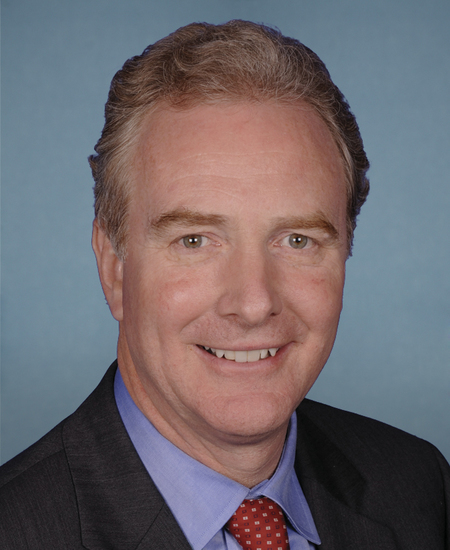
Chris Van Hollen
Chris Van Hollen Senate
D
Strong +
100% 3
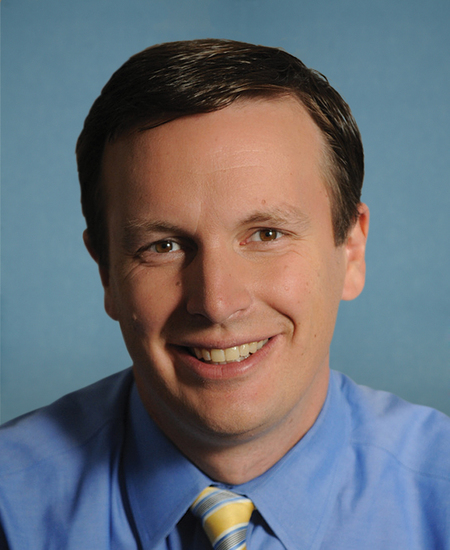
Christopher Murphy
Christopher Murphy Senate
D
Strong +
100% 3
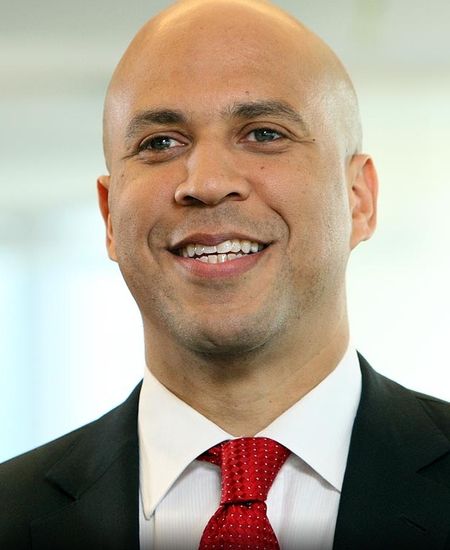
Cory A. Booker
Cory A. Booker Senate
D
Strong +
100% 3
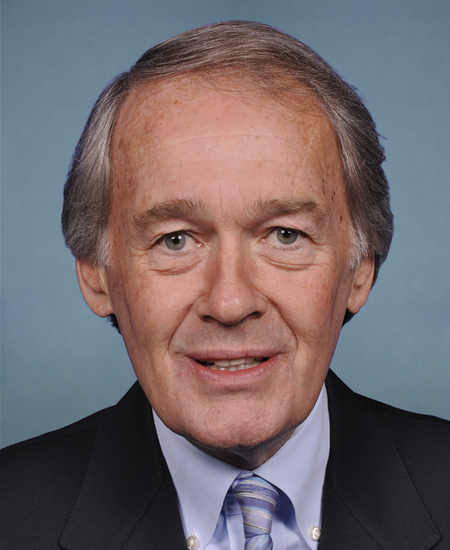
Edward J. Markey
Edward J. Markey Senate
D
Strong +
100% 3
Frank J. Mrvan
Frank J. Mrvan House · District 1
D
Strong −
0% 5
Amy Klobuchar
Amy Klobuchar Senate
D
Strong −
0% 3
Andy Kim
Andy Kim Senate
D
Strong −
0% 3
Angus S. King, Jr.
Angus S. King, Jr. Senate
I
Strong −
0% 3
Ashley Moody
Ashley Moody Senate
R
Strong −
0% 3
Showing 41–50 of 110 bills

All criminal justice bills

in committee · United States · House Feb 11, 2025

HR 1205: Safe Shelters Act of 2025

The Safe Shelters Act of 2025 requires sex offenders mandated to register on the National Sex Offender Registry (under the Adam Walsh Act) to notify shelter staff if they enter a regular emergency shelter during a disaster. It prohibits these offenders from using undesignated shelters without immediate notification, with penalties including fines or up to 5 years in prison for noncompliance. The bill directs FEMA to designate specific federal buildings or prisons as shelters *only* for these offenders during disasters, requiring agencies to share lists of designated shelters with all shelter operators. This directly affects registered sex offenders and emergency shelter managers, creating a new system to separate shelter access during crises. The law takes effect 180 days after enactment.
Sub-Topics Corrections Tags Emergency Management
in committee · United States · House Jul 17, 2025

HR 4472: Stop COYOTES Act

The Stop COYOTES Act (HR 4472) increases penalties for certain crimes involving minors by adding up to 10 years in prison for offenders who commit felonies against children within 1,000 feet of schools, colleges, or youth facilities like playgrounds. It also raises maximum fines for fentanyl-related drug offenses under the Controlled Substances Act and requires federal agencies to share border crime data - including human trafficking, smuggling, and drug trafficking - with state and local law enforcement near U.S. borders. This bill directly affects individuals convicted of these specific offenses and mandates regular reports to Congress on border-related criminal activity.
in committee · United States · Senate Jan 16, 2025

S 115: GATE CRASHERS Act

S 115, the GATE CRASHERS Act, makes it a federal crime to enter clearly marked restricted or closed Department of Defense (DOD) property without authorization. The bill creates new penalties under Title 18: up to 180 days in jail for a first offense, up to 3 years for a second offense, and up to 10 years for a third or subsequent offense. It directly affects individuals who trespass on DOD facilities despite clear signage restricting access. The law applies to all property under DOD jurisdiction that is marked as closed or restricted, with penalties escalating for repeat violations. This bill does not alter existing DOD security protocols but establishes specific criminal penalties for unauthorized access.
Sub-Topics Corrections
in committee · United States · House Jun 13, 2025

HR 4014: Preventing Lethal Agricultural and National Threats (PLANT) Act

The PLANT Act makes it a federal crime to import high-risk agricultural pathogens - such as harmful bacteria, viruses, or pests - without a U.S. Department of Agriculture permit. It directly affects importers, including businesses or individuals bringing in biological agents that could damage U.S. crops, livestock, or ecosystems. Violations carry up to 10 years in prison, with penalties increasing to 20 years if the offense involves concealing the pathogen’s origin, foreign government involvement, or over $1 million in economic harm. The Secretary of Agriculture will define "high-risk" pathogens through future regulations.
Sub-Topics Corrections
passed · United States · House Jan 13, 2026

HR 6732: Coercion and Sexual Abuse Free Environment Act

This bill creates new federal criminal penalties for intentionally coercing minors (under 18) through interstate means (like mail or online platforms) to engage in harmful acts. It specifically prohibits forcing minors to commit self-harm (including suicide attempts), animal cruelty, abusive nonsexual conduct, sexually explicit acts, or obscene speech. Violations carry fines and prison terms of up to 10 years, with harsher penalties (up to 20 years or life) if serious injury or death results. The law directly protects minors from coercion by perpetrators using interstate communication or commerce, with enforcement under existing federal criminal code.
in committee · United States · House Jan 22, 2025

HR 629: Ending Chemical Abortions Act of 2025

HR 629, the "Ending Chemical Abortions Act of 2025," would criminalize the prescription, distribution, or sale of drugs used for chemical abortions (like mifepristone and misoprostol) under federal law, with penalties up to 25 years in prison. It directly affects healthcare providers who prescribe or dispense these drugs, while exempting contraceptive use before pregnancy, treatment of miscarriages, and life-threatening pregnancy conditions certified by a physician. The bill defines "abortion" as intentionally ending a pregnancy, excludes women from prosecution, and redefines "unborn child" to begin at fertilization. This legislation would replace existing federal abortion-related provisions and apply nationwide, making chemical abortion drugs subject to new criminal penalties.
in committee · United States · House Jun 13, 2025

HR 4015: Safe and Open Streets Act

HR 4015, the Safe and Open Streets Act, amends federal law to make it a crime to intentionally block public roads in a way that disrupts commerce. It targets individuals who obstruct, delay, or affect the movement of goods or services on public roads, with penalties including fines or up to five years in prison. The bill directly affects anyone who blocks roads during protests, demonstrations, or other actions that interfere with commercial traffic. This law updates existing federal commerce disruption statutes (18 U.S.C. §1951) to specifically address roadblocks, removing outdated language about "threats or violence" from related provisions.
Sub-Topics Corrections
in committee · United States · Senate Jan 8, 2025

S 34: Justice for 9/11 Act

S 34, the Justice for 9/11 Act, directly affects Khalid Shaikh Mohammad, Walid Muhammad Salih Mubarak Bin ‘Attash, and Mustafa Ahmed Adam al Hawsawi - three individuals detained at Guantanamo Bay for their alleged roles in the 9/11 attacks. The bill mandates that their plea agreements and judgments cannot block military trials under Chapter 47A of Title 10 for the 9/11 attacks, makes the death penalty available in such trials, and requires them to remain in solitary confinement at Guantanamo Bay under strict conditions. Specifically, it prohibits contact with foreign nationals, restricts psychological treatment to only what medical authorities at Guantanamo authorize, and bans their transfer to the continental U.S. or any other country. The law overrides prior legal barriers to ensure these individuals face trial under military law with these specific confinement and sentencing provisions.
Sub-Topics Corrections Sentencing
in committee · United States · House Feb 11, 2025

HR 1203: Stop VOYEURS Act of 2025

HR 1203, the Stop VOYEURS Act of 2025, strengthens federal criminal penalties for secret recording of people in private settings without consent. It increases maximum prison sentences for video voyeurism from one year to five years and expands federal jurisdiction by defining specific circumstances where such acts become federal crimes. These include using interstate commerce for payments, transmitting recordings via computer/email, using equipment that crossed state lines, or conducting the act in federal territories. The law directly affects individuals who secretly record others without consent in private situations, making these acts federal offenses when connected to interstate activity. This change aims to address the growing prevalence of non-consensual recordings by broadening enforcement scope.
Sub-Topics Corrections
signed · United States · Senate Jul 16, 2025

S 331: HALT Fentanyl Act

Halt All Lethal Trafficking of Fentanyl Act or the HALT Fentanyl Act This act permanently places fentanyl-related substances as a class into schedule I of the Controlled Substances Act. A schedule I controlled substance is a drug, substance, or chemical that has a high potential for abuse; has no currently accepted medical value; and is subject to regulatory controls and administrative, civil, and criminal penalties under the Controlled Substances Act. Under the act, offenses involving fentanyl-related substances are triggered by the same quantity thresholds and subject to the same penalties as offenses involving fentanyl analogues (e.g., offenses involving 100 grams or more trigger a 10-year mandatory minimum prison term). Additionally, the act establishes a new, alternative registration process for certain schedule I research. The act also makes several other changes to registration requirements for conducting research with controlled substances, including permitting a single registration for related research sites in certain circumstances, waiving the requirement for a new inspection in certain situations, and allowing a registered researcher to perform certain manufacturing activities with small quantities of a substance without obtaining a manufacturing registration. Finally, the act expresses the sense that Congress agrees with the interpretation of the Controlled Substances Act in United States v. McCray , a 2018 case decided by the U.S. District Court for the Western District of New York. In that case, the court held that butyryl fentanyl, a controlled substance, can be considered an analogue of fentanyl even though, under the Controlled Substances Act, the term controlled substance analogue specifically excludes a controlled substance.
Showing 41 to 50 of 110 bills
Previous 1 … 4 5 6 … 11 Next