Issue · Criminal Justice

Criminal Justice (Law Enforcement)

Every criminal justice bill, vote, and legislator stance in United States, automatically classified by Maddy, our AI policy reader.

Total bills
318
119th Congress
Top supporter
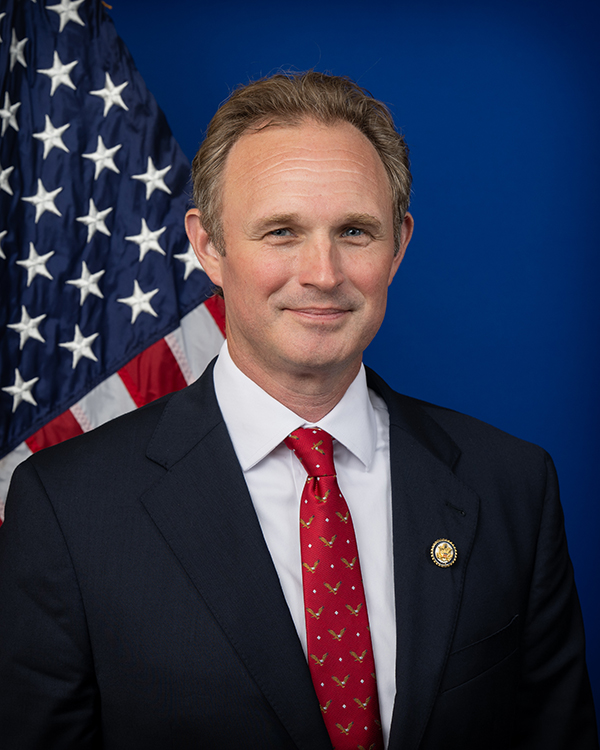
James Gallagher
100% support rate
Top opponent
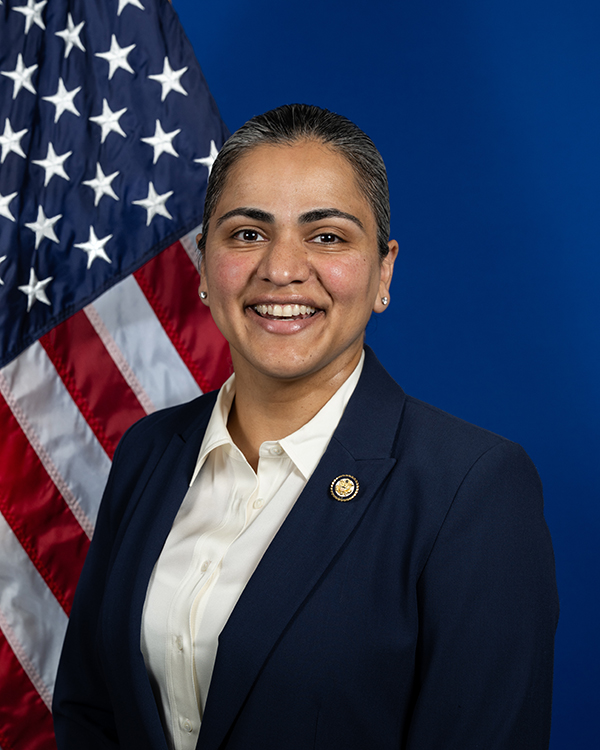
Aisha Wahab
0% support rate
Ranked legislators
10
5 support · 5 oppose
Key legislators

Who's moving law enforcement in United States

Legislators moving law enforcement in United States
Legislator Party Stance Support rate Decisive votes
James Gallagher
James Gallagher House · District 1
R
Strong +
100% 3
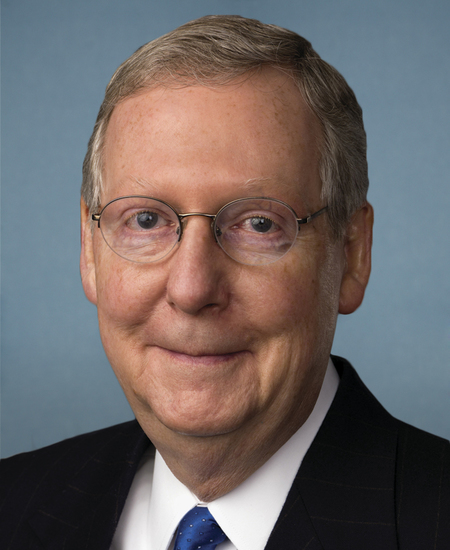
Mitch McConnell
Mitch McConnell Senate
R
Strong +
93% 28
AA
Alan Armstrong Senate
R
Strong +
86% 28
Bernie Moreno
Bernie Moreno Senate
R
Strong +
86% 28
Bill Hagerty
Bill Hagerty Senate
R
Strong +
86% 28
Aisha Wahab
Aisha Wahab House · District 14
D
Strong −
0% 3
Everton Blair Jr.
Everton Blair Jr. House · District 13
D
Strong −
0% 3
Dave Min
Dave Min House · District 47
D
Strong −
13% 15
Marcy Kaptur
Marcy Kaptur House · District 9
D
Strong −
13% 15
Amy Klobuchar
Amy Klobuchar Senate
D
Strong −
14% 28
Showing 271–280 of 318 bills

All criminal justice bills

in committee · United States · House May 29, 2025

HR 3651: Protecting Our Protesters Act of 2025

This bill amends federal law to clarify that law enforcement officers violating protesters' civil rights - including using excessive force during protest responses - can be prosecuted under Section 242 of Title 18. It directly affects law enforcement officers and protesters by explicitly including protest-related force in the definition of "deprivation of rights under color of law." The key provision adds "including the use of force during a response to a protest" to the statute, making it clearer that such actions violate federal civil rights protections. This changes how existing civil rights laws apply to protest scenarios, without altering penalties or creating new requirements.
Sub-Topics Civil Rights Law Enforcement Policing Tags Civil Liberties
in committee · United States · House Feb 27, 2025

HR 1726: Project Safe Neighborhoods Reauthorization Act of 2025

This bill reauthorizes the Project Safe Neighborhoods program through fiscal years 2026-2030, extending funding for a nationwide initiative that helps local law enforcement reduce violent crime. It allows agencies to use funds for hiring crime analysts, covering overtime for officers and support staff, and purchasing technology to aid crime reduction efforts. The bill also requires the Attorney General to submit annual reports to Congress detailing how funds are spent, community outreach activities, and specific violent crime statistics (like murder and assault) in each program area. The program directly affects law enforcement agencies in all 94 federal judicial districts across all 50 states and territories.
in committee · United States · House Oct 31, 2025

HR 5901: BCRA of 2025

This bill requires states receiving certain federal law enforcement funds to submit quarterly, anonymous reports to the Attorney General about pregnant individuals and births in custody. It mandates data on pregnancy testing, prenatal care, birth outcomes, restraint use (including during labor), postpartum care, and restrictive housing for incarcerated pregnant people. States failing to comply face up to a 10% reduction in allocated federal funds. The reports will be publicly published, and the Attorney General must conduct a study to analyze the data and improve care standards. The bill affects all states with correctional facilities (including jails, prisons, and boot camps) that receive funding under the specified federal program.
Sub-Topics Law Enforcement
in committee · United States · House May 14, 2025

HR 3408: Pathways to Policing Act

HR 3408, the Pathways to Policing Act, authorizes $50 million annually from 2026 to 2030 to fund grant programs aimed at increasing diversity in law enforcement. It provides grants to states, local governments, and police agencies to support two key areas: up to 50% of funds for marketing/recruitment campaigns targeting underrepresented communities and nontraditional candidates, and up to 50% for "Pathways to Policing" programs that help new candidates overcome education barriers through financial support during training. These programs specifically assist individuals with no prior law enforcement experience who face obstacles to entering the field. The bill also directs the federal government to create nationwide recruitment campaigns and resources for local agencies, with a focus on recruiting officers who live in or will serve the communities they protect.
passed · United States · Senate Oct 7, 2025

SRES 441: A resolution designating the week of October 5, 2025, through October 11, 2025, as "National Community Policing Week".

This resolution designates the week of October 5-11, 2025, as "National Community Policing Week" to recognize the role of community policing in building trust between law enforcement and communities. It does not create new laws or allocate funds; instead, it formally acknowledges community policing as a strategy for improving public safety and relationships. The resolution encourages communities, law enforcement agencies, and officials to focus on strengthening trust and collaboration through community policing efforts. It is a symbolic gesture with no direct impact on policy or affected individuals.
in committee · United States · Senate Jun 5, 2025

S 1975: Dark Web Interdiction Act of 2025

The Dark Web Interdiction Act of 2025 creates a new federal task force within the FBI to target drug trafficking and illegal marketplaces operating on the dark web. It directly affects law enforcement agencies (including the FBI, DEA, and Homeland Security) by requiring them to investigate, disrupt, and dismantle dark web marketplaces selling drugs, weapons, and stolen data. Key provisions include establishing the Joint Criminal Opioid and Darknet Enforcement Task Force, mandating specialized training for investigators on dark web evidence collection, and requiring annual reports on task force activities and virtual currency use in illicit transactions. The bill amends the Controlled Substances Act to explicitly prohibit distributing controlled substances via the dark web, with enhanced penalties for violations.
in committee · United States · House May 24, 2025

HR 3598: Deescalation Drone Pilot Program Act of 2025

HR 3598, the Deescalation Drone Pilot Program Act of 2025, establishes a federal pilot program to test nonlethal drones for law enforcement during active shooter events. The program, managed by the FAA, will review nonlethal devices (like sound emitters or cameras) for drones, develop training and safety protocols, and assess effectiveness in indoor scenarios to increase officer safety. It requires drones to be manufactured in the U.S. and mandates a report to Congress within 3 months of the pilot's conclusion, followed by rulemaking to create a formal approval process for law enforcement use. The bill directly affects Federal, State, local, and Tribal law enforcement agencies responding to active shooter events as defined by the legislation.
Sub-Topics Law Enforcement
in committee · United States · Senate May 22, 2025

S 1914: Andrew Kearse Accountability for Denial of Medical Care Act of 2025

This bill requires federal law enforcement officers, Bureau of Prisons staff, and U.S. Marshals to immediately obtain or provide medical care when someone in federal custody shows medical distress (like breathing difficulties). It makes it a federal offense for covered officials to negligently fail to act, punishable by fines, up to one year in prison, or both. The bill mandates Inspector General investigations into such failures that cause harm and establishes confidential complaint processes. It also requires agencies to train covered officials on responding to medical distress in custody. The law directly affects individuals in federal custody and the specific federal officials responsible for their care.
in committee · United States · Senate May 1, 2025

S 1580: Clean Slate Act of 2025

The Clean Slate Act of 2025 provides two pathways to seal certain criminal records. It automatically seals records of individuals arrested but not convicted for federal offenses after 180 days, and seals records of those convicted of specific marijuana offenses after completing their sentences. For other nonviolent offenses, individuals can petition courts for record sealing after completing sentences, with courts weighing rehabilitation against public safety concerns. Sealed records cannot be used in most background checks, though law enforcement and security positions may access them, and employers hiring individuals with sealed records are protected from liability for related misconduct.
in committee · United States · House Sep 30, 2025

HR 5640: Northern Mariana Islands and American Samoa Criminal Justice Support Act

This bill amends the definition of "State" in the Omnibus Crime Control and Safe Streets Act to explicitly include the Northern Mariana Islands, removing redundant language. It ensures the Northern Mariana Islands qualifies for federal criminal justice funding typically available to states. The bill directly affects the Northern Mariana Islands by enabling its access to these funds for local law enforcement and justice programs. The provided text does not detail provisions for American Samoa, though the bill title references both territories.
Sub-Topics Law Enforcement
Showing 271 to 280 of 318 bills
Previous 1 … 27 28 29 … 32 Next