Issue · Criminal Justice

Criminal Justice

Every criminal justice bill, vote, and legislator stance in United States, automatically classified by Maddy, our AI policy reader.

Total bills
301
119th Congress
Top supporter
Alan Armstrong
86% support rate
Top opponent
Amy Klobuchar
13% support rate
Ranked legislators
10
5 support · 5 oppose
Key legislators

Who's moving criminal justice in United States

Legislators moving criminal justice in United States
Legislator Party Stance Support rate Decisive votes
AA
Alan Armstrong Senate
R
Strong +
86% 28
Mitch McConnell
Mitch McConnell Senate
R
Strong +
84% 31
Cynthia M. Lummis
Cynthia M. Lummis Senate
R
Strong +
80% 30
Kevin Cramer
Kevin Cramer Senate
R
Strong +
80% 30
Bernie Moreno
Bernie Moreno Senate
R
Support
77% 31
Amy Klobuchar
Amy Klobuchar Senate
D
Strong −
13% 31
Catherine Cortez Masto
Catherine Cortez Masto Senate
D
Strong −
13% 31
Margaret Wood Hassan
Margaret Wood Hassan Senate
D
Strong −
13% 31
Andy Kim
Andy Kim Senate
D
Strong −
16% 31
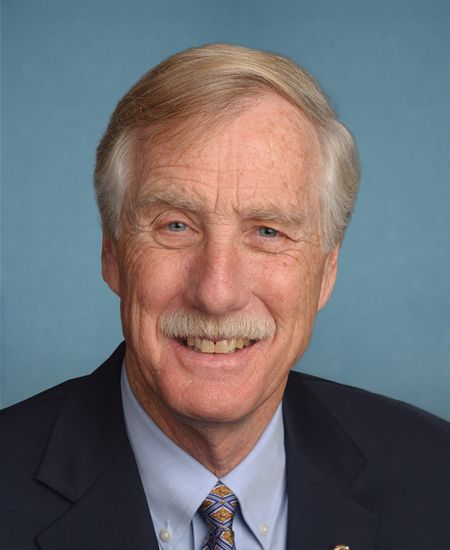
Angus S. King, Jr.
Angus S. King, Jr. Senate
I
Strong −
16% 31
Showing 271–280 of 301 bills

All criminal justice bills

in committee · United States · House Apr 8, 2025

HR 2724: Protecting Our Supreme Court Justices Act of 2025

HR 2724, the "Protecting Our Supreme Court Justices Act of 2025," amends federal law to increase penalties for obstructing justice through picketing or parading near Supreme Court justices. It changes Section 1507 of Title 18 U.S. Code to raise the maximum prison sentence for such obstruction from one year to five years. This bill directly affects individuals who engage in protests or demonstrations that physically block, harass, or impede Supreme Court justices or their property, making the criminal penalty more severe. The key provision is the specific increase in the maximum sentence for these actions.
in committee · United States · House Feb 24, 2026

HR 7664: State Partnerships to Enhance Removal of Criminal Aliens Act

This bill allows state attorneys (who are licensed and trained) to represent U.S. Immigration and Customs Enforcement (ICE) in removal proceedings for certain criminal aliens, under federal supervision. It requires states to ensure these attorneys follow federal law, provide proper training, and not displace federal employees. The bill also expands the definition of "aggravated felony" to include more state-level crimes (like certain drug offenses or thefts punishable by over one year in prison), making those offenses trigger mandatory immigration removal. This directly affects state attorneys participating in federal immigration enforcement and immigrants convicted of qualifying state crimes.
in committee · United States · House Oct 17, 2025

HRES 818: Impeaching Deborah Boardman, Judge of the United States District Court for the District of Maryland, for high crimes and misdemeanors.

This resolution proposes impeaching Judge Deborah Boardman of the U.S. District Court for the District of Maryland, alleging she violated judicial standards by sentencing Nicholas John Roske - a man who attempted to assassinate Supreme Court Justice Brett Kavanaugh - to eight years (instead of the 30-year recommendation) - based on Roske’s transgender identity. The resolution claims Judge Boardman’s decision, which cited Roske as a "transgender woman" in sentencing, undermined the law and impartiality required of federal judges. It argues this conduct constitutes "high crimes and misdemeanors" by violating the constitutional standard for judicial "good behavior." The resolution is now referred to the House Judiciary Committee for further review.
Sub-Topics Courts Judges Sentencing
in committee · United States · House Jun 13, 2025

HJRES 101: Proposing an amendment to the Constitution of the United States giving Congress power to prohibit the physical desecration of the flag of the United States.

This bill proposes a constitutional amendment that would grant Congress the power to pass laws banning the physical desecration of the U.S. flag (such as burning, trampling, or defacing it). If ratified, it would directly affect individuals who engage in such acts by making them subject to federal criminal penalties under new laws Congress could create. The amendment would add a specific clause to the Constitution stating: "Congress shall have power to prohibit the physical desecration of the flag of the United States." Ratification would require approval by 3/4 of state legislatures within seven years of submission.
in committee · United States · House Sep 30, 2025

HR 5624: No Funding for Lawless Jurisdictions Act

This bill withholds federal grant funding from states or local governments that implement specific policies. It prohibits funding for jurisdictions with laws that substantially limit cash bail for certain serious crimes (like violent offenses or public disorder) or allow felony convicts to be released without bail. It also blocks funding for cities classified as "urbanized areas" that reduced police budgets (unless due to a general budget shortfall). The policy directly affects local governments and states that adopt these specific approaches to criminal justice or law enforcement funding. The bill modifies two existing federal grant programs to enforce these eligibility rules.
in committee · United States · House Aug 22, 2025

HR 5016: Keep Offenders Off Our Streets Act.

HR 5016, the "Keep Offenders Off Our Streets Act," requires that anyone charged with a crime in the District of Columbia must post a secured bail bond with reliable third parties (not just promise to appear) before being released before trial. This bill directly affects individuals facing pretrial release decisions in DC courts by eliminating the option of release on personal recognizance. The key mechanism replaces existing rules with a requirement that defendants execute a bail bond in an amount reasonably needed to ensure their court appearance. The law applies to all defendants appearing before a DC judicial officer, both before and after the bill's enactment.
Sub-Topics Courts
in committee · United States · Senate Jan 16, 2025

S 114: CLEAR Act of 2025

The CLEAR Act of 2025 aims to enhance cooperation between state/local law enforcement and federal immigration authorities by requiring states to provide information about apprehended aliens to federal officials and creating a database of immigration violators in the National Crime Information Center. The bill provides financial assistance to states that cooperate with immigration enforcement, increases federal detention space, and establishes training programs for law enforcement officers. It also creates legal immunity for officers following the law and expands a program to identify and remove criminal aliens from prisons. The bill directly affects state and local law enforcement agencies, federal immigration officials, and undocumented immigrants who are apprehended.
in committee · United States · Senate Jul 15, 2025

S 2278: Graham Hoffman Act

This bill creates a new federal crime for assaulting first responders (like police, firefighters, and paramedics) causing serious injury or death, with enhanced penalties. It specifically applies when the assault involves interstate travel, weapons that crossed state lines, or interference with the responder's work affecting commerce. Penalties include up to 10 years in prison for serious injury, or life imprisonment if death occurs, kidnapping, or an attempt to kill happens. Federal prosecution requires Attorney General certification unless states decline jurisdiction or fail to adequately address the crime.
in committee · United States · Senate Jul 10, 2025

S 2250: Restoring the Armed Career Criminal Act

This bill amends the Armed Career Criminal Act (ACCA) to reinstate stricter sentencing requirements for individuals with prior serious felony convictions. It mandates a minimum 15-year prison sentence (with no probation or suspended sentence) for anyone convicted under Section 922(g) who has three or more prior serious felony convictions, where each conviction was for an offense punishable by at least 10 years in prison under the statute. The bill defines "serious felony conviction" to include any offense with a statutory maximum sentence of 10+ years (regardless of actual sentencing guidelines) or consolidated convictions totaling 10+ years in a single proceeding. This applies only to offenses committed after the bill's enactment and affects individuals with three prior qualifying felony convictions who possess firearms.
in committee · United States · House May 4, 2026

HR 5213: No Federal Funds for Cashless Bail Act

HR 5213, the "Keep Violent Criminals Off Our Streets Act," prohibits federal grants to states or local governments that have policies substantially limiting cash bail for individuals charged with specific violent or public disorder offenses. It directly affects state and local governments with bail policies allowing pretrial release for crimes like murder, rape, robbery, looting, or rioting. The bill amends federal law to block grant awards (under the Omnibus Crime Control Act) for any jurisdiction maintaining such bail policies for these covered offenses, starting in the fiscal year after enactment. This is a funding restriction, not a change to bail laws themselves.
Sub-Topics Violent Crime
Showing 271 to 280 of 301 bills
Previous 1 … 27 28 29 … 31 Next