Issue · Criminal Justice

Criminal Justice

Every criminal justice bill, vote, and legislator stance in United States, automatically classified by Maddy, our AI policy reader.

Total bills
301
119th Congress
Top supporter
Alan Armstrong
86% support rate
Top opponent
Amy Klobuchar
13% support rate
Ranked legislators
10
5 support · 5 oppose
Key legislators

Who's moving criminal justice in United States

Legislators moving criminal justice in United States
Legislator Party Stance Support rate Decisive votes
AA
Alan Armstrong Senate
R
Strong +
86% 28
Mitch McConnell
Mitch McConnell Senate
R
Strong +
84% 31
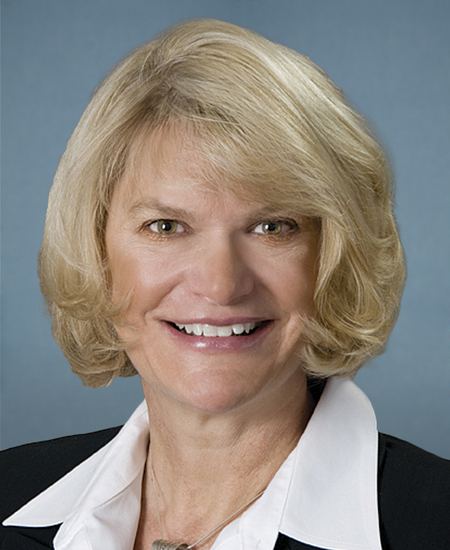
Cynthia M. Lummis
Cynthia M. Lummis Senate
R
Strong +
80% 30
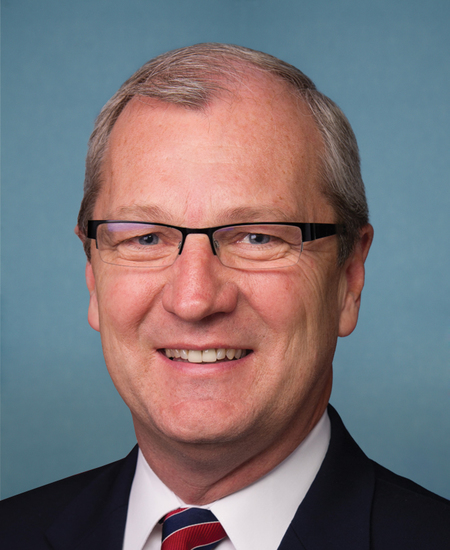
Kevin Cramer
Kevin Cramer Senate
R
Strong +
80% 30
Bernie Moreno
Bernie Moreno Senate
R
Support
77% 31
Amy Klobuchar
Amy Klobuchar Senate
D
Strong −
13% 31
Catherine Cortez Masto
Catherine Cortez Masto Senate
D
Strong −
13% 31
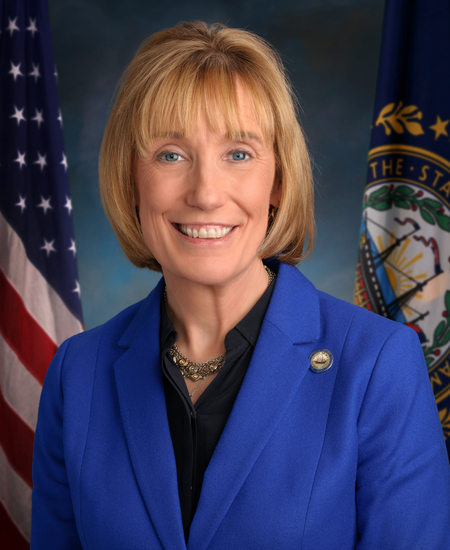
Margaret Wood Hassan
Margaret Wood Hassan Senate
D
Strong −
13% 31
Andy Kim
Andy Kim Senate
D
Strong −
16% 31
Angus S. King, Jr.
Angus S. King, Jr. Senate
I
Strong −
16% 31
Showing 231–240 of 301 bills

All criminal justice bills

in committee · United States · House Jan 16, 2025

HR 503: Qualified Immunity Act of 2025

This bill codifies qualified immunity standards for law enforcement officers under federal law. It specifies that individual officers cannot be held liable in civil suits if they demonstrate either that the constitutional right at issue was not clearly established at the time of the incident, or that a prior court ruling already confirmed the conduct was lawful. Local government agencies also cannot be held liable if the officer is found not liable under these standards and was acting within their job duties. The law applies to all federal, state, tribal, and local officers with arrest powers, including police officers. The changes would take effect 180 days after enactment.
Sub-Topics Courts Law Enforcement Policing Tags Civil Liberties
in committee · United States · Senate Jan 15, 2026

S 3652: Welfare Fraud Deterrence and Recovery Act of 2026

S 3652 increases criminal penalties for welfare fraud to up to 15 years in prison, with steeper sentences for noncitizens and cases exceeding $100,000 in fraudulent benefits. It creates a Welfare Fraud Recovery Task Force to investigate fraud in federal welfare programs (like SNAP and child care grants), pursue civil penalties (including triple damages and fines up to $20,000), and recover funds for program reimbursement. Noncitizens convicted of welfare fraud face deportation, expedited removal, and potential loss of citizenship through denaturalization. Recovered funds would be deposited into a new Treasury fund managed by the Department of Health and Human Services to offset program losses and support fraud prevention.
in committee · United States · Senate Jul 22, 2025

S 2376: A bill to amend title 18, United States Code, to include rioting in the definition of racketeering activity.

This bill amends federal law to include rioting as a form of "racketeering activity" under the Racketeer Influenced and Corrupt Organizations (RICO) Act. It does so by adding a reference to section 2101 (which defines rioting as a federal crime) into the existing list of racketeering activities. This change would allow federal prosecutors to pursue RICO charges against individuals or groups who engage in rioting as part of a larger pattern of organized criminal conduct. The bill directly affects those whose rioting activities are linked to organized criminal enterprises, potentially subjecting them to enhanced penalties under RICO.
in committee · United States · Senate Jan 21, 2025

S 166: Justice for Fallen Law Enforcement Act

This bill increases penalties for crimes against law enforcement officers. It adds a minimum 20-year prison sentence for serious injury to any federal, state, or local officer when the attack involves a weapon crossing state lines or uses interstate commerce. It also creates a new provision requiring life sentences for murder of officers under similar interstate circumstances. The bill directly affects officers (federal, state, local) and those who attack them, with the government required to report on prosecutions within three years of enactment.
in committee · United States · Senate Jan 14, 2025

SRES 24: A resolution condemning the commutation of the death sentence of Anthony George Battle granted by President Biden on December 23, 2024.

SRES 24 is a formal Senate resolution condemning President Biden's December 23, 2024, decision to commute the death sentence of Anthony George Battle. The resolution states the Senate believes this action undermined justice, as Battle was convicted of murdering his wife (a U.S. Marine) and later bludgeoned a correctional officer to death while in prison. The resolution does not create new laws or affect any individuals; it is solely a symbolic expression of the Senate's disapproval. It has no legal effect beyond the Senate's official statement.
Sub-Topics Corrections
in committee · United States · House Feb 13, 2025

HR 1312: No Asylum for Criminals Act of 2025

No Asylum for Criminals Act of 2025 This bill bars an individual who has been convicted of a felony or misdemeanor from receiving asylum, with limited exceptions. Specifically, the Department of Homeland Security may designate political offenses committed outside of the United States that shall not be considered a crime for this purpose. Currently, an individual shall be barred from receiving asylum for only certain types of criminal convictions, such as if the individual is convicted for (1) an aggravated felony, or (2) a particularly serious crime and as a result deemed a danger to the United States.
in committee · United States · Senate Jul 23, 2025

S 2413: Justice for Victims of Illegal Alien Murders Act

S 2413 would amend federal law to impose mandatory death or life imprisonment for first-degree murder and life imprisonment for second-degree murder committed by certain aliens. It directly affects non-citizens classified as "inadmissible" (e.g., due to past crimes) or "deportable" under specific immigration laws (sections 212(a)(6)(A), 212(a)(7), or 237(a)(1)(B)/(C)(i) of the Immigration and Nationality Act). The bill adds new sentencing provisions to Title 18, requiring the harshest penalties for these specific murder cases regardless of the location within U.S. jurisdiction. This changes federal criminal sentencing for a defined group of aliens convicted of murder, without altering immigration enforcement procedures.
Sub-Topics Sentencing Enforcement
in committee · United States · Senate Nov 6, 2025

S 3133: Violent Juvenile Offender Accountability Act of 2025

This bill allows federal prosecutors to directly charge juveniles aged 16 or older with specific violent crimes in federal court, bypassing the usual process requiring the Attorney General to file a transfer motion. It directly affects juveniles aged 16+ accused of five serious offenses: murder, aggravated assault, motor vehicle theft, armed robbery, or aggravated sexual assault involving a firearm. The key mechanism removes the mandatory transfer step for these cases, enabling immediate federal prosecution. The bill targets only the most severe crimes listed under federal law, not all juvenile offenses.
in committee · United States · House May 13, 2025

HR 3353: Lieutenant Osvaldo Albarati Stopping Prison Contraband Act

HR 3353, the Lieutenant Osvaldo Albarati Stopping Prison Contraband Act, increases penalties for providing prohibited items like phones to prisoners in federal custody, imposing up to two years in prison for violations involving such items. The bill requires the Bureau of Prisons to review and update its policies within one year of enactment to better address contraband possession by inmates, aiming to improve safety for both incarcerated individuals and staff. It specifically amends federal law to clarify penalties for trafficking prohibited objects, including phones, under Section 1791 of Title 18. The legislation directly affects federal prison operations, inmates, and staff by targeting contraband trafficking and mandating policy reforms.
in committee · United States · House Jan 21, 2025

HR 578: Sarah’s Law

HR 578, "Sarah’s Law," requires mandatory detention for certain non-citizens (aliens) charged with crimes resulting in death or serious bodily injury. It directly affects non-citizens facing such charges and their victims' families. Key provisions mandate that the Department of Homeland Security detain these individuals immediately and notify victims or their closest living relatives (like parents or spouses) about the alien’s identity, immigration status, custody details, and removal efforts. The bill adds specific categories of non-citizens to the mandatory detention list, including those whose visas were revoked or who are deportable for prior immigration violations. This creates a formal process for victim notification while expanding detention requirements under immigration law.
Showing 231 to 240 of 301 bills
Previous 1 … 23 24 25 … 31 Next