Issue · Criminal Justice

Criminal Justice

Every criminal justice bill, vote, and legislator stance in United States, automatically classified by Maddy, our AI policy reader.

Total bills
301
119th Congress
Top supporter
Alan Armstrong
86% support rate
Top opponent
Amy Klobuchar
13% support rate
Ranked legislators
10
5 support · 5 oppose
Key legislators

Who's moving criminal justice in United States

Legislators moving criminal justice in United States
Legislator Party Stance Support rate Decisive votes
AA
Alan Armstrong Senate
R
Strong +
86% 28
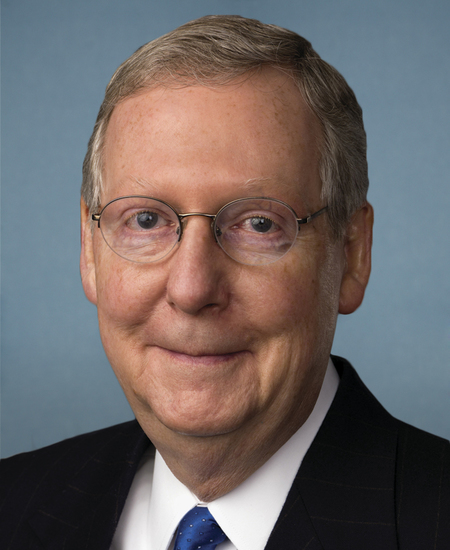
Mitch McConnell
Mitch McConnell Senate
R
Strong +
84% 31
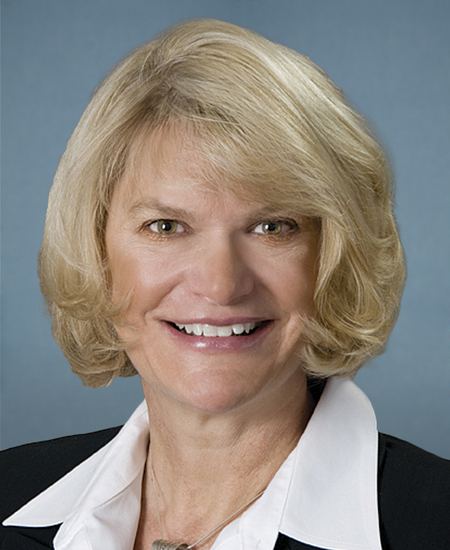
Cynthia M. Lummis
Cynthia M. Lummis Senate
R
Strong +
80% 30
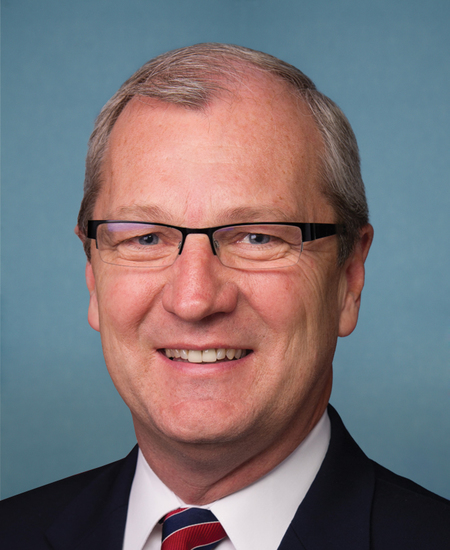
Kevin Cramer
Kevin Cramer Senate
R
Strong +
80% 30
Bernie Moreno
Bernie Moreno Senate
R
Support
77% 31
Amy Klobuchar
Amy Klobuchar Senate
D
Strong −
13% 31
Catherine Cortez Masto
Catherine Cortez Masto Senate
D
Strong −
13% 31
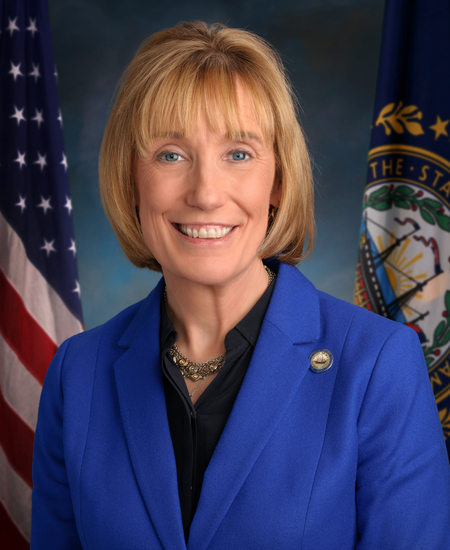
Margaret Wood Hassan
Margaret Wood Hassan Senate
D
Strong −
13% 31
Andy Kim
Andy Kim Senate
D
Strong −
16% 31
Angus S. King, Jr.
Angus S. King, Jr. Senate
I
Strong −
16% 31
Showing 191–200 of 301 bills

All criminal justice bills

in committee · United States · Senate Apr 29, 2025

S 1502: Felony Murder for Deadly Fentanyl Distribution Act of 2025

This bill amends federal murder law to treat fentanyl distribution causing death as first-degree murder. It specifically targets individuals who distribute fentanyl (or certain analogues) in quantities of 2 grams or more (or 0.5 grams for analogues) and who know or should know the substance contains fentanyl, resulting in death. Those convicted face the death penalty or life imprisonment. The law directly affects drug distributors whose actions cause fatal overdoses, shifting prosecution from drug trafficking charges to capital murder under federal law.
Sub-Topics Drug Policy
passed · United States · House Nov 20, 2025

HR 5107: Common-Sense Law Enforcement and Accountability Now in DC Act of 2025

HR 5107, the Common-Sense Law Enforcement and Accountability Now in DC Act (CLEAN DC Act), repeals D.C. Law 24-345 (the 2022 Comprehensive Policing and Justice Reform Amendment Act). This bill directly affects Washington, D.C.'s policing and justice systems by reversing all changes made under that 2022 law. The key mechanism is a straightforward repeal, restoring all prior District laws as if the 2022 reform had never been enacted. The bill does not introduce new provisions but undoes existing reforms to the District’s law enforcement framework.
in committee · United States · Senate Jul 14, 2025

S 2269: PRICE Act

The PRICE Act (S 2269) increases penalties for assaulting, resisting, or impeding U.S. Immigration and Customs Enforcement (ICE) officers or employees. It would double the maximum prison sentence and adjust the fine for such offenses when committed against ICE personnel, as specified in amended federal law (18 U.S.C. § 111). This bill directly affects individuals convicted of violent or obstructive acts against ICE officers, making their penalties more severe than for similar crimes against other federal officers. The key provision modifies existing penalties without changing the definition of the offense or creating new requirements for ICE operations.
in committee · United States · House Sep 26, 2025

HR 5590: SWAT Act

HR 5590, the SWAT Act, amends federal law to increase penalties for threats against specific schools. It adds new provisions making it a federal crime to threaten or falsely report threats at schools providing early childhood through career education (as defined by state law), including public, private, and religious institutions. Violators face up to 20 years in prison or fines. The bill targets threats made via mail, interstate communications, or involving fire/explosives, specifically focusing on school safety by strengthening criminal penalties for such acts.
in committee · United States · Senate May 14, 2025

S 1771: Larry Henderson Act

This bill amends federal law to mandate a minimum 20-year prison sentence for anyone who assaults, resists, or impedes a U.S. federal officer or employee while they are performing official duties, causing any bodily harm. It directly affects individuals convicted of such assaults on federal personnel, replacing previous sentencing options with this fixed minimum term. Key provisions include making federal law exclusively applicable to these offenses and overriding any conflicting state laws that might govern similar acts. The bill applies to offenses occurring after its enactment date.
Sub-Topics Corrections Sentencing
in committee · United States · Senate Jan 14, 2025

S 84: Sarah's Law

This bill requires mandatory detention for certain noncitizens (aliens) charged with crimes resulting in death or serious bodily injury, specifically those who entered without inspection, had a revoked temporary visa, or fall under specific immigration categories. It directly affects noncitizens facing such criminal charges and crime victims or their families. Key provisions mandate U.S. Immigration and Customs Enforcement (ICE) to notify victims (or their families if deceased) about the alien’s identity, immigration status, custody details, and removal efforts. The bill also clarifies that these requirements do not override existing victim rights under other laws.
in committee · United States · House Oct 14, 2025

HR 5242: To repeal the Second Chance Amendment Act of 2022 and the Incarceration Reduction Amendment Act of 2016.

HR 5242 would repeal two District of Columbia laws: the Second Chance Amendment Act of 2022 (D.C. Law 24-284) and the Incarceration Reduction Amendment Act of 2016 (D.C. Law 21-36). This bill would restore the legal provisions that existed before these acts were enacted, effectively undoing their changes to D.C. criminal justice policies. Specifically, it would reverse reforms related to reducing incarceration and expanding opportunities for individuals with criminal records. The bill directly affects the District of Columbia’s legal framework governing criminal justice, not individual residents or specific programs.
Sub-Topics Corrections
in committee · United States · House Nov 20, 2025

HR 6174: Ending Crime and Disorder on America’s Streets Act

This bill redirects federal funding toward mandatory treatment facilities for unhoused individuals with serious mental illness or addiction, while tying grant money to local enforcement of public drug use bans, camping restrictions, and sex offender registration. It prohibits federal support for "harm reduction" programs and safe consumption sites, requires states to prioritize treatment over "housing first" approaches, and mandates data sharing between health programs and law enforcement. The bill defines "unhoused individuals" as those posing public risks or unable to care for themselves for 3+ months. It applies to federal grant programs for homelessness services, mental health treatment, and housing assistance.
in committee · United States · Senate Jun 10, 2025

S 2001: No Visas for Violent Criminals Act

This bill amends U.S. immigration law to add new grounds for deporting non-citizens. It makes non-citizens deportable if convicted of crimes related to protests, including vandalism of federal property or intentional obstruction of highways/bridges. The law requires immediate cancellation of any visa for such individuals and mandates their removal from the U.S. within 60 days of conviction. It directly affects non-citizens convicted under these specific protest-related criminal provisions.
in committee · United States · House Nov 25, 2025

HR 6306: AI Fraud Deterrence Act

HR 6306, the AI Fraud Deterrence Act, increases penalties for fraud crimes when artificial intelligence is used to impersonate federal officials. The bill amends existing laws (mail fraud, wire fraud, bank fraud, and money laundering) to add $1 million fines or up to 20 years in prison for AI-assisted fraud, and specifically targets impersonation of government officials with $1 million fines or up to 3 years in prison when AI is used. It defines "artificial intelligence" using the 2020 National AI Initiative Act and includes a First Amendment protection for satire or parody with clear disclosure. The law directly affects scammers using AI to mimic government officials, as highlighted by recent incidents involving impersonated White House and State Department communications.
Showing 191 to 200 of 301 bills
Previous 1 … 19 20 21 … 31 Next