Issue · Criminal Justice

Criminal Justice (Drug Policy)

Every criminal justice bill, vote, and legislator stance in United States, automatically classified by Maddy, our AI policy reader.

Total bills
85
119th Congress
Top supporter
Adam B. Schiff
100% support rate
Top opponent
Amy Klobuchar
0% support rate
Ranked legislators
10
5 support · 5 oppose
Key legislators

Who's moving drug policy in United States

Legislators moving drug policy in United States
Legislator Party Stance Support rate Decisive votes
Adam B. Schiff
Adam B. Schiff Senate
D
Strong +
100% 3
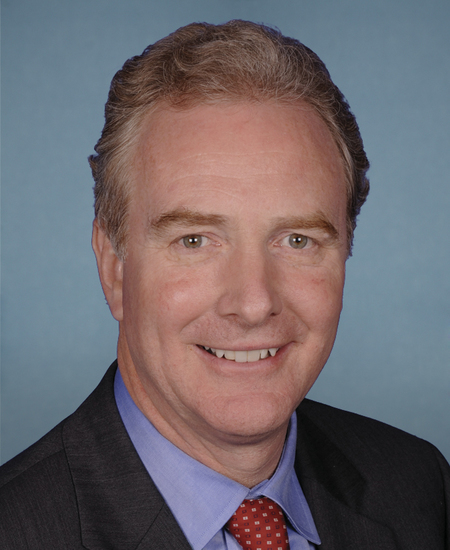
Chris Van Hollen
Chris Van Hollen Senate
D
Strong +
100% 3
Christopher Murphy
Christopher Murphy Senate
D
Strong +
100% 3
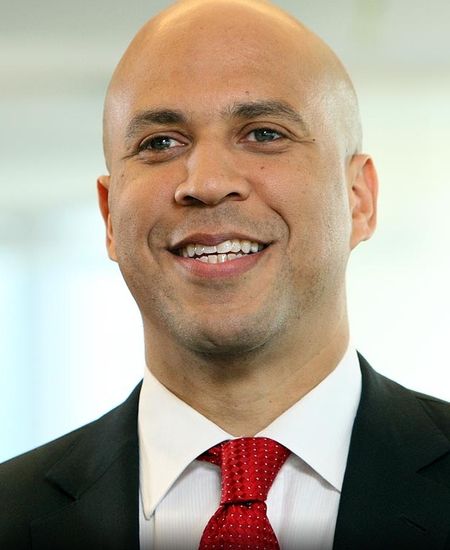
Cory A. Booker
Cory A. Booker Senate
D
Strong +
100% 3
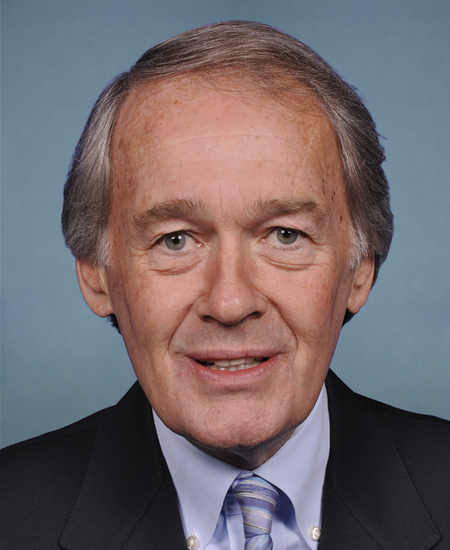
Edward J. Markey
Edward J. Markey Senate
D
Strong +
100% 3
Amy Klobuchar
Amy Klobuchar Senate
D
Strong −
0% 3
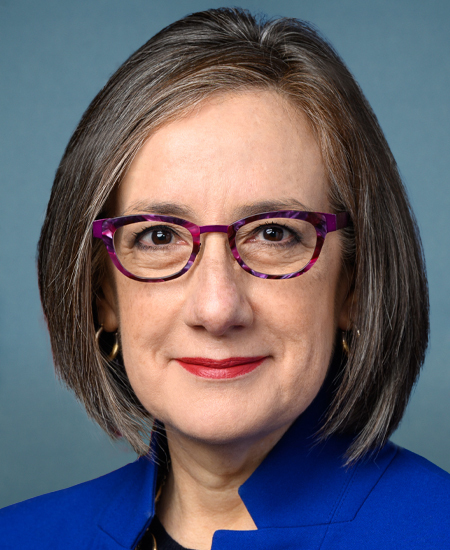
Andrea Salinas
Andrea Salinas House · District 6
D
Strong −
0% 3
Andy Kim
Andy Kim Senate
D
Strong −
0% 3
Angus S. King, Jr.
Angus S. King, Jr. Senate
I
Strong −
0% 3
April McClain Delaney
April McClain Delaney House · District 6
D
Strong −
0% 3
Showing 11–20 of 85 bills

All criminal justice bills

passed · United States · House Jul 14, 2026

HR 8535: Measuring Illicit Fentanyl Trafficking Act

This bill directs the Secretary of Homeland Security to improve internal coordination among agencies responsible for detecting and stopping illicit fentanyl trafficking. It mandates that these components share relevant data and information with each other while identifying any obstacles to effective collaboration. Furthermore, the Secretary must establish performance metrics to measure the department's success in fentanyl detection, deterrence, and seizure. All these actions must be completed within one year of the bill's enactment.
Sub-Topics Drug Policy
passed · United States · House Sep 16, 2026

HR 8005: Stop Pills That Kill Act

The Stop Pills That Kill Act targets counterfeit pills containing fentanyl or methamphetamine that are sold under the branding of legitimate prescription medications. It expands federal criminal penalties to specifically include these counterfeit substances and requires the Drug Enforcement Administration to create a comprehensive plan within 180 days to improve law enforcement investigations and public education efforts. The bill also mandates annual reports to Congress detailing seizure data, prosecution statistics, and prevention measures related to counterfeit pills. These provisions aim to enhance federal response to the distribution of fake prescription pills while maintaining existing legal frameworks.
in committee · United States · House Mar 20, 2026

HR 8022: DETECT Nitazenes Act of 2026

The DETECT Nitazenes Act of 2026 updates federal law to include nitazenes alongside fentanyl and xylazine as priority drugs for detection and identification efforts. This change expands the scope of the Homeland Security Act, directing federal agencies to enhance their capacity to detect and identify nitazenes at border crossings and other entry points. The bill does not create new criminal penalties or funding, but rather modifies existing statutory language to ensure nitazenes are treated with the same detection focus as other synthetic opioids.
Sub-Topics Drug Policy
in committee · United States · Senate Mar 25, 2026

S 4209: TIME for Overdose Justice Act

This bill, known as the TIME for Overdose Justice Act, removes the standard statute of limitations for federal drug trafficking cases that result in death or serious bodily injury. It directly affects prosecutors and defendants by allowing the government to file charges at any time, even years after the alleged crime occurred. The key provision amends the Controlled Substances Act to eliminate the usual time limits for prosecuting violations where overdose deaths or severe injuries are involved. This change aims to ensure accountability in cases where drug distribution leads to fatal outcomes, regardless of how much time has passed since the incident.
Sub-Topics Drug Policy
in committee · United States · Senate Mar 2, 2026

S 3960: Smarter Pretrial Detention for Drug Charges Act of 2026

This bill would allow federal judges more flexibility in deciding whether to keep defendants in jail before trial when they are charged with nonviolent drug crimes. It changes existing federal law by removing a specific provision that currently requires courts to consider certain factors when making pretrial detention decisions for these cases. The changes would apply to all federal criminal cases involving nonviolent drug offenses, giving judges broader authority to release defendants on bail or other conditions instead of holding them without bail. The legislation does not affect violent crimes or other types of offenses outside the scope of nonviolent drug charges.
in committee · United States · Senate Mar 17, 2026

S 4121: Vote Without Fear Act

This bill, known as the Vote Without Fear Act, would make it a federal crime to knowingly possess a firearm inside or within 100 yards of a Federal election site, such as a polling place or ballot counting location. The law applies to anyone who is aware or has reason to believe they are near such a site, with exceptions for law enforcement, security personnel on duty, vehicles where firearms remain inside, and lawful possession on private property. Violations of the basic possession rule could result in fines or up to one year in prison, while possessing a firearm with intent to use it in a crime carries a potential sentence of up to five years. The bill also increases penalties for any homicides or conspiracies involving firearms at these election sites.
in committee · United States · Senate Feb 26, 2026

S 3945: Tribal Police Department Parity Act

This bill, known as the Tribal Police Department Parity Act, would extend existing federal firearms access laws to Tribal law enforcement agencies, ensuring they have the same authority as Federal, State, and local agencies. The legislation amends Title 18 of the United States Code to explicitly include Indian Tribes and their departments in provisions related to machinegun transfers and the transportation, shipment, receipt, possession, and importation of firearms and ammunition. It also modifies the Internal Revenue Code to apply tax exemptions for firearms transfers to Tribal entities on the same basis as State governments. These changes would allow Tribal police departments to legally access and use firearms under the same federal regulations that currently apply to other law enforcement agencies.
Sub-Topics Drug Policy Firearms Law Enforcement Tags Tribal Nations
in committee · United States · Senate Mar 5, 2026

S 4004: Protect Law Enforcement Task Forces Act

This bill authorizes the Organized Crime Drug Enforcement Task Forces (OCDETF) to continue its work against transnational organized crime and drug trafficking using a prosecutor-led, multi-agency enforcement approach. It requires the Attorney General to structure the task force to coordinate efforts among federal, state, and local law enforcement agencies, including the Departments of Treasury, Homeland Security, Postal Service, Labor, and State. The legislation mandates that the Attorney General submit a joint report on the task force's successes to various congressional committees within one year of enactment, with the report made publicly available in unclassified form. The bill includes a sunset provision that ends its authority on January 20, 2029.
in committee · United States · Senate Mar 2, 2026

S 3959: Smarter Sentencing Act of 2026

The Smarter Sentencing Act of 2026 reduces mandatory minimum prison sentences for certain federal drug offenses involving couriers who only transport or store drugs or money. Under the bill, couriers face reduced minimum sentences of 5 years instead of 10 years for major drug offenses, and 2 years instead of 5 years for lesser offenses, while maintaining longer sentences for repeat offenders or those with serious prior convictions. The law applies to cases sentenced after enactment and allows courts to reduce sentences for past cases upon motion. The bill also directs the Sentencing Commission to update sentencing guidelines within 120 days and requires the Attorney General to report on how cost savings from reduced sentences will be used to address prison overcrowding and improve law enforcement spending.
in committee · United States · House Mar 18, 2026

HR 7987: CLIMB Act

This bill would allow businesses and financial institutions to provide services to cannabis companies without fear of federal penalties, even though cannabis remains illegal under federal law. It prohibits federal agencies from taking adverse actions against anyone who offers financial products, insurance, legal services, or other business assistance to cannabis-related legitimate businesses operating in states where it is legal. Additionally, the bill would permit national stock exchanges to list and trade securities from cannabis companies by creating a legal safe harbor that protects exchanges and market participants from federal prosecution. The law would take effect 180 days after it is signed into legislation.
Sub-Topics Drug Policy
Showing 11 to 20 of 85 bills
Previous 1 2 3 … 9 Next