Issue · Criminal Justice

Criminal Justice (Drug Policy)

Every criminal justice bill, vote, and legislator stance in United States, automatically classified by Maddy, our AI policy reader.

Total bills
35
119th Congress
Top supporter
Adam B. Schiff
100% support rate
Top opponent
Amy Klobuchar
0% support rate
Ranked legislators
10
5 support · 5 oppose
Key legislators

Who's moving drug policy in United States

Legislators moving drug policy in United States
Legislator Party Stance Support rate Decisive votes
Adam B. Schiff
Adam B. Schiff Senate
D
Strong +
100% 3
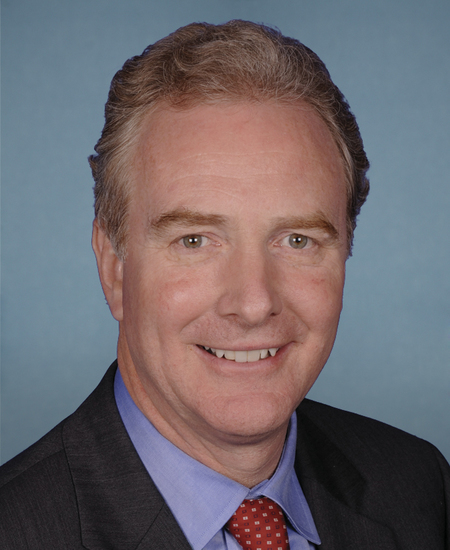
Chris Van Hollen
Chris Van Hollen Senate
D
Strong +
100% 3
Christopher Murphy
Christopher Murphy Senate
D
Strong +
100% 3
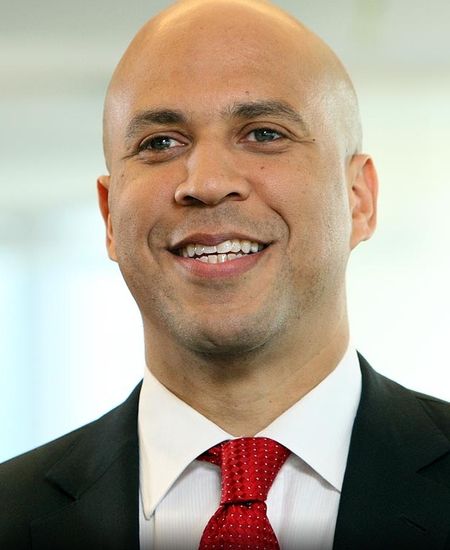
Cory A. Booker
Cory A. Booker Senate
D
Strong +
100% 3
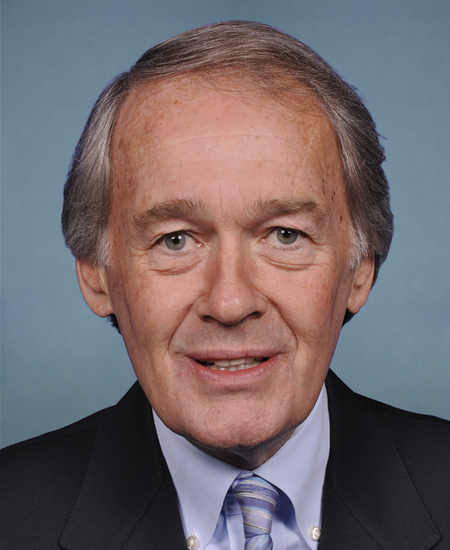
Edward J. Markey
Edward J. Markey Senate
D
Strong +
100% 3
Amy Klobuchar
Amy Klobuchar Senate
D
Strong −
0% 3
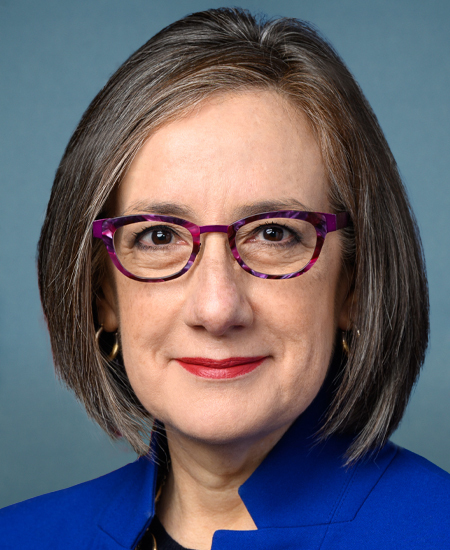
Andrea Salinas
Andrea Salinas House · District 6
D
Strong −
0% 3
Andy Kim
Andy Kim Senate
D
Strong −
0% 3
Angus S. King, Jr.
Angus S. King, Jr. Senate
I
Strong −
0% 3
April McClain Delaney
April McClain Delaney House · District 6
D
Strong −
0% 3
Showing 11–20 of 35 bills

All criminal justice bills

in committee · United States · House Sep 16, 2025

HR 5415: Nitazene Control Act of 2025

This bill permanently bans nitazenes and all structurally related synthetic opioids under federal law, creating a broad definition that covers numerous chemical variations designed to evade current restrictions. It directly affects anyone manufacturing, distributing, or possessing these substances without authorization, including illicit drug producers and users. The key mechanism is a class-wide Schedule I classification that includes specific structural features (like modified benzimidazole rings) and excludes new analogs from legal loopholes. This approach aims to prevent new nitazene variants from entering the illegal market and addresses their role in overdose deaths. Substances previously temporarily banned under similar rules will now be permanently prohibited as of the bill's enactment.
Sub-Topics Drug Policy
in committee · United States · House Dec 18, 2025

HRES 959: Expressing the sense of the House of Representatives that illicit fentanyl-related substances are a weapon of mass destruction and should be classified as such, and recognizing President Trump's efforts to mitigate illicit narcotics from entering the United States through such actions as signing an Executive Order "Designating Fentanyl as a Weapon of Mass Destruction" and declaring the crisis caused by the rise of fentanyl a national health emergency.

This resolution expresses the House's view that illicit fentanyl-related substances should be classified as a weapon of mass destruction and permanently placed in Schedule I of the Controlled Substances Act. It recommends the President take action to reclassify fentanyl under these designations, citing the severe public health impact of the opioid crisis. The resolution also recognizes former President Trump's 2018 Executive Order designating fentanyl as a weapon of mass destruction and his declaration of the fentanyl crisis as a national health emergency. As a symbolic resolution, it does not change current law or enforcement practices.
Sub-Topics Drug Policy
in committee · United States · House Jan 14, 2025

HR 394: Holding Child Predators Accountable Act

HR 394, the "Holding Child Predators Accountable Act," amends federal laws to impose mandatory death or life imprisonment for certain child pornography offenses. It changes penalties under Title 18 for possession (Section 1466A), exploitation (Section 2252), and distribution (Section 2252A) of child sexual abuse material, replacing prior penalty structures with the maximum sentence. This directly affects individuals convicted of violating these specific provisions, including those involving possession, distribution, or production of such material. The bill makes no new offenses but mandates the harshest possible penalties for existing violations under these sections.
Sub-Topics Drug Policy
in committee · United States · House Jan 3, 2025

HR 172: Defund Heroin Injection Centers Act of 2025

This bill prohibits federal funding for any state, local, tribal, or private entity operating an injection center that violates the Controlled Substances Act's Crack House Statute (21 U.S.C. 856), which bans drug use in buildings. It directly affects organizations running facilities where illegal drug use occurs, cutting off all federal grants or programs from such entities. The law does not create new drug offenses but withholds existing federal funds from facilities operating in violation of current law. It applies broadly to all federal funding streams, not just specific programs.
in committee · United States · House Aug 15, 2025

HR 4991: Disarming Felons Act

HR 4991, the Disarming Felons Act, prohibits the sale or transfer of firearms to, and possession of firearms by, adults who committed an act as a juvenile (aged 15-17) that would have been a felony if committed as an adult. The bill amends existing federal law (18 U.S.C. §§ 922(d) and 922(g)) to add this new category to the list of prohibited firearm transactions and possession. It directly affects individuals who were juveniles at the time of a serious offense but are now adults, restricting their access to firearms. The law creates a specific legal barrier to firearm access based on the severity of a juvenile offense, without altering penalties for the offense itself.
in committee · United States · House Aug 22, 2025

HR 5032: Nitazene Control Act

HR 5032, the Nitazene Control Act, permanently classifies all nitazenes and their chemical analogs as Schedule I controlled substances under the Controlled Substances Act. This means these synthetic opioids, which are significantly more potent than fentanyl and linked to overdose deaths, are now federally banned for all non-medical use. The bill creates a broad chemical definition covering substances with specific structural features (a benzimidazole core and mu-opioid receptor activity), preventing new analogs from evading regulation. It includes a temporary 18-month exemption for researchers already studying these substances under active FDA-approved protocols, requiring them to notify the DEA and apply for proper registration within that period. The law directly affects the illicit drug market and ongoing research involving nitazenes, aiming to streamline enforcement and prevent new analogs from entering the supply chain.
Sub-Topics Drug Policy
in committee · United States · House Jun 5, 2025

HR 3764: Death Penalty for Dealing Fentanyl Act of 2025

This bill adds a death penalty option for individuals convicted of distributing, manufacturing, or possessing fentanyl with intent to distribute when their actions cause a death. It directly affects fentanyl traffickers and dealers found guilty under specific drug trafficking laws (sections 401(a)(1) or 416 of the Controlled Substances Act) if their distribution results in a fatality. The key provision allows courts to impose the death penalty, life imprisonment, or any term of years, along with fines under federal law. This policy change specifically targets fentanyl-related offenses causing death, not other drugs or non-fatal cases.
Sub-Topics Drug Policy
in committee · United States · House Apr 29, 2025

HR 3065: Felony Murder for Deadly Fentanyl Distribution Act of 2025

This bill amends federal murder law to treat distributing fentanyl that causes death as felony murder, directly affecting individuals who distribute fentanyl in specified quantities resulting in fatalities. It defines "distributing fentanyl" as distributing at least 2 grams of a mixture containing fentanyl or 0.5 grams of its analogues, knowing it contains the substance and causing death. The key provision adds a new felony murder category under Section 1111(b)(2), imposing the death penalty or life imprisonment for such acts. The bill explicitly ties the penalty to the specific fentanyl quantities and the causal link to death, without altering other murder definitions.
Sub-Topics Drug Policy Sentencing
in committee · United States · House Jan 28, 2025

HR 780: Alexandra’s Law Act of 2025

HR 780, the Alexandra’s Law Act of 2025, amends the Controlled Substances Act to require courts to advise defendants convicted of drug-related offenses involving synthetic opioids (like fentanyl analogues) that caused death about the lethal risks of illicit drugs. It creates new evidence rules: prior convictions for similar drug offenses involving death can be used to prove a defendant knew the substance contained fentanyl analogues, and court advisements from state cases may be admitted in federal courts. The law directly affects individuals convicted of drug sales or distribution linked to overdose deaths involving these substances. It excludes minors from these evidentiary provisions, focusing on holding accountable those who knowingly distribute dangerous synthetic drugs.
Sub-Topics Courts Drug Policy
in committee · United States · Senate Jun 4, 2025

S 1949: Combating Violent and Dangerous Crime Act

This bill (S 1949) creates new penalties for manufacturing or distributing candy-flavored drugs marketed to minors. It specifically targets producers who combine schedule I or II controlled substances with candy/beverage products, market them to appear like candy, or modify them with candy-like flavors/coloring, knowing they’ll be sold to people under 18. First offenses carry up to 10 additional years in prison, while repeat offenses carry up to 20 additional years. Exceptions apply for FDA-approved medications sold as prescribed and products altered under a doctor’s direction for legitimate medical use.
Showing 11 to 20 of 35 bills
Previous 1 2 3 … 4 Next