Issue · Criminal Justice

Criminal Justice

Every criminal justice bill, vote, and legislator stance in United States, automatically classified by Maddy, our AI policy reader.

Total bills
301
119th Congress
Top supporter
Alan Armstrong
86% support rate
Top opponent
Amy Klobuchar
13% support rate
Ranked legislators
10
5 support · 5 oppose
Key legislators

Who's moving criminal justice in United States

Legislators moving criminal justice in United States
Legislator Party Stance Support rate Decisive votes
AA
Alan Armstrong Senate
R
Strong +
86% 28
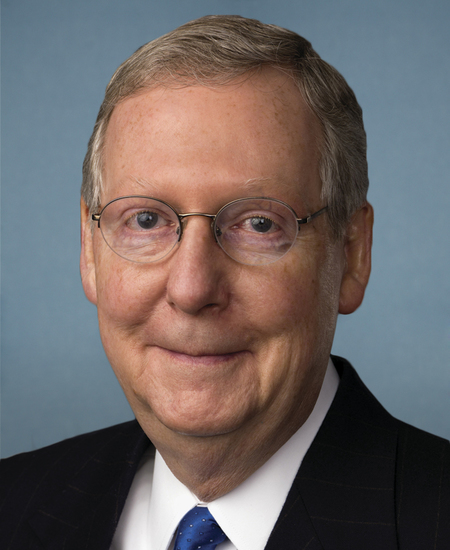
Mitch McConnell
Mitch McConnell Senate
R
Strong +
84% 31
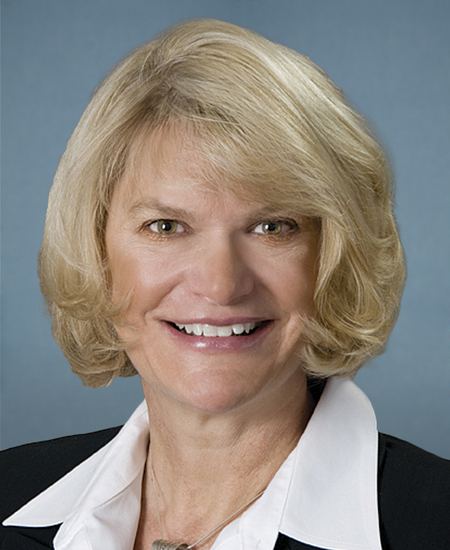
Cynthia M. Lummis
Cynthia M. Lummis Senate
R
Strong +
80% 30
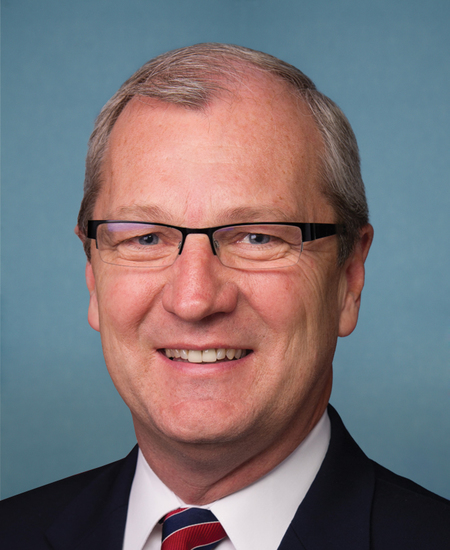
Kevin Cramer
Kevin Cramer Senate
R
Strong +
80% 30
Bernie Moreno
Bernie Moreno Senate
R
Support
77% 31
Amy Klobuchar
Amy Klobuchar Senate
D
Strong −
13% 31
Catherine Cortez Masto
Catherine Cortez Masto Senate
D
Strong −
13% 31
Margaret Wood Hassan
Margaret Wood Hassan Senate
D
Strong −
13% 31
Andy Kim
Andy Kim Senate
D
Strong −
16% 31
Angus S. King, Jr.
Angus S. King, Jr. Senate
I
Strong −
16% 31
Showing 141–150 of 301 bills

All criminal justice bills

in committee · United States · House Jan 20, 2026

HR 7155: Stop Fraud in Federal Programs Act of 2026

HR 7155, the Stop Fraud in Federal Programs Act of 2026, increases penalties for fraud involving federal funds and adds audit requirements for the summer food service program. It amends federal law to raise the maximum prison term for theft or bribery from 10 to 20 years and establishes a new "covered amount" for fines - defined as the greater of $250,000 or twice the value of stolen property. The bill also requires annual third-party audits of accounts for summer food service program providers, with audits submitted directly to the Secretary and prohibiting sponsors or service institutions from conducting the audits themselves. These changes directly affect contractors, program participants, and organizations receiving federal funds, particularly those operating under the National School Lunch Act.
Sub-Topics Corrections
in committee · United States · House Sep 26, 2025

HR 5592: Childhood Genital Mutilation Prevention Act

HR 5592, the Childhood Genital Mutilation Prevention Act, prohibits medical procedures related to gender identity for minors under 18, with exceptions for treating specific medical conditions like disorders of sex development or injuries. It criminalizes performing such treatments under certain circumstances (e.g., involving interstate commerce) with penalties up to 10 years in prison, while exempting care for diagnosed medical needs. The bill also excludes these procedures from Medicare/Medicaid coverage after 90 days and bans federal funding for such treatments or related health coverage. This directly affects minors under 18, healthcare providers, and insurers offering these services, but allows exceptions for medically necessary care.
in committee · United States · House Feb 25, 2026

HR 7702: Death Penalty for Child Rapists Act

This bill amends federal criminal law to authorize the death penalty for specific sexual abuse offenses against children. It modifies three key provisions (18 U.S.C. §§2241, 2243, and 2244) that currently define aggravated sexual abuse, sexual abuse of a minor, and abusive sexual contact involving children, replacing existing prison terms with the option of "death or imprisonment for any term of years or for life." The change applies to both civilian cases under federal law and military cases under the Uniform Code of Military Justice (10 U.S.C. §920b). The bill directly affects individuals convicted of these specific child sexual abuse crimes, making the death penalty a possible sentencing option.
Sub-Topics Corrections Sentencing
in committee · United States · House Jan 30, 2026

HR 7293: Protecting Children in Surrogacy Act

HR 7293, the Protecting Children in Surrogacy Act, prohibits individuals required to register on the National Sex Offender Registry (covered sex offenders) from obtaining a child through surrogacy or entering surrogacy contracts as intended parents. The bill makes it a federal crime punishable by fines or up to 10 years in prison if the surrogacy arrangement involves interstate or foreign commerce (e.g., travel, payments, or communications across state lines). It also bans federal courts from enforcing surrogacy contracts where the intended parent is a covered sex offender. The law directly affects intended parents who are registered sex offenders and aims to prevent them from gaining legal custody of children via surrogacy arrangements.
Sub-Topics Corrections
in committee · United States · House May 23, 2025

HR 3600: LOOTER Act of 2025

HR 3600, the LOOTER Act of 2025, adds federal penalties for theft committed during declared natural disaster emergencies. It makes it a federal offense to commit petty larceny (small theft) or grand larceny (large theft) in any county where a disaster emergency has been declared under the Stafford Act. Offenders face up to 1 year in prison for petty larceny or up to 5 years for grand larceny, using state definitions of these crimes. The law directly affects individuals who steal from vulnerable communities during active disaster response efforts. It applies only during federally declared emergencies, not regular circumstances.
Sub-Topics Corrections
in committee · United States · House Aug 29, 2025

HR 5066: Safe Students Act

This bill repeals the Gun-Free School Zones Act of 1990 and makes technical amendments to Title 18 of the U.S. Code, specifically removing references to school zones in firearm offense provisions. It revises sections governing firearm restrictions (Section 922), definitions (Section 921), and penalties (Section 924) by renumbering and deleting specific paragraphs related to the repealed law. The bill directly affects federal firearm law enforcement and legal interpretations concerning school zones, but does not create new restrictions or protections. As a procedural repeal, it removes outdated language without altering current firearm regulations.
in committee · United States · House Jan 9, 2025

HRES 26: Deeming certain conduct of members of Antifa as domestic terrorism and designating Antifa as a domestic terrorist organization.

This House resolution (HRES 26) declares that conduct by Antifa members at affiliated demonstrations is domestic terrorism under existing law (18 U.S.C. §2331) and designates Antifa as a domestic terrorist organization. It calls on the Department of Justice to prosecute Antifa-related terrorism and use available resources to combat such activity. The resolution does not create new law but formally characterizes Antifa’s actions as terrorism for congressional purposes. It directly affects Antifa members and affiliates by framing their conduct under federal terrorism definitions.
passed · United States · House Feb 10, 2025

HR 27: HALT Fentanyl Act

The HALT Fentanyl Act (HR 27) creates a new category of Schedule I controlled substances for "fentanyl-related substances" defined by specific chemical modifications to fentanyl. This law directly affects researchers, medical professionals, and law enforcement by expanding the legal definition of fentanyl-related substances to include many structurally similar compounds. Key provisions include streamlined registration processes for research on these substances, allowing researchers to conduct studies with expedited procedures if related to FDA-approved drug development or government-funded research. The bill requires the Attorney General to issue implementing rules within six months and includes penalties for violations involving these substances.
in committee · United States · House Jan 9, 2025

HR 296: Justice for 9/11 Act

HR 296, the "Justice for 9/11 Act," modifies legal procedures for three specific defendants accused of the September 11, 2001, attacks: Khalid Shaikh Mohammad, Walid Muhammad Salih Mubarak Bin ‘Attash, and Mustafa Ahmed Adam al Hawsawi. The bill ensures their plea agreements for the 9/11 attacks cannot block military commission trials under Title 10, makes the death penalty available in those trials, and mandates they remain in solitary confinement at Guantanamo Bay under strict conditions - no contact with foreigners, limited psychological care, and no transfer to the U.S. or other countries. It directly affects only these three individuals and their legal proceedings, not the general public. The bill changes existing legal pathways for their trial and confinement, not broader policy.
Sub-Topics Corrections
in committee · United States · House Feb 11, 2025

HR 1205: Safe Shelters Act of 2025

The Safe Shelters Act of 2025 requires sex offenders mandated to register on the National Sex Offender Registry (under the Adam Walsh Act) to notify shelter staff if they enter a regular emergency shelter during a disaster. It prohibits these offenders from using undesignated shelters without immediate notification, with penalties including fines or up to 5 years in prison for noncompliance. The bill directs FEMA to designate specific federal buildings or prisons as shelters *only* for these offenders during disasters, requiring agencies to share lists of designated shelters with all shelter operators. This directly affects registered sex offenders and emergency shelter managers, creating a new system to separate shelter access during crises. The law takes effect 180 days after enactment.
Sub-Topics Corrections Tags Emergency Management
Showing 141 to 150 of 301 bills
Previous 1 … 14 15 16 … 31 Next