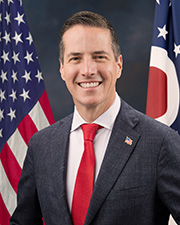
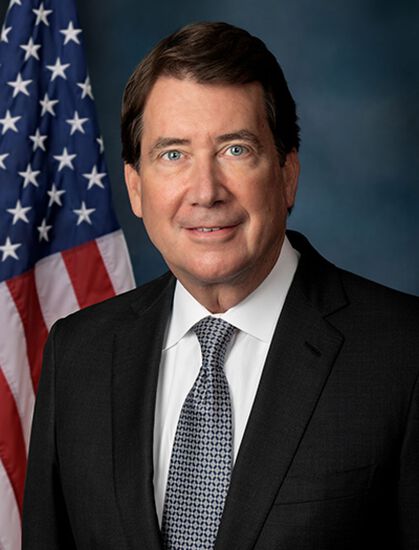
HR 3698, the Living Organ Donor Tax Credit Act, creates a federal tax credit for living individuals who donate specific life-saving organs (like kidneys, livers, or bone marrow) for transplantation. It allows donors to claim a credit covering unreimbursed medical costs, travel, lodging, follow-up care, paperwork, and lost wages related to donation, capped at $5,000 per tax year. The credit applies only to living donors whose organ removal and transplantation comply with U.S. law, excludes reimbursed expenses, and does not apply to deceased donors. This bill directly affects living organ donors who bear out-of-pocket costs during the donation process.
This bill creates a refundable tax credit of up to $15,000 (10% of purchase price) for first-time homebuyers in the U.S. To qualify, buyers must be at least 18 years old, have no recent home ownership, and purchase with a federally-backed mortgage. The credit is reduced for higher-income households relative to local median income and home prices. Homeowners who sell within 4 years must repay the credit, though exceptions exist for military service or job changes. The credit can also be transferred to the mortgage lender at the time of purchase.
This bill expands paid leave under the Family and Medical Leave Act (FMLA) to cover "spontaneous loss of an unborn child" (defined as unplanned, non-purposeful loss in the womb), allowing eligible employees to take leave for their own or their spouse's loss. It also creates a new refundable tax credit for individuals who experienced a stillbirth (defined as spontaneous fetal death before delivery), requiring a state-issued stillbirth certificate for eligibility. The bill adds specific certification requirements for leave requests and clarifies how the tax credit integrates with existing tax filing rules. It directly affects private-sector employees covered by FMLA and taxpayers who suffered a stillbirth.
The CROP Act (S 3297) extends the federal tax credit for biodiesel producers by delaying its expiration date from December 31, 2024 to May 31, 2026. This directly affects biodiesel manufacturers and fuel sellers who claim the credit for qualifying fuel. The bill also adds a provision to prevent double benefits by ensuring the credit isn't claimed alongside another specific tax credit (section 45Z). The extension applies to biodiesel used or sold after November 30, 2025.
The SAFE HOME Act creates a refundable tax credit allowing homeowners to claim 25% of qualified wildfire mitigation costs, up to $25,000 annually. It directly affects primary homeowners in wildfire-prone areas - defined as locations with recent federal wildfire disaster declarations, FEMA hazard mitigation assistance, or designated "community disaster resilience zones." Qualifying expenses include fire-resistant roofing, ignition-resistant construction upgrades, vegetation clearing, and smoke prevention systems, but exclude government-funded projects. The credit phases out for taxpayers earning over $200,000 in adjusted gross income and expires after 2032.
This bill repeals multiple tax credits for renewable energy projects, including solar, wind, and clean transportation fuels, which currently provide financial incentives to businesses. It directly affects companies that claim these credits, such as renewable energy developers and manufacturers, by eliminating their eligibility for these tax benefits starting in 2025. Key provisions remove specific sections of the tax code (like Sections 45, 45Q, and 48) and adjust related references to reflect the repeal. The changes apply to taxable years beginning after December 31, 2024, with no new provisions added - only the removal of existing credits.
Topics
✗ Budget & TaxesOpposes Budget & TaxesRepeals renewable energy tax credits (Sections 45, 45Q, 48), eliminating financial incentives for businesses and directly reducing tax benefits under Budget & Taxes.95% confidence
✗ EnergyOpposes EnergyRepeals tax credits for solar, wind, and clean fuels, removing financial incentives for renewable energy development and weakening clean energy standards.95% confidence
✗ EnvironmentOpposes EnvironmentRepeals tax credits for renewable energy (solar, wind, clean fuels), removing financial incentives that support environmental protection and clean energy adoption.95% confidence
✗ TransportationOpposes TransportationRepeals tax credits for clean transportation fuels, eliminating financial incentives for sustainable transport projects and directly defunding this sector.90% confidence
This bill creates a tax credit for U.S. manufacturers producing rare earth magnets. It provides $20 per kilogram for magnets made in the U.S., increasing to $30 per kilogram if at least 90% of component rare earth materials (like neodymium or cobalt) are also sourced domestically. The credit phases out after 2034 (70% in 2035, 35% in 2036-37, and 0% after 2037) and restricts credits if materials come from "non-allied foreign nations" (with limited exceptions until 2027). The credit applies to taxable years beginning after December 31, 2024, and requires magnets to be produced in regular business operations.
The EITC Lookback Act (HR 2898) allows low-income workers with fluctuating income to use their previous tax year's earnings when calculating their Earned Income Tax Credit (EITC), instead of their current year's lower earnings. It directly affects qualifying taxpayers whose income drops from one year to the next, such as those facing temporary job loss or reduced hours. The key provision lets eligible individuals choose to substitute their prior year's earned income for the current year's in determining their EITC amount. This change applies to tax years beginning after December 31, 2024, providing potential tax relief for workers experiencing income volatility.
The PURE Water Act (HR 1441) creates a federal tax credit for individuals who install qualifying home water filtration systems. It allows a 20% credit on primary residence filtration costs and 10% on secondary residence costs, capped at $2,500 per tax year, with unused portions carryable forward. The credit applies only to systems that remove at least 90% of lead, PFAS, and PFOA from drinking water, excluding maintenance costs. This directly affects individual taxpayers who purchase qualifying filters for their U.S. homes, effective for tax years beginning after December 31, 2024.
This bill would permanently expand the Child Tax Credit to provide $4,200 per year for each child under age 6 and $3,000 per year for each child ages 6-17. It also creates a new $2,800 credit for pregnant mothers with unborn children at 20 weeks gestation or more, requiring physician certification of gestational age. Both credits phase out for higher-income taxpayers, with the Child Tax Credit phasing out at $400,000 for joint filers and $200,000 for other taxpayers. The bill would affect low and middle-income families with children, particularly those with young children or who are pregnant, with changes applying to taxable years beginning after December 31, 2025.