Issue · Budget & Taxes

Budget & Taxes

Every budget & taxes bill, vote, and legislator stance in United States, automatically classified by Maddy, our AI policy reader.

Total bills
2,046
119th Congress
Top supporter
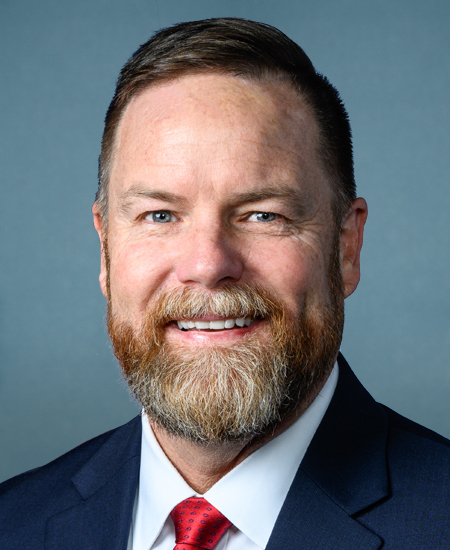
Clay Fuller
87% support rate
Top opponent
Eleanor Holmes Norton
0% support rate
Ranked legislators
10
5 support · 5 oppose
Key legislators

Who's moving budget & taxes in United States

Legislators moving budget & taxes in United States
Legislator Party Stance Support rate Decisive votes
Clay Fuller
Clay Fuller House · District 14
R
Strong +
87% 46
Tina Smith
Tina Smith Senate
D
Strong +
83% 77
Andrew Ogles
Andrew Ogles House · District 5
R
Strong +
83% 65
Aaron Bean
Aaron Bean House · District 4
R
Strong +
83% 69
Ben Cline
Ben Cline House · District 6
R
Strong +
83% 69
Eleanor Holmes Norton
Eleanor Holmes Norton House · District At-Large
D
Strong −
0% 26
Pablo José Hernández
Pablo José Hernández House · District At-Large
D
Strong −
7% 28
Analilia Mejia
Analilia Mejia House · District 11
D
Strong −
13% 45
George Latimer
George Latimer House · District 16
D
Strong −
13% 67
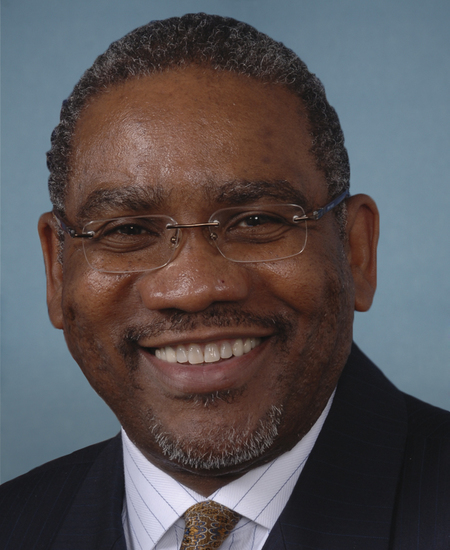
Gregory W. Meeks
Gregory W. Meeks House · District 5
D
Strong −
14% 66
Showing 261–270 of 2,046 bills

All budget & taxes bills

in committee · United States · House Jun 8, 2026

HR 9176: PAR Act

This bill, known as the PAR Act, updates the Internal Revenue Code to provide clearer tax rules for digital assets, specifically targeting lenders, dealers, traders, and investors. It primarily affects individuals and businesses involved in lending traded digital assets, dealers and traders of widely traded digital assets, and taxpayers engaging in digital asset trading activities. A key provision requires lenders to report transfers of traded digital assets similarly to how they report securities, while also allowing dealers and traders to elect a "mark-to-market" accounting method to calculate gains and losses on these assets. The legislation further establishes a safe harbor for digital asset trading and defines specific terms such as "widely traded digital asset" based on market capitalization and liquidity thresholds. Finally, the bill includes definitions for various digital asset types, including stablecoins, and clarifies that these rules do not determine whether a digital asset is legally classified as a security or commodity.
in committee · United States · House Jun 4, 2026

HR 9139: Medicaid Financing Clarification Act of 2026

This bill, titled the Medicaid Financing Clarification Act of 2026, aims to clarify federal rules regarding how states and local governments can fund their Medicaid programs. It directly affects state and local officials by explicitly defining "public funds" to include various local revenue sources such as taxes, fees, and tobacco settlement money. The legislation amends the Social Security Act to ensure that money held by local entities like counties or cities counts as eligible public funding for Medicaid matching purposes. Additionally, it provides clear definitions for terms like "political subdivision" and "public agency" to remove ambiguity in existing laws. By updating these definitions, the bill seeks to establish a clearer legal framework for how local governments contribute to Medicaid financing.
Sub-Topics Medicaid
in committee · United States · House Jun 4, 2026

HR 9141: SAVE America Through REAL ID Act

HR 9141, titled the SAVE America Through REAL ID Act, establishes a federal grant program to help states eliminate fees for low-income individuals seeking REAL ID-compliant driver's licenses or identification cards. The legislation defines low-income individuals as those earning at or below 200 percent of the federal poverty level or participating in means-tested assistance programs. Funds allocated to states can be used to waive application fees, cover administrative costs, conduct public outreach, and provide mobile services in underserved areas. To receive these funds, states must submit detailed plans outlining how they will identify eligible applicants and ensure privacy compliance, while the Department of Homeland Security will distribute money based on population need and require annual reporting on program usage. The bill authorizes $50 million annually for fiscal years 2027 through 2031 to support these efforts.
in committee · United States · House Jun 2, 2026

HR 9114: Gig Is Up Act

The Gig Is Up Act requires large companies with over $100 million in annual revenue and at least 10,000 independent contractors to withhold taxes from payments made to these workers. This provision treats the earnings of these specific contractors as wages for Social Security purposes, effectively doubling the employer's portion of the tax on their behalf. The law applies to payments made after December 31, 2026, and includes rules for grouping related businesses together to determine if they meet the size thresholds.
Sub-Topics Gig Economy
in committee · United States · House Jun 2, 2026

HR 9094: Florida Freeze Disaster Assistance Act of 2026

This bill appropriates $3.5 billion to help Florida farmers and growers recover from the severe freeze that occurred in March 2026. The funds are distributed as block grants specifically to cover losses in crops, trees, bushes, and vines caused by the cold weather, including compensation for multi-year crops. Assistance is restricted to counties officially designated as disaster areas by the Secretary of Agriculture on March 4, 2026, and requires a request from a state agriculture department to release the money. The Secretary of Agriculture must also submit quarterly reports to Congress detailing how the funds are being used until the budget is exhausted.
in committee · United States · House May 26, 2026

HR 9036: American High-Speed Rail Act

The American High-Speed Rail Act expands federal funding and streamlines regulations to support the development of high-speed and higher-speed rail projects across the United States. It authorizes billions of dollars in grants for corridor planning, technology improvements, and construction, while allowing the federal government to cover up to 100% of project costs under specific conditions. The bill also introduces new provisions to facilitate land acquisition, prioritize border projects, and extend labor protections to workers involved in federally funded rail infrastructure. Additionally, the legislation defines higher-speed rail as trains traveling between 110 and 186 miles per hour and includes tax incentives for rail carriers that sell or lease property to support these projects.
Sub-Topics Rail
in committee · United States · House May 14, 2026

HR 8837: RISE Act

The RISE Act introduces tax incentives to encourage small businesses to offer pension plans to their employees. It increases the startup tax credit for microemployers, allowing them to claim a larger credit for establishing a retirement plan starting in 2027. Additionally, the bill permits service providers who help set up these plans to receive a tax credit for the fees they waive to make the plans affordable. To prevent fraud, the law requires employers to certify that they have not previously received similar credits for the same group of workers. These changes aim to lower the financial barriers for small employers and their service partners to create retirement savings options.
Sub-Topics Pensions Tax Credits Retirement Benefits Tags Small Business
in committee · United States · Senate Jun 1, 2026

S 4647: AGE Act of 2026

The AGE Act of 2026 creates a new tax credit to help taxpayers cover the costs of caring for elderly relatives who are at least 65 years old and need assistance with daily living. This credit allows individuals to claim up to $6,000 per year for expenses such as medical care, adult day services, personal care, respite care, and home modifications, provided the care recipient is a parent, grandparent, or other household member. The amount of the credit decreases by one percentage point for every $4,000 that a taxpayer's income exceeds $120,000, and the benefit is reduced if the taxpayer already uses a dependent care assistance program. To qualify, taxpayers must report the names, addresses, and taxpayer identification numbers of both the care providers and the elderly individuals they are supporting on their tax returns.
Sub-Topics Tax Credits Tags Seniors
in committee · United States · Senate Jun 2, 2026

S 4662: ROBINHOOD Act of 2026

The ROBINHOOD Act of 2026 introduces a new tax rule that treats high-income individuals and wealthy entities as if they sold their assets when they take out new loans. Specifically, the bill requires these taxpayers to recognize capital gains on their long-term assets equal to the amount of any new loan they receive, effectively taxing the borrowing event itself. This provision applies to individuals with an annual income exceeding $100 million or assets valued over $1 billion, as well as certain trusts and estates meeting similar thresholds. The law also mandates that these recognized gains cannot be offset by capital losses in the same year and extends the rule to long-term leases for properties held for more than five years. Additionally, the bill includes specific definitions for "covered assets," valuation methods, and reporting requirements to ensure compliance with these new tax obligations.
in committee · United States · House Jun 8, 2026

HR 9174: Digital Assets Voluntary Disclosure Program Act

This bill creates a voluntary program allowing individuals who have previously failed to report digital assets taxes to fix their errors without facing additional criminal charges or most civil penalties. To qualify, taxpayers must submit an application, file amended tax returns for affected years, and pay any owed taxes plus a specific penalty that is reduced for those who certify their actions were not willful. In exchange for full compliance, the program waives further penalties and protects participants from criminal prosecution or the use of their disclosed information for investigations. The initiative is designed to help people come into compliance with tax laws regarding digital assets while encouraging transparency through a structured disclosure process.
Showing 261 to 270 of 2,046 bills
Previous 1 26 27 28 205 Next