

Issue · Healthcare
Healthcare
Every healthcare bill, vote, and legislator stance in Tennessee, automatically classified by Maddy, our AI policy reader.
Total bills
513
114th Regular Session (2025-2026)
Top supporter
Jeremy Faison
100% support rate
Top opponent
Justin Jones
19% support rate
Ranked legislators
10
5 support · 5 oppose
Key legislators
Who's moving healthcare in Tennessee
| Legislator | Party | Stance | Support rate | Decisive votes |
|---|---|---|---|---|
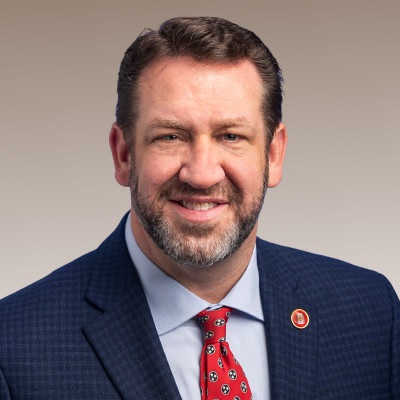
Jeremy Faison
House · District 11
|
R |
Strong +
|
100% | 18 |

Cameron Sexton
House · District 25
|
R |
Strong +
|
100% | 16 |

Tim Rudd
House · District 34
|
R |
Strong +
|
100% | 15 |

Steve Southerland
Senate · District 9
|
R |
Strong +
|
100% | 12 |

Ferrell Haile
Senate · District 18
|
R |
Strong +
|
100% | 11 |

Justin Jones
House · District 52
|
D |
Strong −
|
19% | 16 |

Gabby Salinas
House · District 96
|
D |
Oppose
|
25% | 20 |

Jason Powell
House · District 53
|
D |
Oppose
|
28% | 18 |

Aftyn Behn
House · District 51
|
D |
Oppose
|
29% | 17 |

Jeff Yarbro
Senate · District 21
|
D |
Oppose
|
33% | 12 |
Showing 191–200 of 513
bills
All healthcare bills
HJR 749: General Assembly, Statement of Intent or Position - Recognizes importance of substance abuse prevention education. -
Topics
✓ EducationSupports EducationRecommends evidence-based substance abuse prevention curriculum in K-12, enhancing student program access and life skills education per resolution language.
✓ HealthcareSupports HealthcareRecommends evidence-based mental health support and substance abuse prevention in school curricula, directly advancing public health initiatives under healthcare policy.
HB 2016: Employees, Employers - As introduced, requires employers that condition employment or prospective employment upon an employee or prospective employee submitting to a mental health evaluation to grant the employee or prospective employee reasonable access to the results of the mental health evaluation, including any report from a mental health professional or other evaluator; provides a private right of action for an employee or prospective employee who is denied such access. - Amends TCA Title 8 and Title 50.
Topics
✓ HealthcareSupports HealthcareProtects employee rights to access mental health evaluation results, ensuring transparency in employer-mandated mental health assessments under healthcare context.
✓ Labor & EmploymentSupports Labor & EmploymentBill mandates employer access to mental health evaluation results for employees, protecting workers' rights and providing legal recourse for denial, directly strengthening employment standards.
HB 1848: Insurance, Health, Accident - As introduced, prohibits an insurer from denying, conditioning the issuance or effectiveness of, or discriminating in the pricing of a medicare supplement policy if an applicant meets certain listed requirements, including a non-age eligible person who submits an application for enrollment in a medicare supplement policy with a different insurer within 60 days of such person's birthday and makes other related changes. - Amends TCA Title 56.
HB 1590: Sunset Laws - As enacted, extends the Occupational Therapy Licensure Compact to June 30, 2034. - Amends TCA Title 4, Chapter 29 and Title 63, Chapter 13, Part 5.
Sub-Topics
Medical Licensing
SB 1848: Controlled Substances - As enacted, authorizes additional healthcare providers to directly administer buprenorphine mono or buprenorphine without the use of naloxone; adds that prescribing a buprenorphine product to nursing mother or prescribing an injectable mono product does not restrict certain healthcare providers from prescribing a buprenorphine product for the treatment of opioid use disorder without naloxone. - Amends TCA Title 53, Chapter 11.
HB 1471: Courts - As enacted, removes a conviction for domestic assault from the definition of a violent offender for purposes of drug treatment courts; changes the definition of a violent offender for purposes of drug treatment courts from an offender with a conviction for an offense involving certain acts to an offender with a conviction for a felony offense involving certain acts within the previous 10 years. - Amends TCA Title 16, Chapter 22.
Topics
✓ Criminal JusticeSupports Criminal JusticeBill expands drug treatment court eligibility by removing non-felony domestic assault from violent offender definition, promoting rehabilitation over incarceration.
✓ HealthcareSupports HealthcareExpands access to drug treatment programs (a healthcare service) by removing non-felony domestic assault from violent offender definition, broadening eligibility for treatment courts.
SJR 619: General Assembly, Statement of Intent or Position - Recognizes importance of substance abuse prevention education. -
Topics
✓ EducationSupports EducationBill advocates for integrating substance abuse prevention into school curricula, enhancing student programs and promoting life skills training per Tennessee survey data.
✓ HealthcareSupports HealthcareBill advocates for evidence-based substance abuse prevention programs in schools, integrated into health curricula, strengthening public health initiatives as part of healthcare policy.
SB 2080: TennCare - As introduced, directs the first $150 million of tax revenue generated by the health maintenance organization tax on or after July 1, 2026, to be utilized to draw down federal funds to reimburse a physician, advanced practice registered nurse, or physician assistant who is entitled to receive TennCare reimbursement for a CPT code for evaluation and management, obstetrics and gynecology, or anesthesia. - Amends TCA Title 56; Title 63; Title 68 and Title 71.
Topics
✓ Budget & TaxesSupports Budget & TaxesDirects $150M in existing tax revenue to fund healthcare provider reimbursements for TennCare, aligning with funding essential public services under budget/fiscal management.
✓ HealthcareSupports HealthcareDirects $150M tax revenue to reimburse providers for TennCare services at 110% Medicare rate, expanding coverage access and funding for healthcare providers.
HB 2003: Education, Dept. of - As introduced, enacts the "School Mental Health Transparency Act"; requires the department to consult relevant agencies to compile a list of mental health resources; requires public schools to use the department's list to compile lists of mental health resources available to enrolled students and provide the lists to students' parents; requires that lists of mental health resources be published on the website of the department and each public school. - Amends TCA Title 10, Chapter 7; Title 33 and Title 49.
Topics
✓ EducationSupports EducationRequires schools to provide mental health resources to students/parents, enhancing access to student support services within educational context.
✓ HealthcareSupports HealthcareRequires statewide mental health resource lists for schools, improving student access to mental health services per bill's transparency mandate.