

Issue · Criminal Justice
Criminal Justice
Every criminal justice bill, vote, and legislator stance in Tennessee, automatically classified by Maddy, our AI policy reader.
Total bills
422
114th Regular Session (2025-2026)
Top supporter
Johnny Shaw
77% support rate
Top opponent
Tim Rudd
19% support rate
Ranked legislators
10
5 support · 5 oppose
Key legislators
Who's moving criminal justice in Tennessee
| Legislator | Party | Stance | Support rate | Votes |
|---|---|---|---|---|
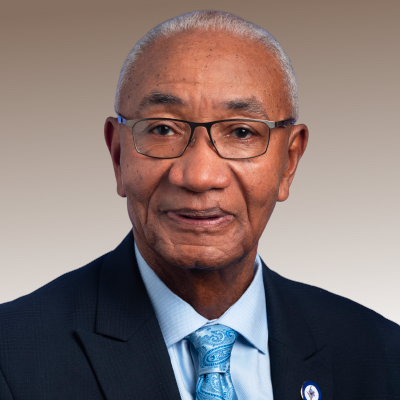
Johnny Shaw
House · District 80
|
D |
Support
|
77% | 103 |

John Clemmons
House · District 55
|
D |
Support
|
76% | 115 |

Harold Love
House · District 58
|
D |
Support
|
75% | 92 |
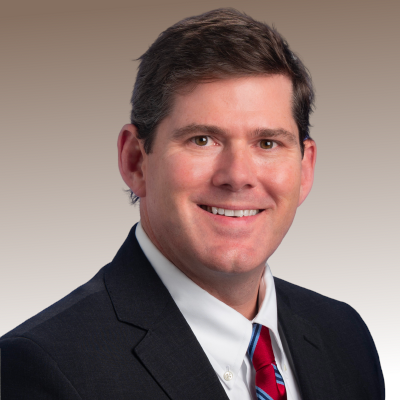
Bob Freeman
House · District 56
|
D |
Support
|
75% | 95 |

Joe Towns
House · District 84
|
D |
Support
|
74% | 122 |

Tim Rudd
House · District 34
|
R |
Strong −
|
19% | 107 |

Chris Todd
House · District 73
|
R |
Oppose
|
24% | 150 |

Johnny Garrett
House · District 45
|
R |
Oppose
|
24% | 132 |

Renea Jones
House · District 4
|
R |
Oppose
|
24% | 100 |

Dan Howell
House · District 22
|
R |
Oppose
|
25% | 126 |
Showing 91–100 of 422
bills
All criminal justice bills
HB 1832: Driver Licenses - As introduced, authorizes the department of safety to issue a for-hire endorsement to operate a Class D vehicle to an applicant who would otherwise qualify for a for-hire endorsement but for the requirement of at least two years of unrestricted driving prior to the date of application if the applicant has completed a sentence of incarceration after conviction for an offense and currently has a restricted license for unpaid fines and court costs and is making payments in accordance with a payment plan. - Amends TCA Title 55.
HB 1931: Sheriffs - As introduced, prohibits the county legislative body of a county with a charter form of government from adopting a budget that reduces the budget for the sheriff below the budgeted amount for the previous fiscal year unless the reduction is approved in writing by the sheriff; authorizes a sheriff to approve or disapprove a budget amendment that would reduce personnel, operational, or capital expenditures below the level proposed by the sheriff; authorizes the county legislative body to override the sheriff's disapproval by a two-thirds vote. - Amends TCA Title 5, Chapter 1, Part 2; Title 5, Chapter 9, Part 4 and Title 8, Chapter 20, Part 1.
Topics
✓ Budget & TaxesSupports Budget & TaxesPrevents county budget cuts to sheriff's department without approval, protecting existing funding for personnel and essential operations.
✓ Criminal JusticeSupports Criminal JusticePrevents budget cuts to sheriff's personnel/operations, maintaining law enforcement funding levels per bill's explicit language on budget protections.
Sub-Topics
Law Enforcement
SB 1909: Courts - As enacted, removes a conviction for domestic assault from the definition of a violent offender for purposes of drug treatment courts; changes the definition of a violent offender for purposes of drug treatment courts from an offender with a conviction for an offense involving certain acts to an offender with a conviction for a felony offense involving certain acts within the previous 10 years. - Amends TCA Title 16, Chapter 22.
Topics
✓ Criminal JusticeSupports Criminal JusticeRemoves domestic assault convictions from violent offender definition for drug treatment courts, expanding eligibility for rehabilitation programs and aligning with criminal justice reform goals.
✓ HealthcareSupports HealthcareRemoves domestic assault conviction barrier for drug treatment courts, improving access to substance abuse healthcare services.
SB 1845: Clerks, Court - As enacted, requires a person ordered to use an ignition interlock device to provide the clerk of the court with documentation showing qualifications for certain assistance on the date the person was ordered to use the device to show need to participate in the electronic monitoring indigency fund. - Amends TCA Section 55-10-419.
Sub-Topics
Courts
HB 2001: Criminal Offenses - As introduced, adds as an affirmative defense to the offense of criminal exposure of another to human immunodeficiency virus (HIV), proof by a preponderance of the evidence that a person infected with HIV was in compliance with a treatment regime prescribed by the person's healthcare provider to medically suppress the risk of HIV transmission. - Amends TCA Title 39, Chapter 13.
Sub-Topics
Courts
HB 1489: Firefighters - As enacted, expands the applicability of the presumption that a firefighter's cancer was caused by the firefighter's employment to include arson investigators. - Amends TCA Title 7; Title 8; Title 50 and Title 56.
Topics
✓ Criminal JusticeSupports Criminal JusticeExpands cancer presumption benefits to arson investigators (TBI/sheriff's personnel), supporting law enforcement personnel within criminal justice framework.
✓ HealthcareSupports HealthcareExpands disability benefits eligibility for cancer treatment via occupational presumption, improving access to healthcare for arson investigators.
✓ Labor & EmploymentSupports Labor & EmploymentExpands cancer presumption for arson investigators, granting automatic disability benefits for job-related cancer, strengthening workplace safety protections and worker benefits.
Sub-Topics
Law Enforcement
HB 1554: Criminal Procedure - As introduced, removes the requirement for a petitioner for restoration of citizenship or an applicant for a certificate of employability to pay the costs of the proceedings; makes other changes to the process for restoration of citizenship. - Amends TCA Title 40, Chapter 29.
Topics
✓ Criminal JusticeSupports Criminal JusticeRemoves financial barriers for citizenship restoration and employability, aiding reintegration and reducing recidivism per criminal justice reform indicators.
✓ ImmigrationSupports ImmigrationRemoves fees for citizenship restoration and employability certificates, reducing financial barriers for immigrants seeking legal status and rights.
SB 1973: Immigration - As introduced, enacts the “Tennessee Freedom from Unlawful Immigration Detention Act.” - Amends TCA Title 7; Title 8; Title 38; Title 40 and Title 41.
Topics
✓ Criminal JusticeSupports Criminal JusticeProhibits unlawful immigration detentions by law enforcement, protects civil rights, and requires judicial warrants - aligns with criminal justice reform indicators like enhancing accountability and protecting defendant rights.
✓ ImmigrationSupports ImmigrationProhibits state detention based on ICE requests, requires judicial warrants, and allows lawsuits - directly limits state cooperation with federal immigration enforcement.
HB 2062: Criminal Offenses - As introduced, increases the amount of marijuana that may be possessed, from one-half ounce to five ounces, for it to be considered a small amount of marijuana and punishable as a Class A misdemeanor; revises penalty to make it punishable by a $500 fine for a first offense and a $1,000 fine for a second or subsequent offense. - Amends TCA Title 39, Chapter 17.
Sub-Topics
Drug Policy