Issue · Criminal Justice

Criminal Justice

Every criminal justice bill, vote, and legislator stance in Tennessee, automatically classified by Maddy, our AI policy reader.

Total bills
59
114th Regular Session (2025-2026)
Top supporter
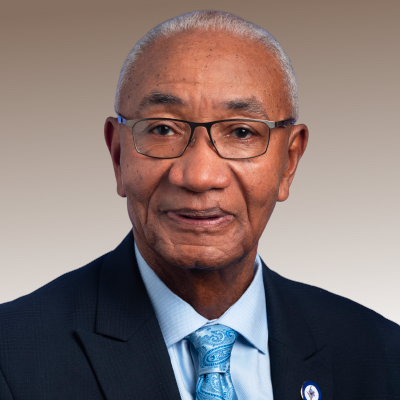
Johnny Shaw
77% support rate
Top opponent
Tim Rudd
19% support rate
Ranked legislators
10
5 support · 5 oppose
Key legislators

Who's moving criminal justice in Tennessee

Legislators moving criminal justice in Tennessee
Legislator Party Stance Support rate Decisive votes
Johnny Shaw
Johnny Shaw House · District 80
D
Support
77% 56
John Clemmons
John Clemmons House · District 55
D
Support
76% 63
Joe Towns
Joe Towns House · District 84
D
Support
76% 71
Harold Love
Harold Love House · District 58
D
Support
75% 56
Bob Freeman
Bob Freeman House · District 56
D
Support
75% 59
Tim Rudd
Tim Rudd House · District 34
R
Strong −
19% 59
Renea Jones
Renea Jones House · District 4
R
Oppose
24% 62
Chris Todd
Chris Todd House · District 73
R
Oppose
24% 82
Johnny Garrett
Johnny Garrett House · District 45
R
Oppose
25% 73
Dan Howell
Dan Howell House · District 22
R
Oppose
25% 71
Showing 51–59 of 59 bills

All criminal justice bills

passed · Tennessee · Senate Apr 23, 2025

SR 120: General Assembly, Statement of Intent or Position - Urges Supreme Court to draft and adopt codes of conduct in the court rules for district attorneys general, district public defenders, and court clerks; urges Supreme Court to create panel to investigate current complaints of misconduct regarding three elected district attorneys general. -

Senate Resolution 120 is a non-binding resolution urging the Tennessee Supreme Court to take two specific actions. It requests the court draft and adopt formal codes of conduct for district attorneys general, district public defenders, and court clerks - officials currently lacking such rules. Additionally, it asks the court to form a panel to investigate recent misconduct complaints against three elected district attorneys general. The resolution does not create new laws but seeks to establish accountability mechanisms for these justice system roles.
signed · Tennessee · Senate Apr 8, 2025

SB 1290: Criminal Offenses - As enacted, makes permanent the exclusion of narcotic testing equipment used to determine whether a controlled substance contains a synthetic opioid, unless the narcotic testing equipment is possessed for purposes of the commission of a drug offense, from the definition of drug paraphernalia; removes the July 1, 2025, repeal date for that exclusion. - Amends TCA Section 39-17-402.

SB 1290 permanently removes a temporary expiration date for a law that excludes certain testing equipment from being classified as drug paraphernalia. Specifically, it makes permanent the exclusion of equipment used to test for synthetic opioids (like fentanyl) unless the equipment is used to commit a drug crime. This change directly affects harm reduction organizations, public health workers, and law enforcement using such tools for legitimate testing purposes. The bill amends Tennessee Code Annotated Section 39-17-402 by deleting the prior repeal date of July 1, 2025. The law is now permanent and took effect April 3, 2025.
signed · Tennessee · Senate Apr 8, 2025

SB 19: Attorney General and Reporter - As enacted, authorizes the attorney general and reporter to conduct an investigation and initiate criminal prosecution of a judicial elected official or district attorney general whenever the attorney general and reporter has probable cause to investigate whether an official may have violated any state criminal law and either a decision to prosecute the official by the district attorney general may result in a personal, financial, or political conflict of interest or the attorney general and reporter receives a report of a violation of the prohibition on nepotism within state government entities. - Amends TCA Title 8, Chapter 6.

SB 19 allows Tennessee's Attorney General and Reporter to investigate and prosecute criminal violations by judicial officials (such as judges) or district attorney generals. This authority applies only when the Attorney General has sufficient evidence of a crime and either the local district attorney would face a personal, financial, or political conflict of interest in prosecuting the case, or a nepotism violation has been reported. The law ensures that cases involving potential conflicts can be handled by the Attorney General's office without relying on the conflicted local prosecutor. It does not change existing criminal laws but clarifies the process for such investigations.
signed · Tennessee · Senate Apr 8, 2025

SB 335: Criminal Offenses - As enacted, enacts the "Voyeurism Victims Act." - Amends TCA Title 28; Title 29; Title 36, Chapter 3, Part 6; Title 39 and Title 40, Chapter 2.

SB 335, the "Voyeurism Victims Act," amends Tennessee law to specifically address unauthorized photography (voyeurism) by defining "unlawful photography" and expanding legal protections for victims. It adds new provisions to criminalize hidden-camera photography, multiple-victim cases, and extends the statute of limitations for prosecution by tolling it during the defendant's concealment of the crime. The bill also integrates "unlawful photography" into existing domestic violence, stalking, and human trafficking protections, allowing victims to seek relief through related legal pathways. This law directly affects individuals who experience unauthorized photography, providing clearer legal recourse and updated penalties. It takes effect July 1, 2025, after being signed by the Governor on March 25, 2025.
in committee · Tennessee · Senate Apr 4, 2025

SB 1303: Criminal Offenses - As enacted, creates the offense of intentionally impeding or obstructing a member of the division of protective services from ingress to, egress from, or movement about a location where the member is responsible for a person protected by the division of protective services; creates the offense of intentionally refusing to vacate an area where access has been restricted by a member of the division of protective services for the purpose of maintaining the safety or security of the person being protected. - Amends TCA Title 4 and Title 39.

SB 1303 creates two new criminal offenses in Tennessee law. It makes it illegal to intentionally block or obstruct a protective services officer (including highway patrol or law enforcement supporting them) when they need to access a location to protect a person under their care. It also prohibits refusing to leave an area where access has been restricted by such an officer to ensure the safety of the person being protected. Violations are punishable as a Class A misdemeanor, or a Class E felony if the person obstructing posed a threat to the protected individual. This law directly affects anyone who interferes with protective services officers during their duties.
in committee · Tennessee · Senate Apr 4, 2025

SB 790: Law Enforcement Training Academy - As enacted, requires the peace officer standards and training commission to issue a certificate of compliance to a person appointed as a private special deputy on or after January 1, 2026, if the person meets the qualifications for employment as a police officer and satisfactorily completes an approved recruit training program; requires annual in-service training sessions to retain such certification. - Amends TCA Title 4; Title 8; Title 38 and Title 49.

SB 790 requires private special deputies in Tennessee (appointed on or after January 1, 2026) to obtain a certificate of compliance from the Peace Officer Standards and Training Commission. To qualify, they must meet standard police officer requirements and complete an approved recruit training program. The bill also mandates annual in-service training sessions to maintain this certification. This law amends Tennessee Code to establish these training and certification standards for private special deputies.
signed · Tennessee · House Apr 4, 2025

HB 120: Criminal Offenses - As enacted, creates the offense of intentionally impeding or obstructing a member of the division of protective services from ingress to, egress from, or movement about a location where the member is responsible for a person protected by the division of protective services; creates the offense of intentionally refusing to vacate an area where access has been restricted by a member of the division of protective services for the purpose of maintaining the safety or security of the person being protected. - Amends TCA Title 4 and Title 39.

HB 120 creates two new criminal offenses in Tennessee: intentionally obstructing officers from entering, leaving, or moving within areas where they protect vulnerable individuals, and refusing to vacate restricted zones when ordered for safety. It directly affects anyone who interferes with the Division of Protective Services (including highway patrol and law enforcement officers) while they are safeguarding people under their protection. Violating these provisions is a Class A misdemeanor, but becomes a Class E felony if the person posed a threat to the protected individual. The law takes effect July 1, 2025, and applies to all locations where protective services are actively engaged.
signed · Tennessee · House Apr 4, 2025

HB 1095: Law Enforcement Training Academy - As enacted, requires the peace officer standards and training commission to issue a certificate of compliance to a person appointed as a private special deputy on or after January 1, 2026, if the person meets the qualifications for employment as a police officer and satisfactorily completes an approved recruit training program; requires annual in-service training sessions to retain such certification. - Amends TCA Title 4; Title 8; Title 38 and Title 49.

HB 1095 requires Tennessee's Peace Officer Standards and Training Commission to issue a certification to private special deputies appointed on or after January 1, 2026, if they meet police officer qualifications and complete an approved recruit training program. To maintain this certification, special deputies must also complete annual in-service training sessions relevant to their duties. The bill directly affects private special deputies employed by entities like private security firms or businesses with law enforcement authority. It updates existing training requirements in Tennessee law (Titles 4, 8, 38, and 49) to standardize certification for this specific role, effective March 28, 2025.
failed · Tennessee · Senate Mar 17, 2025

SB 17: Law Enforcement - As introduced, requires law enforcement agencies and officials to communicate with federal officials regarding the immigration status only for an individual who has been arrested for a criminal offense; sets a civil penalty of up to $1,000 for a law enforcement agency that does not comply to be enforced by the attorney general and reporter. - Amends TCA Title 5; Title 6; Title 7; Title 8; Title 40 and Chapter 716 of the Public Acts of 2024.

SB 17 requires Tennessee law enforcement agencies to share an individual’s immigration status with federal officials only when that person has been arrested for a criminal offense. It exempts school resource officers regarding students and people not arrested (such as victims or witnesses). The bill imposes a $1,000 civil penalty for noncompliance, enforceable by the attorney general. This bill failed in the Senate Judiciary Committee on March 17, 2025, and has not advanced further.

Showing 51 to 59 of 59 bills
Previous 1 … 4 5 6