Issue · Criminal Justice

Criminal Justice

Every criminal justice bill, vote, and legislator stance in Tennessee, automatically classified by Maddy, our AI policy reader.

Total bills
67
114th Regular Session (2025-2026)
Top supporter
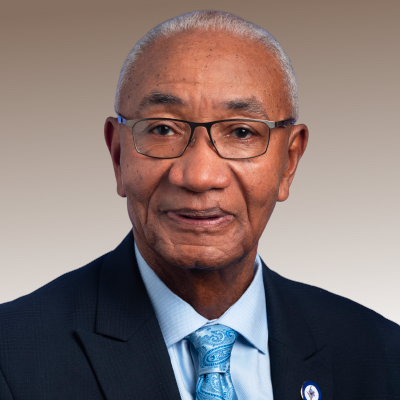
Johnny Shaw
77% support rate
Top opponent
Tim Rudd
19% support rate
Ranked legislators
10
5 support · 5 oppose
Key legislators

Who's moving criminal justice in Tennessee

Legislators moving criminal justice in Tennessee
Legislator Party Stance Support rate Decisive votes
Johnny Shaw
Johnny Shaw House · District 80
D
Support
77% 56
John Clemmons
John Clemmons House · District 55
D
Support
76% 63
Joe Towns
Joe Towns House · District 84
D
Support
76% 71
Harold Love
Harold Love House · District 58
D
Support
75% 56
Bob Freeman
Bob Freeman House · District 56
D
Support
75% 59
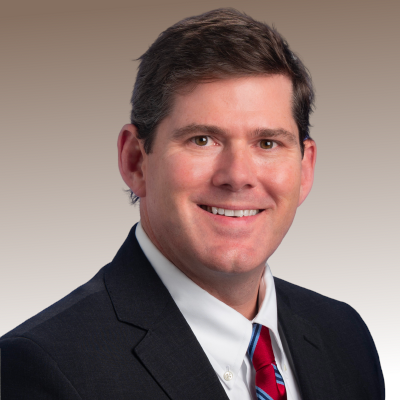
Tim Rudd
Tim Rudd House · District 34
R
Strong −
19% 59
Renea Jones
Renea Jones House · District 4
R
Oppose
24% 62
Chris Todd
Chris Todd House · District 73
R
Oppose
24% 82
Johnny Garrett
Johnny Garrett House · District 45
R
Oppose
25% 73
Dan Howell
Dan Howell House · District 22
R
Oppose
25% 71
Showing 61–67 of 67 bills

All criminal justice bills

signed · Tennessee · House Apr 4, 2025

HB 120: Criminal Offenses - As enacted, creates the offense of intentionally impeding or obstructing a member of the division of protective services from ingress to, egress from, or movement about a location where the member is responsible for a person protected by the division of protective services; creates the offense of intentionally refusing to vacate an area where access has been restricted by a member of the division of protective services for the purpose of maintaining the safety or security of the person being protected. - Amends TCA Title 4 and Title 39.

HB 120 creates two new criminal offenses in Tennessee: intentionally obstructing officers from entering, leaving, or moving within areas where they protect vulnerable individuals, and refusing to vacate restricted zones when ordered for safety. It directly affects anyone who interferes with the Division of Protective Services (including highway patrol and law enforcement officers) while they are safeguarding people under their protection. Violating these provisions is a Class A misdemeanor, but becomes a Class E felony if the person posed a threat to the protected individual. The law takes effect July 1, 2025, and applies to all locations where protective services are actively engaged.
signed · Tennessee · House Apr 4, 2025

HB 1095: Law Enforcement Training Academy - As enacted, requires the peace officer standards and training commission to issue a certificate of compliance to a person appointed as a private special deputy on or after January 1, 2026, if the person meets the qualifications for employment as a police officer and satisfactorily completes an approved recruit training program; requires annual in-service training sessions to retain such certification. - Amends TCA Title 4; Title 8; Title 38 and Title 49.

HB 1095 requires Tennessee's Peace Officer Standards and Training Commission to issue a certification to private special deputies appointed on or after January 1, 2026, if they meet police officer qualifications and complete an approved recruit training program. To maintain this certification, special deputies must also complete annual in-service training sessions relevant to their duties. The bill directly affects private special deputies employed by entities like private security firms or businesses with law enforcement authority. It updates existing training requirements in Tennessee law (Titles 4, 8, 38, and 49) to standardize certification for this specific role, effective March 28, 2025.
in committee · Tennessee · Senate Apr 2, 2025

SB 337: Taxes, Sales - As introduced, authorizes certain counties to levy a local option sales tax at the rate of 3.75 percent, instead of a maximum of 2.75 percent, if the revenue from the increase in such tax is used by the county exclusively for the construction of a new county jail or to retire debt, including principal and interest and related expenses, on such construction. - Amends TCA Title 67, Chapter 6, Part 7.

SB 337 allows Tennessee counties with populations over 900,000 (per the 2020 census) to temporarily increase their local sales tax rate from 2.75% to 3.75% for up to eight years. The additional revenue must be used exclusively for constructing a new county jail or paying off debt related to such construction. If the jail debt is paid off early, the tax rate reverts to 2.75% immediately. After the temporary period, counties must allocate revenue from the 2.75% tax rate to fund sheriff's department operations (in addition to existing funding), not for other purposes.
passed · Tennessee · Senate Mar 17, 2025

SB 956: Expunction - As introduced, lowers the period of time that must elapse after completion of the sentence imposed before a petitioner may have an eligible criminal offense expunged, for misdemeanors or Class E felonies, from five years to three years, and for Class D felonies, from 10 years to six years. - Amends TCA Title 39 and Title 40.

SB 956 reduces waiting periods for expunging certain criminal records in Tennessee. It shortens the required time from 5 years to 3 years for misdemeanors or Class E felonies, and from 10 years to 6 years for Class D felonies after completing a sentence. The bill amends Tennessee Code Sections 40-32-101(g)(2)(B) and (k)(1)(C) to implement these changes. This affects individuals seeking to clear eligible criminal records for specific offense types. The law takes effect July 1, 2025.
failed · Tennessee · Senate Mar 17, 2025

SB 17: Law Enforcement - As introduced, requires law enforcement agencies and officials to communicate with federal officials regarding the immigration status only for an individual who has been arrested for a criminal offense; sets a civil penalty of up to $1,000 for a law enforcement agency that does not comply to be enforced by the attorney general and reporter. - Amends TCA Title 5; Title 6; Title 7; Title 8; Title 40 and Chapter 716 of the Public Acts of 2024.

SB 17 requires Tennessee law enforcement agencies to share an individual’s immigration status with federal officials only when that person has been arrested for a criminal offense. It exempts school resource officers regarding students and people not arrested (such as victims or witnesses). The bill imposes a $1,000 civil penalty for noncompliance, enforceable by the attorney general. This bill failed in the Senate Judiciary Committee on March 17, 2025, and has not advanced further.
failed · Tennessee · Senate Mar 11, 2025

SB 959: Sentencing - As introduced, permits a person who is serving a sentence of incarceration of eight years or more for an offense committed prior to January 1, 2026, and who is a victim of domestic abuse subjected to substantial physical, sexual, or psychological abuse inflicted by a member of the same family or household as the person to submit to the sentencing court, a request to apply for resentencing. - Amends TCA Title 39 and Title 40.

SB 959 allows individuals serving 8+ years in prison for crimes committed before January 1, 2026, to request a new sentencing hearing if they were victims of domestic abuse (physical, sexual, or psychological) inflicted by a family or household member at the time of the offense. To apply, they must submit court records, police reports, or other verified evidence proving their abuse history and current sentence eligibility. Courts will review prison program participation (like domestic violence counseling) and abuse history but cannot reconsider the original conviction. If approved, the court may reduce the sentence while crediting time already served.
in committee · Tennessee · Senate Feb 12, 2025

SB 710: Criminal Offenses - As introduced, requires the punishment for the offense of misuse of official information to include at least 30 hours of community service work to be determined by the court, in addition to any other punishment authorized by law. - Amends TCA Title 39, Chapter 16, Part 4.

SB 710 amends Tennessee law to require that public servants convicted of misusing official information (a Class B misdemeanor) must complete at least 30 hours of community service, determined by the court, in addition to any other penalties allowed under law. This bill directly affects public employees who misuse their position or access to official information. The key provision adds a mandatory community service requirement to existing punishments for this specific offense, as outlined in amended Tennessee Code § 39-16-404(b). The law takes effect July 1, 2025.

Showing 61 to 67 of 67 bills
Previous 1 … 5 6 7