Issue · Technology

Technology

Every technology bill, vote, and legislator stance in Pennsylvania, automatically classified by Maddy, our AI policy reader.

Total bills
187
2025-2026 Regular Session
Top supporter
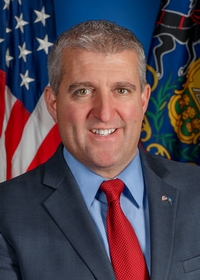
Devlin Robinson
100% support rate
Top opponent
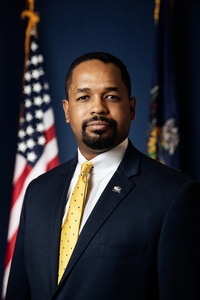
Sharif Street
14% support rate
Ranked legislators
10
5 support · 5 oppose
Key legislators

Who's moving technology in Pennsylvania

Legislators moving technology in Pennsylvania
Legislator Party Stance Support rate Votes
Devlin Robinson
Devlin Robinson Senate · District 37
R
Strong +
100% 55
Joe Picozzi
Joe Picozzi Senate · District 5
R
Strong +
100% 60
Scott Martin
Scott Martin Senate · District 13
R
Strong +
100% 49
Elder Vogel
Elder Vogel Senate · District 47
R
Strong +
100% 59
Frank Farry
Frank Farry Senate · District 6
R
Strong +
100% 45
Sharif Street
Sharif Street Senate · District 3
D
Strong −
14% 54
Carolyn Comitta
Carolyn Comitta Senate · District 19
D
Strong −
14% 51
Tony Williams
Tony Williams Senate · District 8
D
Strong −
17% 48
Judy Schwank
Judy Schwank Senate · District 11
D
Strong −
17% 51
Lindsey Williams
Lindsey Williams Senate · District 38
D
Strong −
17% 52
Showing 61–70 of 187 bills

All technology bills

passed · Pennsylvania · Senate Jun 9, 2026

SR 244: A Resolution directing the Joint State Government Commission to establish the Task Force on Child Protection in the Digital Age.

This Senate Resolution directs the Joint State Government Commission to create a Task Force on Child Protection in the Digital Age to evaluate how current laws address online risks to minors. The Task Force will include representatives from law enforcement, victim advocacy, medical professionals, and other relevant agencies appointed by the Attorney General. Its main role is to review Pennsylvania's statutes regarding child protection in the digital age, particularly concerning artificial intelligence and child sexual abuse material, and recommend updates to laws and policies. The commission must submit an initial report by November 30, 2027, with follow-up reports every odd-numbered year thereafter, and publish findings online while sending copies to state leadership.
Sub-Topics Artificial Intelligence Online Safety Tags Children
passed · Pennsylvania · Senate Jul 1, 2026

SB 1182: An Act amending the act of December 22, 1983 (P.L.306, No.84), known as the Board of Vehicles Act, further providing for title of act; in preliminary provisions, further providing for definitions; and, in vehicles, further providing for license to engage in business, for reimbursement for all parts and service required by the manufacturer or distributor and reimbursement audits, for unlawful acts by manufacturers or distributors and for manufacturer or distributor repurchase of inventory and equipment and providing for consumer data protection.

SB 1182 amends Pennsylvania's Board of Vehicles Act to update definitions and add new requirements for vehicle dealers, manufacturers, and distributors. It requires manufacturers/distributors to reimburse dealers for all parts and service costs mandated by them, includes audit provisions for these reimbursements, and establishes a process for manufacturers/distributors to repurchase dealer inventory or equipment. The bill also adds consumer data protection rules, defining "consumer data" to align with federal standards (15 U.S.C. § 6809) and limiting how third-party "authorized integrators" can access dealer data. These changes directly affect vehicle dealers (who sell new/used cars), manufacturers, and distributors, while protecting consumer data used in dealership operations.
passed · Pennsylvania · House Jun 18, 2026

HB 2252: An Act amending Title 18 (Crimes and Offenses) of the Pennsylvania Consolidated Statutes, in sexual offenses, further providing for the offense of unlawful dissemination of intimate image; and, in minors, further providing for the offense of sexual abuse of children.

HB 2252 makes it a crime to share someone's intimate image without consent, including AI-generated images that falsely depict them in nudity or sexual conduct. It directly affects individuals whose intimate images are shared non-consensually, whether the images are real or artificially created using AI or photo editing. The law establishes misdemeanor penalties (from second to first degree) based on factors like the victim's age, the sharer's intent (e.g., to harass, profit, or cause harm), and whether multiple images were shared. This bill updates Pennsylvania's sexual offenses law to specifically address the growing threat of AI-generated intimate images, ensuring they face the same legal consequences as real non-consensual image sharing.
in committee · Pennsylvania · House Feb 11, 2026

HB 2215: An Act amending Title 18 (Crimes and Offenses) of the Pennsylvania Consolidated Statutes, providing for guidelines for user age verification and responsible dialogue; providing for the offense of prohibited promotion of sexually explicit conduct and for the offense of prohibited promotion of violence; and imposing penalties.

HB 2215 requires AI chatbot providers to verify user age using reliable methods like government-issued ID, not just birth dates, to prevent minors from accessing AI companions designed for emotional interaction. The bill prohibits creating or distributing AI chatbots that risk encouraging minors to engage in or share sexually explicit content or violent behavior, with penalties of up to $100,000 per violation. It defines "AI companion" as chatbots simulating friendship or therapy and mandates that age verification must reliably block minors without relying on IP addresses or other technical indicators. This law applies to any entity making AI chatbots available in the U.S., focusing on protecting minors from harmful content through concrete verification requirements.
in committee · Pennsylvania · Senate Jan 9, 2026

SB 1138: An Act amending Title 20 (Decedents, Estates and Fiduciaries) of the Pennsylvania Consolidated Statutes, adopting Uniform Acts: in short title and definitions, further providing for definitions; in wills, further providing for validity of execution and for revocation of a will; providing for electronic wills; in dispositions independent of letters, family exemption, probate of wills and grant of letters, further providing for self-proved wills; providing for uniform electronic estate planning documents; and making conforming changes.

This bill modernizes Pennsylvania's estate laws to allow electronic wills. It defines "will" to include digital documents and creates new rules for creating, signing, and revoking wills online. Key provisions require witnesses to observe the testator via video call (virtual "presence") and follow specific digital execution steps, while still permitting traditional paper wills. The law directly affects Pennsylvanians creating estate plans, making it easier to use digital tools without losing legal validity.
in committee · Pennsylvania · House Jan 30, 2026

HB 2174: An Act amending Title 75 (Vehicles) of the Pennsylvania Consolidated Statutes, in enforcement, providing for use of automated license plate reader information prohibited.

HB 2174 prohibits Pennsylvania law enforcement agencies from sharing automated license plate reader (ALPR) data with any federal, state, or local government agency if that data would be used to enforce laws interfering with access to medically accurate information or evidence-based medical services. Before sharing ALPR data, agencies must obtain a written declaration from the receiving agency confirming they will not use it in violation of this prohibition. The bill also requires ALPR information to be kept confidential and defines key terms like "medically accurate" (supported by peer-reviewed research or medical guidelines) and "evidence-based" (aligned with clinical standards and patient needs). This directly affects law enforcement agencies and government entities seeking to use ALPR data for medical-related enforcement actions.
Sub-Topics Law Enforcement
in committee · Pennsylvania · Senate Jan 9, 2026

SB 1113: An Act amending Titles 35 (Health and Safety) and 40 (Insurance) of the Pennsylvania Consolidated Statutes, providing for artificial intelligence in facilities, for artificial intelligence use by insurers and for artificial intelligence use by MA or CHIP managed care plans; imposing duties on the Department of Health, the Insurance Department and the Department of Human Services; and imposing penalties.

SB 1113 requires health care facilities, insurers, and Medicaid Advantage/CHIP managed care plans in Pennsylvania to disclose when artificial intelligence (AI) is used for clinical decision making or patient communications. Facilities must provide clear disclosures in writing, on their public website, and include disclaimers for AI-generated communications with instructions to contact a human provider. The bill exempts routine administrative tasks (like scheduling or billing) and communications reviewed by a human from these disclosure rules. It imposes duties on the Departments of Health, Insurance, and Human Services to enforce compliance and sets penalties for violations.
in committee · Pennsylvania · House Dec 18, 2025

HB 2108: An Act providing for duties of covered entities to protect the best interests of children that use online services, products or features and for data protection impact assessments; prohibiting certain actions by covered entities; and imposing penalties.

HB 2108 requires online platforms likely accessed by children (e.g., social media, games, educational apps) to conduct data protection impact assessments before launching features. It mandates that companies prioritize children's safety, privacy, and well-being over profits when designing products, prohibits deceptive "dark patterns" that trick kids into sharing data, and bans practices causing physical, psychological, or privacy harms. Covered entities - businesses processing children's personal data - face penalties for violations. The law directly affects digital services targeting minors, focusing on concrete policy changes like mandatory risk assessments and design safeguards.
in committee · Pennsylvania · House Mar 19, 2026

HB 2175: An Act amending Title 12 (Commerce and Trade) of the Pennsylvania Consolidated Statutes, providing for consumer protection and for artificial intelligence and chatbots; imposing duties on the Bureau of Consumer Protection in the Office of Attorney General; and imposing penalties.

HB 2175 requires businesses using AI chatbots to clearly disclose when consumers are interacting with artificial intelligence, especially for mental health support (e.g., chatbots claiming to treat anxiety or depression). It prohibits deceptive advertising, mandates protection of personal data shared with these tools, and gives Pennsylvania’s Attorney General’s Bureau of Consumer Protection authority to enforce these rules and impose penalties. The law directly affects companies offering AI chatbots that provide health-related advice to Pennsylvania residents. It does not cover scripted tools (like guided meditation) or AI that simply connects users with human professionals.
passed · Pennsylvania · House Apr 29, 2026

HB 2177: An Act amending Titles 8 (Boroughs and Incorporated Towns), 11 (Cities) and 16 (Counties) of the Pennsylvania Consolidated Statutes, in ordinances, further providing for publication; in council, further providing for publication of proposed ordinance; and, in county commissioners and chief clerks, further providing for ordinances and resolutions.

HB 2177 updates publication requirements for proposed ordinances in Pennsylvania boroughs, cities, and counties. It mandates that when publishing a proposed ordinance, municipalities must include a detailed summary covering tax/fee changes, penalties, and fund-related provisions (like payments or restrictions), along with references to where the full text can be viewed online or at a physical location. This applies to all proposed ordinances before council votes, ensuring the public has clear access to key details. The bill does not change the content of ordinances but standardizes how they are communicated to residents.
Tags Local Government
Showing 61 to 70 of 187 bills
Previous 1 6 7 8 19 Next