Issue · Technology

Technology (Artificial Intelligence)

Every technology bill, vote, and legislator stance in Pennsylvania, automatically classified by Maddy, our AI policy reader.

Total bills
33
2025-2026 Regular Session
Top supporter
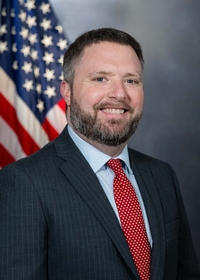
Ben Waxman
100% support rate
Top opponent
Chad Reichard
0% support rate
Ranked legislators
10
5 support · 5 oppose
Key legislators

Who's moving artificial intelligence in Pennsylvania

Legislators moving artificial intelligence in Pennsylvania
Legislator Party Stance Support rate Votes
Ben Waxman
Ben Waxman House · District 182
D
Strong +
100% 7
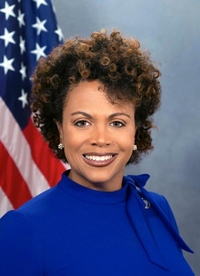
Gina Curry
Gina Curry House · District 164
D
Strong +
100% 7
Andre Carroll
Andre Carroll House · District 201
D
Strong +
100% 6
Jacklyn Rusnock
Jacklyn Rusnock House · District 126
D
Strong +
100% 6
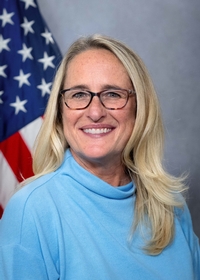
JM
Jen Mazzocco House · District 42
D
Strong +
100% 6
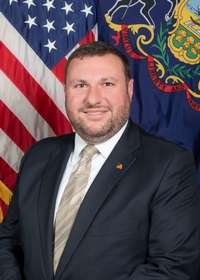
Chad Reichard
Chad Reichard House · District 90
R
Strong −
0% 7
Eric Nelson
Eric Nelson House · District 57
R
Strong −
0% 7
AV
Andrea Verobish House · District 79
R
Strong −
0% 6
CW
Catherine Wallen House · District 193
R
Strong −
0% 6
Joe D'Orsie
Joe D'Orsie House · District 47
R
Strong −
0% 6
Showing 11–20 of 33 bills

All technology bills

in committee · Pennsylvania · Senate Mar 2, 2026

SB 1205: An Act amending the act of December 17, 1968 (P.L.1224, No.387), known as the Unfair Trade Practices and Consumer Protection Law, further providing for definitions.

This bill amends Pennsylvania's Unfair Trade Practices and Consumer Protection Law to explicitly define "dynamic pricing" as a potential unfair trade practice. It directly affects businesses that sell essential goods or services by clarifying that using artificial intelligence to vary prices within a 24-hour period based on demand may be considered deceptive. The law defines dynamic pricing as changing prices based on demand or AI-driven adjustments, while excluding bona fide pricing practices that offer genuine discounts without misleading consumers. Essential goods are defined as items exempt from sales tax, and the bill includes specific definitions for artificial intelligence, generative AI, and former price comparisons to guide enforcement. The changes take effect 60 days after the bill is enacted.
in committee · Pennsylvania · House Mar 13, 2026

HB 2288: An Act amending the act of December 17, 1968 (P.L.1224, No.387), known as the Unfair Trade Practices and Consumer Protection Law, providing for artificial intelligence training disclosure.

This bill requires online platforms in Pennsylvania to inform users when their content may be used to train artificial intelligence systems. It applies to websites and apps that collect user-created content like posts, videos, or images for AI training purposes. The law mandates that platforms must provide a clear, separate disclosure at sign-up and require users to acknowledge receiving this notice before they can post content. The bill defines key terms like "artificial intelligence" and "platform" to ensure consistent application of the disclosure requirement.
passed · Pennsylvania · Senate Jun 9, 2026

SR 244: A Resolution directing the Joint State Government Commission to establish the Task Force on Child Protection in the Digital Age.

This Senate Resolution directs the Joint State Government Commission to create a Task Force on Child Protection in the Digital Age to evaluate how current laws address online risks to minors. The Task Force will include representatives from law enforcement, victim advocacy, medical professionals, and other relevant agencies appointed by the Attorney General. Its main role is to review Pennsylvania's statutes regarding child protection in the digital age, particularly concerning artificial intelligence and child sexual abuse material, and recommend updates to laws and policies. The commission must submit an initial report by November 30, 2027, with follow-up reports every odd-numbered year thereafter, and publish findings online while sending copies to state leadership.
Sub-Topics Artificial Intelligence Online Safety Tags Children
passed · Pennsylvania · House Jun 18, 2026

HB 2252: An Act amending Title 18 (Crimes and Offenses) of the Pennsylvania Consolidated Statutes, in sexual offenses, further providing for the offense of unlawful dissemination of intimate image; and, in minors, further providing for the offense of sexual abuse of children.

HB 2252 makes it a crime to share someone's intimate image without consent, including AI-generated images that falsely depict them in nudity or sexual conduct. It directly affects individuals whose intimate images are shared non-consensually, whether the images are real or artificially created using AI or photo editing. The law establishes misdemeanor penalties (from second to first degree) based on factors like the victim's age, the sharer's intent (e.g., to harass, profit, or cause harm), and whether multiple images were shared. This bill updates Pennsylvania's sexual offenses law to specifically address the growing threat of AI-generated intimate images, ensuring they face the same legal consequences as real non-consensual image sharing.
in committee · Pennsylvania · House Feb 11, 2026

HB 2215: An Act amending Title 18 (Crimes and Offenses) of the Pennsylvania Consolidated Statutes, providing for guidelines for user age verification and responsible dialogue; providing for the offense of prohibited promotion of sexually explicit conduct and for the offense of prohibited promotion of violence; and imposing penalties.

HB 2215 requires AI chatbot providers to verify user age using reliable methods like government-issued ID, not just birth dates, to prevent minors from accessing AI companions designed for emotional interaction. The bill prohibits creating or distributing AI chatbots that risk encouraging minors to engage in or share sexually explicit content or violent behavior, with penalties of up to $100,000 per violation. It defines "AI companion" as chatbots simulating friendship or therapy and mandates that age verification must reliably block minors without relying on IP addresses or other technical indicators. This law applies to any entity making AI chatbots available in the U.S., focusing on protecting minors from harmful content through concrete verification requirements.
in committee · Pennsylvania · Senate Jan 9, 2026

SB 1113: An Act amending Titles 35 (Health and Safety) and 40 (Insurance) of the Pennsylvania Consolidated Statutes, providing for artificial intelligence in facilities, for artificial intelligence use by insurers and for artificial intelligence use by MA or CHIP managed care plans; imposing duties on the Department of Health, the Insurance Department and the Department of Human Services; and imposing penalties.

SB 1113 requires health care facilities, insurers, and Medicaid Advantage/CHIP managed care plans in Pennsylvania to disclose when artificial intelligence (AI) is used for clinical decision making or patient communications. Facilities must provide clear disclosures in writing, on their public website, and include disclaimers for AI-generated communications with instructions to contact a human provider. The bill exempts routine administrative tasks (like scheduling or billing) and communications reviewed by a human from these disclosure rules. It imposes duties on the Departments of Health, Insurance, and Human Services to enforce compliance and sets penalties for violations.
in committee · Pennsylvania · House Mar 19, 2026

HB 2175: An Act amending Title 12 (Commerce and Trade) of the Pennsylvania Consolidated Statutes, providing for consumer protection and for artificial intelligence and chatbots; imposing duties on the Bureau of Consumer Protection in the Office of Attorney General; and imposing penalties.

HB 2175 requires businesses using AI chatbots to clearly disclose when consumers are interacting with artificial intelligence, especially for mental health support (e.g., chatbots claiming to treat anxiety or depression). It prohibits deceptive advertising, mandates protection of personal data shared with these tools, and gives Pennsylvania’s Attorney General’s Bureau of Consumer Protection authority to enforce these rules and impose penalties. The law directly affects companies offering AI chatbots that provide health-related advice to Pennsylvania residents. It does not cover scripted tools (like guided meditation) or AI that simply connects users with human professionals.
in committee · Pennsylvania · House Dec 12, 2025

HB 2100: An Act providing for the use of mental health chatbots and artificial intelligence by mental health therapists; imposing duties on the Bureau of Professional and Occupational Affairs; and imposing a penalty.

HB 2100 prohibits mental health chatbot suppliers from selling or sharing Pennsylvania users' personal health data or chat inputs with third parties. It directly affects companies providing AI therapy tools that simulate confidential conversations with users in Pennsylvania. The law requires suppliers to protect user data, with limited exceptions for user consent or sharing with health providers. This creates new data privacy rules for AI mental health tools used by therapists in the state.
in committee · Pennsylvania · House Feb 5, 2025

HB 518: An Act amending the act of December 17, 1968 (P.L.1224, No.387), known as the Unfair Trade Practices and Consumer Protection Law, further providing for definitions and for unlawful acts or practices and exclusions.

HB 518 amends Pennsylvania's Unfair Trade Practices law to address consumer guarantees generated by artificial intelligence. It specifically makes it unlawful for businesses to fail to honor written guarantees, warranties, or policies created by consumer-facing AI systems. The bill defines "artificial intelligence" broadly to include systems that perform human-like tasks (e.g., learning, decision-making) without significant human oversight. This directly affects businesses using AI for customer commitments, adding a new prohibited practice under the state's consumer protection law. The change clarifies that deceptive AI-generated promises now fall under existing penalties for unfair trade practices.
Sub-Topics Artificial Intelligence Tags Consumer Protection
signed · Pennsylvania · Senate Jul 7, 2025

SB 649: An Act amending Title 18 (Crimes and Offenses) of the Pennsylvania Consolidated Statutes, in forgery and fraudulent practices, providing for the offense of digital forgery.

Pennsylvania's SB 649 (now Act No. 35 of 2025) creates a new criminal offense for "digital forgery," targeting individuals who create and distribute fake digital images or audio recordings of real people without consent, intending to defraud or cause harm. It defines a "forged digital likeness" as a computer-generated representation that materially changes a person's appearance, speech, or behavior to deceive others, with penalties ranging from a misdemeanor to a felony for fraud schemes. The law explicitly excludes satire, political commentary, law enforcement activities, and technology providers from prosecution, and allows a defense if the creator clearly disclosed the content as fake. This law directly affects creators of deceptive digital content and aims to protect individuals from identity-based fraud or harm.
Showing 11 to 20 of 33 bills
Previous 1 2 3 4 Next