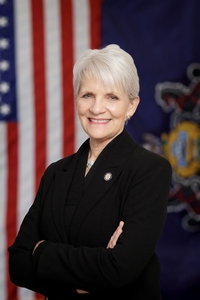
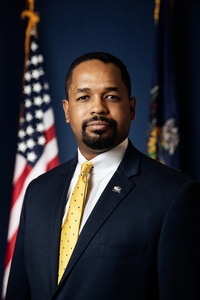
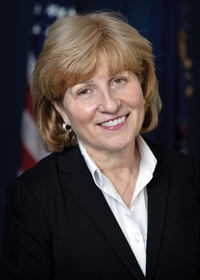
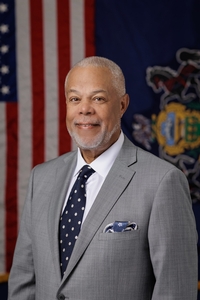
Key legislators
Who's moving technology in Pennsylvania
Showing 11–14 of 14
bills
All technology bills
SB 468 allows Pennsylvania to form agreements with other states for drone (unmanned aircraft system) research and testing. It requires Governor approval for these agreements and specifies that drone operations must occur in certain counties (including defined population ranges) or with approved educational partners like schools or colleges offering aviation courses. The bill lets the state Transportation Department create temporary rules for drone operations without standard regulatory review, while ensuring compliance with federal and local laws. This primarily affects state agencies, educational institutions, and drone operators seeking to test or deploy drones across state lines.
This bill amends Pennsylvania's State Lottery Law to protect the privacy of large lottery winners. It requires that personal information (name, address, and other details) for winners of $100,000 or more in prizes remain confidential and not part of public records. However, the winner's city/township/borough, county of residence, and prize amount must still be publicly disclosed. Winners may voluntarily waive this confidentiality by following procedures set by the Department of Revenue, and the department can create implementing regulations.
SB 811 establishes Pennsylvania's SBIR/STTR Matching Funds Program to support small businesses with federal research grants. It provides state matching funds (up to $50,000) to Pennsylvania-based businesses that receive Phase I awards under the federal Small Business Innovation Research (SBIR) or Small Business Technology Transfer (STTR) programs. To qualify, businesses must conduct at least 51% of their Phase II research in Pennsylvania, submit a Phase I report, and avoid duplicate state funding. The program aims to foster economic growth by helping small businesses advance federal-funded research projects.
Pennsylvania's SB 649 (now Act No. 35 of 2025) creates a new criminal offense for "digital forgery," targeting individuals who create and distribute fake digital images or audio recordings of real people without consent, intending to defraud or cause harm. It defines a "forged digital likeness" as a computer-generated representation that materially changes a person's appearance, speech, or behavior to deceive others, with penalties ranging from a misdemeanor to a felony for fraud schemes. The law explicitly excludes satire, political commentary, law enforcement activities, and technology providers from prosecution, and allows a defense if the creator clearly disclosed the content as fake. This law directly affects creators of deceptive digital content and aims to protect individuals from identity-based fraud or harm.