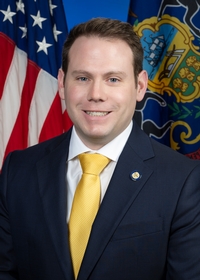
HB 1358 updates Pennsylvania's lodging laws to directly protect hotel employees. It requires hotels to safeguard workers from retaliation for reporting safety issues or violations, replacing vague existing rules with specific protections. The bill imposes fines on hotels that violate these new safeguards, targeting employers who fail to prevent retaliation. This law affects all Pennsylvania hotels and lodging businesses, focusing on concrete changes to employee safety and enforcement.
HB 1334 allocates funding from the Workmen's Compensation Administration Fund to Pennsylvania's Department of Labor and Industry, Department of Community and Economic Development, and the Office of Small Business Advocate. It covers expenses for administering the Workers' Compensation Act, Pennsylvania Occupational Disease Act, and the Small Business Advocate program for fiscal year 2025-2026, including payments for unpaid bills from the prior fiscal year. The bill directly affects state agencies responsible for worker compensation, occupational disease claims, and small business support services. This is a routine appropriations measure to ensure ongoing operations of these programs, not a policy change. The bill was signed into law as Act No. 3A of 2025 on June 27, 2025.
HB 506 amends Pennsylvania's Human Services Code to establish a state-funded Child Care Staff Recruitment and Retention Program. It directly affects licensed child care providers and their staff by creating a new program to address staffing shortages. The key mechanism provides state funding for recruitment incentives and retention support, such as signing bonuses or professional development, for child care workers. The bill passed final passage on June 25, 2025, and was referred to the Health & Human Services committee.
HB 27 amends the Health Care Facilities Act to require hospitals and surgical clinics to install systems that remove smoke generated during certain medical procedures. This directly affects healthcare facilities performing surgeries where smoke is produced, such as those using lasers or electrosurgery. The bill mandates these evacuation systems as part of facility licensing standards under the existing 1979 law. The change focuses on improving air quality and safety for both patients and medical staff during operations.
HB 191 updates Pennsylvania's school safety requirements by replacing outdated rules about CPR and defibrillator training. It repeals old teacher certification requirements for CPR instruction and school health service rules about automatic external defibrillators (AEDs). The bill now mandates new CPR and AED training for school staff, sets specific standards for AED availability and placement in schools, and establishes an official AED program. This directly affects public schools, teachers, and school health personnel by requiring updated emergency response protocols. The bill focuses on modernizing school health safety procedures rather than changing other aspects of education.
HB 846 amends Pennsylvania's Prevailing Wage Act to clarify job definitions, specify how prevailing wages are calculated for public construction projects, and detail the Labor Secretary's responsibilities. It directly affects construction workers, contractors, and state agencies managing public works by updating administrative processes. The bill makes technical changes to implementation without altering the core requirement that public projects pay local standard wages. These updates aim to improve consistency in applying the existing law across state-funded projects.
HB 926 requires healthcare facilities to establish violence prevention committees to address workplace violence. These committees must develop safety plans, and facilities must report violent incidents to the Department of Labor and Industry. The Department gains authority to enforce compliance, impose fines, and issue administrative penalties for violations. This bill directly affects hospitals, clinics, and all healthcare workplaces covered under state labor regulations.
HB 504, the Community Energy Act, establishes a framework for third-party-owned community energy projects (like solar gardens) in Pennsylvania. It requires electric distribution companies to connect these facilities, provides bill credits to subscribers (homeowners, renters, and businesses) for energy generated, and ensures guaranteed savings by linking subscription payments to bill reductions. Key provisions include setting size limits (max 5,000 kW for most facilities), mandating that at least 50% of subscriptions come from small users or farms, and requiring fair wages for construction workers. The bill directly affects electric companies (with new connection duties), community energy organizations (as owners/operators), and subscribers (who gain access to shared renewable energy).
HB 820 creates Pennsylvania's "Working Pennsylvanians Tax Credit," which provides a state tax credit equal to 30% of a taxpayer's federal Earned Income Tax Credit (EITC) for the same year. This credit directly affects low-to-moderate income Pennsylvania residents who qualify for the federal EITC, applying it against their state tax bill. The credit is refundable, meaning taxpayers receive a cash refund if the credit exceeds their state tax liability. The bill takes effect for taxable years beginning after December 31, 2024.
HB 308 establishes new workplace health and safety standards specifically for public employees in Pennsylvania, including those working for the Commonwealth, counties, cities, schools, and public institutions. It creates the Pennsylvania Occupational Safety and Health Review Board, grants the Secretary of Labor new enforcement powers for workplace inspections, and requires public employers to meet safety standards comparable to those in the private sector under federal OSHA. The bill imposes penalties for violations, prohibits employer retaliation against employees reporting safety concerns, and mandates recordkeeping and reporting procedures. This legislation directly affects all public employees across Pennsylvania who previously lacked consistent state-level safety protections.