





Issue · Housing

Housing

Every housing bill, vote, and legislator stance in Pennsylvania, automatically classified by Maddy, our AI policy reader.

Total bills
4
2025-2026 Regular Session
Top supporter
James Malone
100% support rate
Top opponent
Andrea Verobish
14% support rate
Ranked legislators
10
5 support · 5 oppose
Key legislators

Who's moving housing in Pennsylvania

Legislators moving housing in Pennsylvania
Legislator Party Stance Support rate Votes
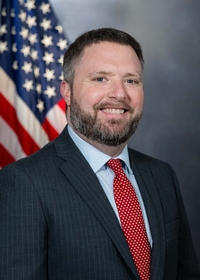
James Malone
James Malone Senate · District 36
D
Strong +
100% 35
AT
Ana Tiburcio House · District 22
D
Strong +
89% 44
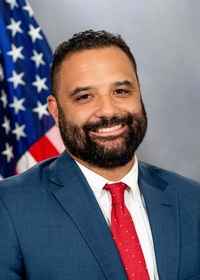
Ben Waxman
Ben Waxman House · District 182
D
Strong +
84% 196
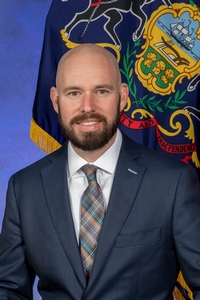
Dave Madsen
Dave Madsen House · District 104
D
Strong +
83% 194
Izzy Smith-Wade-El
Izzy Smith-Wade-El House · District 49
D
Strong +
83% 168
AV
Andrea Verobish House · District 79
R
Strong −
14% 39
Jake Banta
Jake Banta House · District 4
R
Strong −
15% 156
Carl Metzgar
Carl Metzgar House · District 69
R
Strong −
20% 135
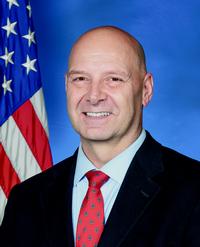
Doug Mastriano
Doug Mastriano Senate · District 33
R
Strong −
20% 42
Wendy Fink
Wendy Fink House · District 94
R
Oppose
21% 155
Showing 4 of 4 bills

All housing bills

passed · Pennsylvania · House May 1, 2026

HB 344: An Act amending the act of April 6, 1951 (P.L.69, No.20), known as The Landlord and Tenant Act of 1951, in creation of leases, statute of frauds and mortgaging of leaseholds, providing for parking provisions in lease.

HB 344 amends Pennsylvania's Landlord and Tenant Act to require landlords to disclose parking availability and associated fees in rental leases. Landlords must state whether parking is provided, if a fee applies, and the exact amount - prohibiting fee increases during the lease term. Tenants can file complaints with lower courts (e.g., district justice) if landlords fail to comply, and landlords violating the rules must reimburse tenants for parking costs incurred. This directly affects landlords and tenants in Pennsylvania rental agreements involving parking.
signed · Pennsylvania · House Nov 12, 2025

HB 416: An Act amending the act of April 9, 1929 (P.L.343, No.176), known as The Fiscal Code, providing for Child Care Staff Recruitment and Retention Program; in 911 Emergency Communication Services, further providing for surcharge; in Department of Revenue, further providing for exclusion from classes of income and providing for research and experimental expenditures and qualified production property, for report to General Assembly and for interest expense; in joint underwriting association, further providing for findings and for definitions, repealing provisions relating to sunset and providing for risk-based capital certification, for fund transfers, for association oversight and additional duties, for Joint Underwriting Association Board, for board meetings, for construction, for dissolution, for appropriations and for reports and hearings; in State Health Insurance Exchange Affordability Program, further providing for Exchange Affordability Assistance Account; providing for Rural Health Transformation Program; in Treasury Department, providing for waiver of interest, costs and fees; in procedure for disbursement of money from the State Treasury, further providing for use and appropriation of unused Commonwealth funds; in oil and gas wells, further providing for Oil and Gas Lease Fund; providing for advanced air mobility sites and for public transportation vehicles; in human services, further providing for resident care and related costs; in Attorney General, providing for home improvement contractor registration fee; providing for Rare Disease Advisory Council, for affordable housing tax credit and for working Pennsylvanians tax credit; in additional keystone opportunity expansion zones, providing for additional keystone opportunity expansion zones for certain counties of the fourth class; providing for additional extensions of keystone opportunity zones; in special funds, further providing for funding, for expiration and for other grants; in additional special funds and restricted accounts, further providing for establishment of special fund and account, for use of fund and for distributions from Pennsylvania Race Horse Development Fund and providing for refund of 2003 assessment by Insurance Department; in additional special funds and restricted accounts relating to Service and Infrastructure Improvement Fund, further providing for deposits and providing for Property Tax Relief Fund; in general budget implementation, further providing Executive Offices, for Department of Community and Economic Development, for Department of Environmental Protection, for Pennsylvania Fish and Boat Commission, for Pennsylvania Higher Education Assistance Agency and for Commonwealth Financing Authority, providing for stenography services, further providing for surcharges, for Federal and Commonwealth use of forest land and for Multimodal Transportation Fund and providing for State Sexual Offenders Assessment Board, for interest transfers, for fund transfers and for miscellaneous provisions; in 2024-2025 budget implementation, further providing for Department of Education, for Department of Environmental Protection and for Department of Human Services; in Streamlining Permits for Economic Expansion and Development Program, further providing for scope of article, for definitions and for the Streamlining Permits for Economic Expansion and Development Program, providing for review and determination of specific permits and for State agency permits and further providing for construction; providing for electricity load forecast accountability, for 2025-2026 budget implementation and for 2025-2026 restrictions on appropriations for funds and accounts; making repeals; and making editorial changes.

HB 416 establishes a new Child Care Staff Recruitment and Retention Program to support early childhood educators and creates a Rural Health Transformation Program to improve healthcare access in underserved areas. It also streamlines permit processes for economic development projects through the Streamlining Permits for Economic Expansion and Development Program. These provisions are integrated into the 2025 state budget implementation, alongside administrative updates to tax collection procedures, state fund management, and reporting requirements for agencies like the Department of Revenue and Treasury. The bill does not alter existing tax rates or create new funding streams but modifies how current state financial systems operate.
passed · Pennsylvania · House Jul 22, 2025

HB 1466: An Act amending Title 7 (Banks and Banking) of the Pennsylvania Consolidated Statutes, in mortgage loan industry licensing and consumer protection, further providing for general requirements.

HB 1466 requires mortgage lenders in Pennsylvania to provide mandatory housing counseling to applicants before processing reverse mortgage loans. Specifically, licensees must arrange in-person, phone, or video counseling from a HUD-approved agency, covering reverse mortgage details and alternatives, and issue a certificate documenting the session. This applies to all applicants for reverse mortgages - loans secured by home equity that don’t require repayment until later - and mandates lenders to keep counseling records for the loan’s duration. The bill directly affects mortgage lenders and reverse mortgage applicants, aiming to improve consumer understanding of this complex financial product.
passed · Pennsylvania · House Apr 28, 2025

HB 316: An Act amending Title 53 (Municipalities Generally) of the Pennsylvania Consolidated Statutes, in neighborhood blight reclamation and revitalization, further providing for municipal permit denial.

HB 316 allows Pennsylvania municipalities to deny building permits to property owners with specific unpaid debts or unaddressed violations. It directly affects owners of real property, particularly corporations or LLCs, who owe unpaid taxes, water/sewer bills, or have serious uncorrected code violations (like failing to fix blight) after six months of notification. The bill requires municipalities to specify the property address and court details in denial notices, prohibits denying permits needed to correct violations, and imposes a $1,000 fine on corporations that fail to disclose such delinquencies when applying for permits. It aims to prioritize blight remediation by linking permit access to property maintenance compliance.