Issue · Healthcare

Healthcare

Every healthcare bill, vote, and legislator stance in Pennsylvania, automatically classified by Maddy, our AI policy reader.

Total bills
672
2025-2026 Regular Session
Top supporter
Joe Pittman
96% support rate
Top opponent
Eric Weaknecht
14% support rate
Ranked legislators
10
5 support · 5 oppose
Key legislators

Who's moving healthcare in Pennsylvania

Legislators moving healthcare in Pennsylvania
Legislator Party Stance Support rate Votes
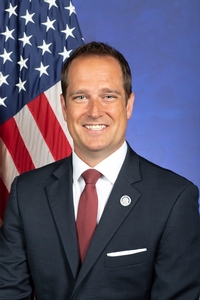
Joe Pittman
Joe Pittman Senate · District 41
R
Strong +
96% 70
Bridget Malloy Kosierowski
Bridget Malloy Kosierowski House · District 114
D
Strong +
94% 270
Devlin Robinson
Devlin Robinson Senate · District 37
R
Strong +
93% 72
Steve Malagari
Steve Malagari House · District 53
D
Strong +
93% 228
Kyle Mullins
Kyle Mullins House · District 112
D
Strong +
92% 224
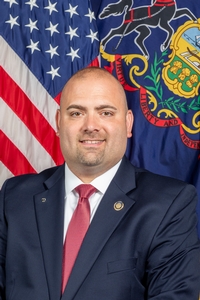
Eric Weaknecht
Eric Weaknecht House · District 5
R
Strong −
14% 185
Jamie Walsh
Jamie Walsh House · District 117
R
Strong −
14% 221
Scott Barger
Scott Barger House · District 80
R
Strong −
14% 212
Ryan Warner
Ryan Warner House · District 52
R
Strong −
14% 196
Joe Hamm
Joe Hamm House · District 84
R
Strong −
14% 204
Showing 611–620 of 672 bills

All healthcare bills

passed · Pennsylvania · House May 5, 2026

HR 203: A Resolution directing the Joint State Government Commission to conduct a study of reported patient safety events and issue a report with recommendations for reducing reportable patient safety events and improving patient safety.

HR 203 is a House Resolution directing Pennsylvania's Joint State Government Commission to study medication errors and patient safety. The Commission must form an advisory committee including health officials and stakeholder representatives (like pharmacists, nurses, and hospital associations) to examine how errors occur in hospitals, long-term care facilities, and pharmacies. The study will review current state laws, other states' policies, and best practices, with a report containing recommendations due to the House within 18 months. This resolution does not change laws but aims to inform future policy through a comprehensive review.
in committee · Pennsylvania · Senate Jan 29, 2025

SB 190: An Act providing for pharmaceutical transparency; establishing the Pharmaceutical Transparency Review Board and providing for its powers and duties; establishing the Pharmaceutical Transparency Review Fund; and imposing a penalty.

SB 190 establishes Pennsylvania's Pharmaceutical Transparency Review Board to address high-cost prescription drug affordability. The Board, composed of appointed experts with strict conflict-of-interest rules, reviews prescription drugs and develops recommendations for residents, government agencies, health plans, and other stakeholders. It requires pharmaceutical manufacturers (those setting drug prices) to provide pricing data and mandates public meetings and transparency in the review process. The bill also creates a dedicated fund to support the Board's operations and sets penalties for noncompliance.
Sub-Topics Prescription Drugs
in committee · Pennsylvania · House Jan 14, 2025

HB 90: An Act amending the act of June 13, 1967 (P.L.31, No.21), known as the Human Services Code, in public assistance, further providing for verification of eligibility.

HB 90 amends Pennsylvania's Human Services Code to require applicants and recipients of medical assistance for children to cooperate with state departments in securing medical support from non-custodial parents. It prohibits accepting private agreements where custodial parents would provide medical support instead of pursuing the non-custodial parent, ensuring children access available medical support under state law. Exceptions apply if the custodial parent is a domestic violence victim (verified per state standards), interrupting a child's medical care would endanger them, or pursuing support harms the child or custodial parent. If a non-custodial parent withholds required information, they must reimburse the state for medical costs, but this does not make the child ineligible for assistance. Medical aid must continue without delay during verification.
in committee · Pennsylvania · House Aug 14, 2025

HB 1803: An Act establishing the Advisory Council on PANDAS and PANS; and providing for the duties of the Advisory Council on PANDAS and PANS.

HB 1803 establishes an Advisory Council focused on PANDAS (Pediatric Autoimmune Neuropsychiatric Disorders Associated with Streptococcal Infections) and PANS (Pediatric Acute-onset Neuropsychiatric Syndrome), conditions affecting children's health. The bill defines the council's responsibilities, including providing guidance to state health officials on these conditions. This council will be created within the state government, with members appointed to address medical, research, and support needs. The bill does not amend existing laws but creates a new advisory structure to improve care for children impacted by PANDAS and PANS.
Sub-Topics Children's Health
in committee · Pennsylvania · House Jun 24, 2026

HB 1827: An Act providing for medical assistance coverage and insurance coverage of screening, prevention and treatment measures for osteoporosis as a result of menopause.

This bill requires Medicaid programs and private health insurance plans to cover bone density screenings, preventive care, and treatments for osteoporosis specifically linked to menopause. It directly affects postmenopausal women, particularly those with low income who rely on Medicaid, by ensuring access to these services without cost barriers. The key provision mandates that both public medical assistance programs and private insurers include these osteoporosis-related services in standard coverage. This expands existing coverage to explicitly address menopause-related bone health needs.
in committee · Pennsylvania · House Jan 28, 2025

HB 390: An Act amending the act of March 4, 1971 (P.L.6, No.2), known as the Tax Reform Code of 1971, in personal income tax, providing for preceptor tax deduction.

HB 390 creates a $1,000 annual tax deduction for Pennsylvania health care providers who volunteer to supervise clinical training for students. It directly affects licensed physicians, nurses, physician assistants, and nurse anesthetists who provide uncompensated, volunteer-based clinical training (minimum 80 hours annually per student) to eligible students in approved programs. The bill establishes a Preceptor Certification Committee within the Department of Health to verify eligibility, process applications within 30 days, and issue certificates confirming the deduction. To claim the deduction, providers must submit this certificate with their tax return, and the deduction cannot exceed the tax owed. The policy change specifically targets volunteer clinical education support without altering tax rates or creating new tax credits.
in committee · Pennsylvania · House Jan 28, 2025

HB 395: An Act amending Title 35 (Health and Safety) of the Pennsylvania Consolidated Statutes, in emergency medical services system, further providing for emergency medical responders.

HB 395 allows Pennsylvania to grant provisional certification to emergency medical responders (EMRs) who already hold valid national certification from the National Registry of Emergency Medical Technicians (NREMT). This applies to individuals certified as EMRs, first responders, EMTs, AEMTs, or paramedics. The provisional certification is valid for three years and automatically converts to standard Pennsylvania certification after completing the regular triennial registration process. This change eliminates redundant certification requirements for nationally certified EMTs working in Pennsylvania.
in committee · Pennsylvania · House Feb 12, 2025

HR 76: A Resolution urging the Congress of the United States to establish policies that would provide greater access to blood transfusions for hospice patients with blood cancer.

This Pennsylvania House Resolution (HR 76) urges the U.S. Congress to change Medicare reimbursement policies to cover blood transfusions for hospice patients with blood cancer. It highlights that current Medicare pays hospices a fixed daily rate ($34,465.34 annually per patient), which fails to cover the average $2,388 cost per red blood cell unit transfusion - needed twice weekly by most patients. The resolution states this reimbursement gap prevents access to palliative transfusions (used for comfort, not cancer treatment), leading patients to avoid hospice care. It specifically references a 2023 federal bill proposal that aimed to create a separate payment model for transfusions. The resolution has no legal effect but seeks to prompt federal policy changes.
Sub-Topics Medicare
passed · Pennsylvania · House Apr 17, 2026

HB 1706: An Act amending the act of March 10, 1949 (P.L.30, No.14), known as the Public School Code of 1949, in school health services, providing for student mental health awareness.

HB 1706 requires Pennsylvania schools to integrate student mental health awareness into existing health education standards and school operations. It mandates the State Board of Education to update health standards, the Department of Health and Education to develop public guidelines on mental health warning signs for students and families, and schools to notify students and parents twice yearly about local mental health services. The bill also requires school entities to report student absences or injuries in activities to student assistance programs and directs the Pennsylvania Interscholastic Athletic Association to add mental health training to coach certification by the 2025-2026 school year. This bill directly affects all public, private, and parochial schools in Pennsylvania, their students, families, and athletic staff.
Sub-Topics Student Health
passed · Pennsylvania · Senate Apr 21, 2026

SB 998: An Act providing for the Nurse Education Capacity Expansion Grant Program; and imposing duties on the Department of Community and Economic Development.

SB 998 would create a grant program to fund expansions of nursing education programs at colleges and universities. It requires the Department of Community and Economic Development to administer grants for institutions aiming to increase nursing program capacity, directly affecting nursing schools and future nursing students. Key provisions include establishing grant criteria, application processes, and reporting requirements for funded programs. The bill is currently pending in the Appropriations committee after committee review.
Showing 611 to 620 of 672 bills
Previous 1 61 62 63 68 Next