Issue · Healthcare

Healthcare

Every healthcare bill, vote, and legislator stance in Pennsylvania, automatically classified by Maddy, our AI policy reader.

Total bills
672
2025-2026 Regular Session
Top supporter
Joe Pittman
96% support rate
Top opponent
Eric Weaknecht
14% support rate
Ranked legislators
10
5 support · 5 oppose
Key legislators

Who's moving healthcare in Pennsylvania

Legislators moving healthcare in Pennsylvania
Legislator Party Stance Support rate Votes
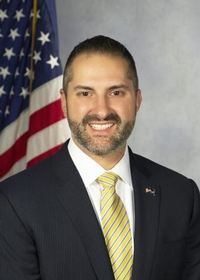
Joe Pittman
Joe Pittman Senate · District 41
R
Strong +
96% 70
Bridget Malloy Kosierowski
Bridget Malloy Kosierowski House · District 114
D
Strong +
94% 270
Devlin Robinson
Devlin Robinson Senate · District 37
R
Strong +
93% 72
Steve Malagari
Steve Malagari House · District 53
D
Strong +
93% 228
Kyle Mullins
Kyle Mullins House · District 112
D
Strong +
92% 224
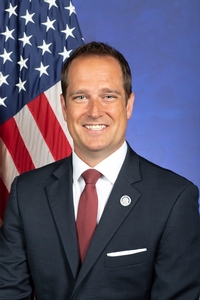
Eric Weaknecht
Eric Weaknecht House · District 5
R
Strong −
14% 185
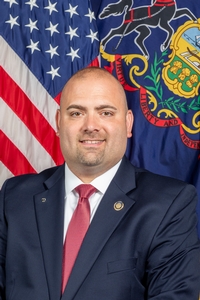
Jamie Walsh
Jamie Walsh House · District 117
R
Strong −
14% 221
Scott Barger
Scott Barger House · District 80
R
Strong −
14% 212
Ryan Warner
Ryan Warner House · District 52
R
Strong −
14% 196
Joe Hamm
Joe Hamm House · District 84
R
Strong −
14% 204
Showing 581–590 of 672 bills

All healthcare bills

in committee · Pennsylvania · Senate Sep 17, 2025

SB 1007: An Act providing for insurance coverage for transition intervention reversal services.

SB 1007 (An Act providing for insurance coverage for transition intervention reversal services) requires health insurance plans to cover medical services that reverse prior gender transition interventions, such as procedures to undo hormone therapy or surgical changes. This directly affects transgender individuals who have undergone medical transition and seek to reverse those treatments. The key provision mandates that insurers include coverage for these reversal services without additional cost-sharing, treating them similarly to other covered medical procedures. The bill is currently pending referral to the Banking & Insurance committee for further consideration. (Note: The bill title uses "transition intervention reversal services," which refers to medical services reversing prior gender transition treatments, not to be confused with broader policy debates.)
Sub-Topics Insurance
in committee · Pennsylvania · House Jun 25, 2025

HB 1670: An Act amending the act of May 17, 1921 (P.L.682, No.284), known as The Insurance Company Law of 1921, in casualty insurance, further providing for hearing aid coverage.

HB 1670 requires health insurance plans in Pennsylvania, including Medicare and Medicaid coverage, to provide hearing aid benefits. Specifically, it mandates that insurers offer at least $2,500 in coverage every three years for hearing aids sold under state registration rules, with benefits applicable to either hearing aid sellers or contracted fitters. This applies to most health insurance policies but excludes dental, vision, Medicare supplements, and other specified plans. The law takes effect 90 days after enactment, impacting insurers and enrollees in covered health plans across the state.
in committee · Pennsylvania · Senate Apr 4, 2025

SB 537: An Act amending the act of June 13, 1967 (P.L.31, No.21), known as the Human Services Code, in public assistance, providing for medical assistance payments for orthotics and prosthetics.

SB 537 would require Pennsylvania's Medicaid program to reimburse providers for custom orthotics (like braces) and prosthetics (like artificial limbs) at rates no lower than the current Medicare fee schedule. This change directly affects Medicaid recipients needing these medical devices and the healthcare providers who supply them. The bill mandates that the state update its reimbursement rates quarterly to match Medicare's current rates for all applicable codes. This policy aligns Pennsylvania's Medicaid payments more closely with federal Medicare standards for these specific medical equipment items.
Sub-Topics Medicaid Medicare
passed · Pennsylvania · House Oct 29, 2025

HB 157: An Act providing for grant awards to entities in rural counties and designated medically underserved areas to pay for the education debt of practitioners employed at the entity.

HB 157 creates state grants to help healthcare entities in rural counties or designated medically underserved areas cover the student loan debt of their employed healthcare practitioners. The grants would be paid directly to the healthcare facilities (like clinics or hospitals), not to individual providers, to offset the cost of practitioners' education debt. This aims to support recruitment and retention of healthcare workers in areas with limited access to medical services. The program would be funded through state appropriations, targeting facilities serving communities with significant healthcare access challenges.
in committee · Pennsylvania · House Apr 7, 2025

HB 1166: An Act amending the act of July 19, 1979 (P.L.130, No.48), known as the Health Care Facilities Act, providing for health care worker platforms; and imposing duties on the Department of Health.

HB 1166 regulates digital platforms that connect healthcare workers with facilities (like staffing apps). It requires these platforms to register with Pennsylvania’s Department of Health ($1,000 fee), verify workers’ licenses, background checks, and insurance, and maintain records for three years. The bill also sets rules ensuring healthcare workers using these platforms are classified as independent contractors (not employees) and must have annual physicals/CPR certification if providing direct patient care. These requirements apply directly to platforms operating in Pennsylvania and the healthcare workers using them.
in committee · Pennsylvania · Senate Mar 10, 2025

SB 419: An Act amending Title 35 (Health and Safety) of the Pennsylvania Consolidated Statutes, in miscellaneous provisions relating to public safety, establishing the Train Derailment Emergency Grant Program and Train Derailment Emergency Grant Fund.

SB 419 creates a grant program to provide financial assistance to residents and small businesses directly affected by the February 3, 2023, train derailment in East Palestine, Ohio. The program covers medical expenses, lost income, property damage, relocation costs, and decontamination for homeowners and small businesses (under 100 employees) located within 15 miles of the derailment site or demonstrating contamination evidence. Administered by the Pennsylvania Emergency Management Agency, grants are funded through state appropriations, federal money, settlements from responsible parties, or other designated sources. Applications can be submitted anytime for expenses occurring on or after February 3, 2023, with applicants required to provide "actual proof" of impact.
in committee · Pennsylvania · House Mar 31, 2025

HB 1070: An Act amending the act of July 2, 1996 (P.L.514, No.85), known as the Health Security Act, further providing for definitions and for postpartum coverage standards; providing for provisions relating to involuntary discharge; and imposing duties on the Department of Human Services.

HB 1070 requires all health insurance policies covering maternity benefits in Pennsylvania to provide 24 additional hours of elective postpartum observation and care beyond the existing 48-96 hours of inpatient coverage, starting January 1, 2026. It also prohibits hospitals from involuntarily discharging postpartum patients or newborns between 10 p.m. and 8 a.m., with billing under "observation status" if discharge is refused. The bill directly affects mothers, newborns, hospitals, and health insurers by extending coverage duration and restricting nighttime discharges. The Department of Human Services must seek a federal waiver to extend government program coverage for this additional 24-hour period.
in committee · Pennsylvania · Senate Mar 26, 2025

SB 522: An Act amending the act of April 9, 1929 (P.L.343, No.176), known as The Fiscal Code, providing for Collaborative Care Model and Primary Care Behavioral Health Model Implementation Program.

SB 522 provides funding and support for integrating mental health services into primary care settings across Pennsylvania. It allocates grants to primary care physicians and practices to cover initial costs of implementing collaborative care models (like hiring staff, upgrading technology, and creating patient tracking systems), with priority for rural clinics and areas with high suicide or overdose rates. The bill also establishes regional technical assistance centers to help practices develop staffing models, integrate tools into electronic records, and navigate billing. These provisions directly affect primary care providers statewide, aiming to improve access to behavioral health services through existing medical settings.
in committee · Pennsylvania · House Dec 17, 2025

HB 1202: An Act amending Title 35 (Health and Safety) of the Pennsylvania Consolidated Statutes, establishing and providing for duties of the Infectious Disease Advisory Commission.

HB 1202 establishes Pennsylvania's Infectious Disease Advisory Commission to coordinate long-term responses to public health emergencies like pandemics. The bill requires the Governor to select a statewide organization via competitive bidding to manage a PPE stockpile, including sourcing from in-state manufacturers and maintaining four designated storage locations. It directly affects healthcare facilities (such as nursing homes, assisted living centers, and personal care homes) by mandating infectious disease plans and requiring facilities to designate coordinators for outbreak response. Key provisions include creating the Commission, defining emergency protocols, and ensuring PPE availability during health crises. The law focuses on systemic preparedness rather than specific pandemic responses.
in committee · Pennsylvania · House Apr 7, 2025

HB 1154: An Act amending the act of April 9, 1929 (P.L.343, No.176), known as The Fiscal Code, in general budget implementation, further providing for Department of Health.

HB 1154 requires Pennsylvania's Department of Health to develop and implement a mobile application targeting Medicaid-eligible individuals for pregnancy, prenatal, postpartum, and infant care programs. The app must provide multilingual resources, connect users to state health services, meet clinical standards from major medical organizations, and operate on Android/iOS platforms. The department must select a vendor through competitive bidding within 90 days, paying $10 per user monthly with an annual cap of $500,000. The bill mandates the vendor to report de-identified usage data, including Medicaid eligibility engagement and app interaction metrics, to the department.
Sub-Topics Procurement Medicaid
Showing 581 to 590 of 672 bills
Previous 1 58 59 60 68 Next