Issue · Healthcare

Healthcare

Every healthcare bill, vote, and legislator stance in Pennsylvania, automatically classified by Maddy, our AI policy reader.

Total bills
672
2025-2026 Regular Session
Top supporter
Joe Pittman
96% support rate
Top opponent
Eric Weaknecht
14% support rate
Ranked legislators
10
5 support · 5 oppose
Key legislators

Who's moving healthcare in Pennsylvania

Legislators moving healthcare in Pennsylvania
Legislator Party Stance Support rate Decisive votes
Joe Pittman
Joe Pittman Senate · District 41
R
Strong +
96% 24
Bridget Malloy Kosierowski
Bridget Malloy Kosierowski House · District 114
D
Strong +
94% 113
Devlin Robinson
Devlin Robinson Senate · District 37
R
Strong +
93% 29
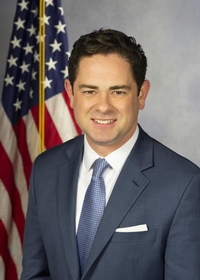
Steve Malagari
Steve Malagari House · District 53
D
Strong +
93% 95
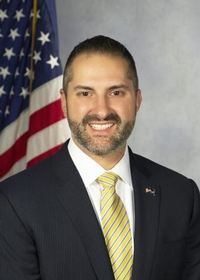
Kyle Mullins
Kyle Mullins House · District 112
D
Strong +
92% 91
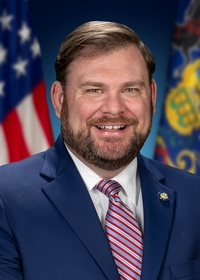
Eric Weaknecht
Eric Weaknecht House · District 5
R
Strong −
14% 66
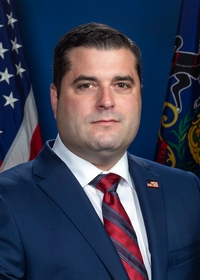
Jamie Walsh
Jamie Walsh House · District 117
R
Strong −
14% 80
Scott Barger
Scott Barger House · District 80
R
Strong −
14% 72
Ryan Warner
Ryan Warner House · District 52
R
Strong −
14% 77
Joe Hamm
Joe Hamm House · District 84
R
Strong −
14% 76
Showing 461–470 of 672 bills

All healthcare bills

in committee · Pennsylvania · House Feb 20, 2025

HR 78: A Resolution directing the Joint State Government Commission to establish an advisory committee and conduct a comprehensive study regarding the effectiveness of the Commonwealth's multidisciplinary approach to infants born affected by substance use or withdrawal symptoms resulting from prenatal drug exposure or a fetal alcohol spectrum disorder, including the success with or barriers to developing plans of safe care as required by Federal and State law.

HR 78 is a resolution directing Pennsylvania's Joint State Government Commission to study how effectively the state supports infants affected by prenatal substance exposure or fetal alcohol spectrum disorder. It requires forming an advisory committee - including health, human services, and substance use experts plus a parent with lived experience - to evaluate current "plans of safe care" implementation, including barriers like duplicate reporting requirements and gaps in tracking infant outcomes. The study will assess coordination between health, child welfare, and treatment systems, cost implications, and alignment of policies across agencies. The committee must issue findings within 18 months, focusing on improving support for infants and families without changing existing laws.
in committee · Pennsylvania · House May 13, 2025

HB 1447: An Act amending the act of March 10, 1949 (P.L.30, No.14), known as the Public School Code of 1949, in school health services, further providing for possession and use of asthma inhalers and epinephrine auto-injectors and providing for school administration of adrenal insufficiency medication.

HB 1447 requires Pennsylvania schools to create written policies allowing students to carry and self-administer asthma inhalers, epinephrine auto-injectors, and adrenal insufficiency medications. Schools must verify students' ability to use these medications safely, store them securely, and notify staff after use - while ensuring students with medical needs can access treatment without disrupting classes. The bill also mandates training for school staff to administer adrenal insufficiency medication during emergencies and directs the state health and education departments to provide resources on proper medication use. This directly affects students with asthma, severe allergies, or adrenal insufficiency, as well as school districts and staff responsible for health protocols.
passed · Pennsylvania · House Mar 16, 2026

HB 80: An Act authorizing the Commonwealth of Pennsylvania to join the Audiology and Speech-Language Pathology Interstate Compact; and providing for the form of the compact.

HB 80 would authorize Pennsylvania to join the Audiology and Speech-Language Pathology Interstate Compact. This compact allows licensed audiologists and speech-language pathologists to practice in other participating states without obtaining separate licenses for each state. The bill directly affects these healthcare professionals and their patients, streamlining cross-state practice for providers. It creates a standardized process for reciprocity among member states, eliminating redundant licensing requirements.
in committee · Pennsylvania · Senate Jun 19, 2025

SB 872: An Act amending Title 61 (Prisons and Parole) of the Pennsylvania Consolidated Statutes, in Nonnarcotic Medication Assisted Substance Abuse Treatment Grant Pilot Program, further providing for definitions, repealing provisions relating to establishment of pilot program, providing for establishment and further providing for county participation requirements, for use of grant funding, for powers and duties of department, for report to General Assembly and for construction; imposing duties on the Pennsylvania Commission on Crime and Delinquency; and making an editorial change.

SB 872 replaces Pennsylvania’s temporary "Nonnarcotic Medication Assisted Substance Abuse Treatment Grant Pilot Program" with a permanent "Medication-Assisted Substance Abuse Treatment Grant Program" administered by the Pennsylvania Commission on Crime and Delinquency. The bill requires counties with correctional facilities offering substance abuse treatment to apply for grants, enabling them to provide medication-assisted treatment (MAT) combined with counseling to eligible offenders both during incarceration and after release. Key provisions mandate county assessments to identify suitable candidates, individualized treatment plans, access to MAT, and coordination with probation/parole, while requiring biennial reports to the legislature on program effectiveness. The law prioritizes nonnarcotic MAT funding and prohibits using grant money to replace existing programs.
in committee · Pennsylvania · Senate Jun 3, 2025

SB 816: An Act amending the act of March 10, 1949 (P.L.30, No.14), known as the Public School Code of 1949, in school health services, providing for parent educational information regarding eating disorders.

SB 816 requires Pennsylvania public schools serving grades 6-12 to annually provide parents with educational materials about eating disorders. The bill directly affects parents of middle and high school students by mandating schools to share information via email, mail, or school websites. Key mechanisms include creating a state Task Force (with health and education experts) to develop guidelines for school staff and parent resources on eating disorder warning signs and support services. The guidelines must be updated annually by the Task Force and incorporated into school health materials. This law amends the Public School Code to standardize parent education on eating disorders across all Pennsylvania school entities.
passed · Pennsylvania · Senate Mar 24, 2026

SB 804: An Act amending Title 35 (Health and Safety) of the Pennsylvania Consolidated Statutes, providing for medical devices.

SB 804 amends Pennsylvania's health and safety laws to ban the intentional addition of DEHP and certain ortho-phthalates (like BBP, DBP, DINP) in medical devices. It specifically targets intravenous (IV) solution containers (like IV bags) and IV tubing used in hospitals and healthcare facilities. The bill prohibits manufacturers from adding these chemicals to medical devices if they serve a functional purpose, requiring notice of such additions. This affects device manufacturers and healthcare facilities purchasing these products, directly changing manufacturing standards for common medical equipment.
in committee · Pennsylvania · Senate Apr 22, 2026

SB 980: An Act amending Title 35 (Health and Safety) of the Pennsylvania Consolidated Statutes, in Commonwealth services, further providing for assistance to fire companies and EMS companies and providing for protection against PFAS chemicals and for firefighting protective equipment; in grants to fire companies and emergency medical services companies, further providing for award of grants; and imposing penalties.

SB 980 bans the manufacture, sale, and use of class B firefighting foam containing intentionally added PFAS chemicals after July 1, 2026 (for manufacturers/sellers) and January 1, 2027 (for users), with limited exceptions for federal requirements and exempt facilities like airports. It requires manufacturers of firefighting protective gear to label products containing PFAS and provide online information about PFAS content. The bill establishes civil penalties for violations (up to $5,000 for first offenses, $10,000 for repeat offenses) and creates new grant funding for fire companies to dispose of PFAS foam and purchase PFAS-free alternatives, with penalty revenue directed to these programs.
in committee · Pennsylvania · Senate May 5, 2025

SB 710: An Act amending the act of July 23, 1970 (P.L.563, No.195), known as the Public Employe Relations Act, in strikes, providing for health care benefits during strikes.

SB 710 amends Pennsylvania's Public Employe Relations Act. This bill directly affects public employers and their employees who are participating in a strike. Its key provision prohibits public employers from discontinuing health care benefits for public employees during the period they are engaged in a strike. This change ensures the continuation of health coverage for public sector workers during labor disputes.
in committee · Pennsylvania · House Apr 3, 2025

HB 1109: An Act amending Title 20 (Decedents, Estates and Fiduciaries) of the Pennsylvania Consolidated Statutes, providing for compassionate aid in dying; and imposing penalties.

HB 1109 would establish a legal process for "compassionate aid in dying" in Pennsylvania, allowing terminally ill adults to request medication to end their life under strict safeguards. To qualify, patients must be 18 or older, under the care of a healthcare provider, have a terminal illness confirmed by a consulting provider, and be deemed capable of making an informed decision after counseling. The process requires a written request, a waiting period, and detailed documentation to ensure the decision is voluntary and informed, while protecting healthcare providers from forced participation. Violations of the law would be subject to penalties as outlined in the bill.
in committee · Pennsylvania · House Oct 29, 2025

HB 305: An Act amending the act of May 17, 1921 (P.L.682, No.284), known as The Insurance Company Law of 1921, in casualty insurance, providing for coverage for insulin.

HB 305 requires health insurance policies to cover insulin, directly affecting people with diabetes who rely on this medication. It amends the 1921 Insurance Company Law to mandate that casualty insurance plans include insulin coverage without excessive cost-sharing. The key provision eliminates gaps where insulin might previously have been excluded or subject to high out-of-pocket costs. This policy change applies to all insurers offering casualty coverage under the amended law. The bill is currently pending before the Insurance committee.
Showing 461 to 470 of 672 bills
Previous 1 … 46 47 48 … 68 Next