Issue · Healthcare

Healthcare (Hospitals)

Every healthcare bill, vote, and legislator stance in Pennsylvania, automatically classified by Maddy, our AI policy reader.

Total bills
37
2025-2026 Regular Session
Top supporter
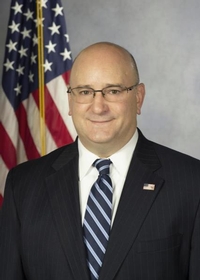
Arvind Venkat
100% support rate
Top opponent
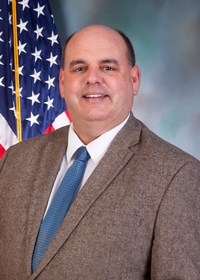
Brad Roae
0% support rate
Ranked legislators
10
5 support · 5 oppose
Key legislators

Who's moving hospitals in Pennsylvania

Legislators moving hospitals in Pennsylvania
Legislator Party Stance Support rate Votes
Arvind Venkat
Arvind Venkat House · District 30
D
Strong +
100% 6
Ben Sanchez
Ben Sanchez House · District 153
D
Strong +
100% 6
Bridget Malloy Kosierowski
Bridget Malloy Kosierowski House · District 114
D
Strong +
100% 6
Dan Frankel
Dan Frankel House · District 23
D
Strong +
100% 6
Danielle Otten
Danielle Otten House · District 155
D
Strong +
100% 6
Brad Roae
Brad Roae House · District 6
R
Strong −
0% 6
Charity Krupa
Charity Krupa House · District 51
R
Strong −
0% 6
Dave Zimmerman
Dave Zimmerman House · District 99
R
Strong −
17% 6
Leslie Rossi
Leslie Rossi House · District 59
R
Strong −
17% 6
Tim Twardzik
Tim Twardzik House · District 123
R
Strong −
17% 6
Showing 31–37 of 37 bills

All healthcare bills

passed · Pennsylvania · House May 5, 2026

HR 203: A Resolution directing the Joint State Government Commission to conduct a study of reported patient safety events and issue a report with recommendations for reducing reportable patient safety events and improving patient safety.

HR 203 is a House Resolution directing Pennsylvania's Joint State Government Commission to study medication errors and patient safety. The Commission must form an advisory committee including health officials and stakeholder representatives (like pharmacists, nurses, and hospital associations) to examine how errors occur in hospitals, long-term care facilities, and pharmacies. The study will review current state laws, other states' policies, and best practices, with a report containing recommendations due to the House within 18 months. This resolution does not change laws but aims to inform future policy through a comprehensive review.
in committee · Pennsylvania · House Apr 17, 2025

HB 1266: An Act amending the act of July 19, 1979 (P.L.130, No.48), known as the Health Care Facilities Act, in licensing of health care facilities, providing for hospital pricing transparency; providing for acquisition of health care facilities; and conferring powers to the Department of Health and Attorney General.

HB 1266 requires Pennsylvania hospitals to publicly post detailed pricing information for standard medical services on their websites within six months of the law taking effect. Hospitals must list the full price (gross charge), negotiated prices for each insurance company (with the insurer's name), the minimum and maximum negotiated prices across all insurers, and the cash price for self-pay patients, along with service descriptions and standard billing codes. This transparency requirement applies to all hospitals and hospital systems in Pennsylvania and mandates ongoing disclosure even if federal pricing rules are repealed or no longer enforced.
Sub-Topics Hospitals Insurance
in committee · Pennsylvania · Senate Feb 26, 2025

SB 317: An Act amending the act of May 17, 1921 (P.L.682, No.284), known as The Insurance Company Law of 1921, in casualty insurance, providing for coverage for eating disorder treatment.

SB 317 requires most health insurance policies in Pennsylvania to cover eating disorder treatment, directly affecting people with conditions like anorexia, bulimia, or binge-eating disorder. The bill mandates coverage for inpatient care, residential treatment, counseling, and specialized nutrition services provided by licensed professionals, as defined in the law. Insurers cannot deny coverage based solely on weight, prior treatment history, or attempt to steer patients toward less comprehensive care. This applies to individual and group health plans (excluding limited coverage types like dental or accident-only policies) and takes effect within 60 days of enactment.
Sub-Topics Hospitals Insurance
in committee · Pennsylvania · House Apr 1, 2025

HB 832: An Act providing for hospital closure procedure requirements, for notice of proposed general hospital closure or significant impact closure, for health equity impact assessments, for closure plans and for enforcement actions.

HB 832 requires hospitals planning to close all or most units (general hospital closure) or critical departments like emergency or maternity units (significant impact closure) to follow specific steps. Hospitals must submit a detailed closure plan for approval by the Department of Health or local health authorities at least 180 days before closing, include a health equity impact assessment, and hold two public hearings in the affected community. The bill mandates public notice, comment periods via phone and website, and ensures hospitals address community health needs before proceeding. This directly affects hospitals seeking to close operations and the communities relying on their services, aiming to prevent abrupt healthcare disruptions.
Sub-Topics Hospitals
in committee · Pennsylvania · House Jan 14, 2025

HB 110: An Act amending the act of February 13, 1970 (P.L.19, No.10), entitled "An act enabling certain minors to consent to medical, dental and health services, declaring consent unnecessary under certain circumstances," further providing for individual consent, for mental health treatment and for release of medical records; and providing for parent or legal guardian access to medical records.

HB 110 amends Pennsylvania's 1970 law to allow minors aged 18 or older to consent independently to mental health treatment without parental permission, raising the age from 14. It also clarifies that minors aged 18+ control their mental health treatment records, while parents or legal guardians retain full access to all medical, dental, and health records for minors under 18. The bill includes provisions for minors to revoke consent for treatment and requires court review if a minor objects to continued inpatient care. These changes directly affect minors seeking mental health services and their parents, streamlining consent processes while balancing minor autonomy with parental access.
Sub-Topics Hospitals
in committee · Pennsylvania · Senate Jan 29, 2025

SB 53: An Act amending the act of May 17, 1921 (P.L.682, No.284), known as The Insurance Company Law of 1921, in casualty insurance, further providing for conditions subject to which policies are to be issued and for health insurance coverage for certain children of insured parents.

SB 53 requires health insurance policies in Pennsylvania to cover children up to age 26, extending the previous limit of 19. It prohibits insurers from denying or restricting coverage based on factors like marital status, education, employment, or residency. The law applies to standard health insurance policies (excluding dental, disability, hospital indemnity, and similar plans) and mandates continued coverage for adult children meeting specific criteria, such as not being married or having dependents. This directly affects policyholders and their children aged 19-26 who would otherwise lose coverage.
Sub-Topics Hospitals Insurance
in committee · Pennsylvania · House Mar 4, 2025

HB 803: An Act amending the act of March 10, 1949 (P.L.30, No.14), known as the Public School Code of 1949, in school health services, providing for maintenance and use of opioid antagonists.

HB 803 requires Pennsylvania high schools (grades 9-12) to maintain opioid antagonists like naloxone (Narcan) on-site and train staff to use them during suspected overdose emergencies. Schools must develop a policy within 60 days with the Department of Education, detailing safe storage, administration procedures, and mandatory hospital transport after use. Trained staff, including nurses or teachers, can administer the medication in good faith without facing legal liability, criminal charges, or professional penalties. This law directly affects all public, charter, private, and nonpublic high schools in Pennsylvania, aiming to improve emergency response to opioid overdoses among students and staff.
Showing 31 to 37 of 37 bills
Previous 1 2 3 4