Issue · Healthcare

Healthcare (Medicaid)

Every healthcare bill, vote, and legislator stance in Pennsylvania, automatically classified by Maddy, our AI policy reader.

Total bills
41
2025-2026 Regular Session
Top supporter
Kim Ward
100% support rate
Top opponent
Patty Kim
0% support rate
Ranked legislators
10
5 support · 5 oppose
Key legislators

Who's moving medicaid in Pennsylvania

Legislators moving medicaid in Pennsylvania
Legislator Party Stance Support rate Decisive votes
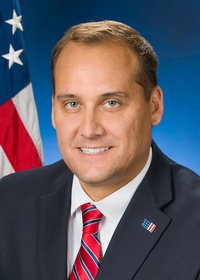
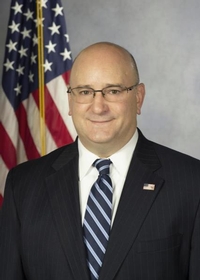
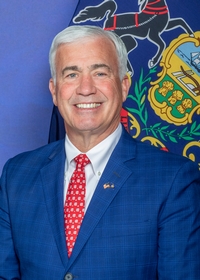
Kim Ward
Kim Ward Senate · District 39
R
Strong +
100% 3
Lynda Culver
Lynda Culver Senate · District 27
R
Strong +
100% 3
Tracy Pennycuick
Tracy Pennycuick Senate · District 24
R
Strong +
100% 3
Wayne Langerholc
Wayne Langerholc Senate · District 35
R
Strong +
100% 3
Ben Sanchez
Ben Sanchez House · District 153
D
Strong +
85% 13
Patty Kim
Patty Kim Senate · District 15
D
Strong −
0% 3
Clint Owlett
Clint Owlett House · District 68
R
Strong −
11% 9
Thomas Kutz
Thomas Kutz House · District 87
R
Strong −
15% 13
Eric Davanzo
Eric Davanzo House · District 58
R
Strong −
18% 11
Jamie Barton
Jamie Barton House · District 124
R
Strong −
18% 11
Showing 31–40 of 41 bills

All healthcare bills

in committee · Pennsylvania · House Jun 25, 2025

HB 1670: An Act amending the act of May 17, 1921 (P.L.682, No.284), known as The Insurance Company Law of 1921, in casualty insurance, further providing for hearing aid coverage.

HB 1670 requires health insurance plans in Pennsylvania, including Medicare and Medicaid coverage, to provide hearing aid benefits. Specifically, it mandates that insurers offer at least $2,500 in coverage every three years for hearing aids sold under state registration rules, with benefits applicable to either hearing aid sellers or contracted fitters. This applies to most health insurance policies but excludes dental, vision, Medicare supplements, and other specified plans. The law takes effect 90 days after enactment, impacting insurers and enrollees in covered health plans across the state.
in committee · Pennsylvania · Senate Apr 4, 2025

SB 537: An Act amending the act of June 13, 1967 (P.L.31, No.21), known as the Human Services Code, in public assistance, providing for medical assistance payments for orthotics and prosthetics.

SB 537 would require Pennsylvania's Medicaid program to reimburse providers for custom orthotics (like braces) and prosthetics (like artificial limbs) at rates no lower than the current Medicare fee schedule. This change directly affects Medicaid recipients needing these medical devices and the healthcare providers who supply them. The bill mandates that the state update its reimbursement rates quarterly to match Medicare's current rates for all applicable codes. This policy aligns Pennsylvania's Medicaid payments more closely with federal Medicare standards for these specific medical equipment items.
Sub-Topics Medicaid Medicare
in committee · Pennsylvania · House Apr 7, 2025

HB 1154: An Act amending the act of April 9, 1929 (P.L.343, No.176), known as The Fiscal Code, in general budget implementation, further providing for Department of Health.

HB 1154 requires Pennsylvania's Department of Health to develop and implement a mobile application targeting Medicaid-eligible individuals for pregnancy, prenatal, postpartum, and infant care programs. The app must provide multilingual resources, connect users to state health services, meet clinical standards from major medical organizations, and operate on Android/iOS platforms. The department must select a vendor through competitive bidding within 90 days, paying $10 per user monthly with an annual cap of $500,000. The bill mandates the vendor to report de-identified usage data, including Medicaid eligibility engagement and app interaction metrics, to the department.
Sub-Topics Procurement Medicaid
in committee · Pennsylvania · House Jan 10, 2025

HR 3: A Resolution designating the month of March 2025 as "Endometriosis Awareness Month" in Pennsylvania.

This resolution designates March 2025 as "Endometriosis Awareness Month" in Pennsylvania. It does not create new laws or provide funding but formally recognizes endometriosis - a condition affecting about 10% of women - as a significant health issue. The resolution urges federal lawmakers to increase research funding for endometriosis, review Medicare/Medicaid billing codes to ensure fair reimbursement for surgical treatments, and establish a national awareness month. It directly affects Pennsylvanians by promoting public and medical awareness of endometriosis symptoms and diagnosis challenges, though it has no binding effect on state or federal policy.
Sub-Topics Medicaid Medicare
in committee · Pennsylvania · House Aug 14, 2025

HB 1802: An Act amending the act of May 17, 1921 (P.L.682, No.284), known as The Insurance Company Law of 1921, in casualty insurance, providing for coverage of COVID-19 vaccines.

HB 1802 requires all health insurance policies issued in Pennsylvania to cover FDA-approved COVID-19 vaccines with no cost-sharing for enrollees. This applies to insurers offering policies covering medical care (excluding accident-only, dental, or Medicare supplement plans), and mandates that government programs like Medicaid must also provide this coverage without deductibles, copays, or coinsurance. The bill defines "cost-sharing" to exclude premiums but includes standard out-of-pocket expenses, ensuring vaccines remain fully covered. It takes immediate effect and prevents insurers from reducing or eliminating this coverage for existing policies. This directly affects Pennsylvania residents with health insurance and the insurers providing those plans.
in committee · Pennsylvania · House Jan 22, 2025

HB 216: An Act amending the act of June 13, 1967 (P.L.31, No.21), known as the Human Services Code, in fraud and abuse control, further providing for definitions and for provider prohibited acts, criminal penalties and civil remedies.

HB 216 amends Pennsylvania's Human Services Code to strengthen fraud and abuse controls in the medical assistance program (Medicaid). It adds a definition of "Representation" to clarify communications used for billing or determining reimbursement rates, and updates prohibited acts to explicitly include making false or misleading statements in claims or records. The bill expands specific prohibitions to cover submitting claims for medically unnecessary services, misrepresenting services provided, or billing for non-rendered care. These changes directly affect healthcare providers and practitioners who bill the state's Medicaid program by providing clearer standards for compliance. The amendments aim to improve enforcement of existing penalties without creating new ones.
Sub-Topics Medicaid
in committee · Pennsylvania · House Jun 24, 2026

HB 1827: An Act providing for medical assistance coverage and insurance coverage of screening, prevention and treatment measures for osteoporosis as a result of menopause.

This bill requires Medicaid programs and private health insurance plans to cover bone density screenings, preventive care, and treatments for osteoporosis specifically linked to menopause. It directly affects postmenopausal women, particularly those with low income who rely on Medicaid, by ensuring access to these services without cost barriers. The key provision mandates that both public medical assistance programs and private insurers include these osteoporosis-related services in standard coverage. This expands existing coverage to explicitly address menopause-related bone health needs.
in committee · Pennsylvania · House Dec 3, 2025

HB 2060: An Act amending the act of June 13, 1967 (P.L.31, No.21), known as the Human Services Code, in public assistance, providing for pain parity in Medicaid and for pain parity in commercial insurance.

HB 2060 requires Pennsylvania's Medicaid program and private commercial insurers to provide equal coverage for non-opioid and opioid medications used to treat pain. It prohibits insurers from designating non-opioid pain drugs as "non-preferred" when opioids are preferred, imposing stricter prior authorization requirements on non-opioids, or placing non-opioids in higher-cost tiers than opioids. The law applies immediately to any FDA-approved pain medication, affecting Medicaid beneficiaries and private insurance customers across Pennsylvania. This policy change ensures that patients have equal access to both non-opioid and opioid treatment options without discriminatory coverage barriers.
passed · Pennsylvania · House Jul 1, 2025

HB 1590: An Act amending the act of June 13, 1967 (P.L.31, No.21), known as the Human Services Code, in public assistance, providing for abrogation of regulatory requirements for payment for clinic services within physical confines of clinic facilities.

HB 1590 removes specific regulatory requirements that clinics must meet to receive payment for services provided within their own facilities under public assistance programs like Medicaid. This change directly affects clinics offering on-site care covered by these programs, simplifying their billing process. The bill amends the Human Services Code to eliminate the need for clinics to comply with certain prior payment rules when services occur inside their physical premises. It focuses solely on modifying reimbursement procedures without altering eligibility or funding levels.
Sub-Topics Medicaid Primary Care
in committee · Pennsylvania · House Jun 25, 2026

HB 1925: An Act amending Titles 35 (Health and Safety), 40 (Insurance) and 67 (Public Welfare) of the Pennsylvania Consolidated Statutes, providing for artificial intelligence in facilities, for artificial intelligence use by insurers and for artificial intelligence use by MA or CHIP managed care plans; imposing duties on the Department of Health, the Insurance Department and the Department of Human Services; and imposing penalties.

HB 1925 regulates how healthcare facilities, insurance companies, and Medicaid/CHIP managed care plans can use artificial intelligence. It requires the Department of Health, Insurance Department, and Department of Human Services to create rules for AI safety and transparency in these sectors. The bill imposes penalties for failing to comply with these new requirements. It directly affects providers and insurers operating in Pennsylvania's health and insurance systems.
Showing 31 to 40 of 41 bills
Previous 1 … 3 4 5 Next