Issue · Healthcare

Healthcare

Every healthcare bill, vote, and legislator stance in Pennsylvania, automatically classified by Maddy, our AI policy reader.

Total bills
672
2025-2026 Regular Session
Top supporter
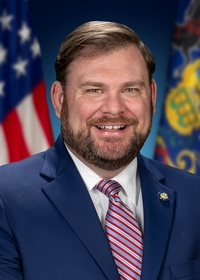
Joe Pittman
96% support rate
Top opponent
Eric Weaknecht
14% support rate
Ranked legislators
10
5 support · 5 oppose
Key legislators

Who's moving healthcare in Pennsylvania

Legislators moving healthcare in Pennsylvania
Legislator Party Stance Support rate Decisive votes
Joe Pittman
Joe Pittman Senate · District 41
R
Strong +
96% 24
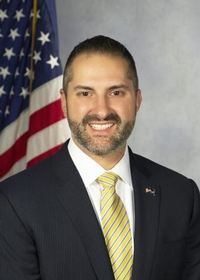
Bridget Malloy Kosierowski
Bridget Malloy Kosierowski House · District 114
D
Strong +
94% 113
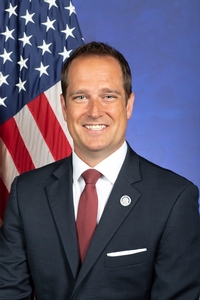
Devlin Robinson
Devlin Robinson Senate · District 37
R
Strong +
93% 29
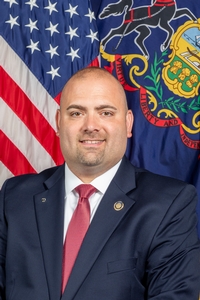
Steve Malagari
Steve Malagari House · District 53
D
Strong +
93% 95
Kyle Mullins
Kyle Mullins House · District 112
D
Strong +
92% 91
Eric Weaknecht
Eric Weaknecht House · District 5
R
Strong −
14% 66
Jamie Walsh
Jamie Walsh House · District 117
R
Strong −
14% 80
Scott Barger
Scott Barger House · District 80
R
Strong −
14% 72
Ryan Warner
Ryan Warner House · District 52
R
Strong −
14% 77
Joe Hamm
Joe Hamm House · District 84
R
Strong −
14% 76
Showing 371–380 of 672 bills

All healthcare bills

signed · Pennsylvania · House Nov 12, 2025

HB 749: An Act amending the act of June 13, 1967 (P.L.31, No.21), entitled "An act to consolidate, editorially revise, and codify the public welfare laws of the Commonwealth," in public assistance, further providing for uniformity in administration of assistance and regulations as to assistance and for copayments for subsidized child care, providing for report on transition to chip-enabled access cards, further providing for reports to General Assembly, for persons eligible for medical assistance and for nonemergency medical transportation services and providing for abrogation of regulatory requirements for payment for outpatient behavioral health services within physical confines of behavioral health clinic facilities and for SNAP benefit reporting; and making a repeal.

HB 749 updates Pennsylvania's public welfare laws to streamline assistance programs and improve service access. It requires copayments for subsidized child care, changes reporting for SNAP benefits, and mandates reports on transitioning to chip-enabled access cards for benefits. The bill removes regulatory barriers for outpatient behavioral health services provided within clinic facilities, allowing services to be billed as part of the clinic visit. It also requires additional reports to the General Assembly regarding medical assistance eligibility and nonemergency medical transportation services.
in committee · Pennsylvania · House Nov 18, 2025

HB 1043: An Act amending the act of March 10, 1949 (P.L.30, No.14), known as the Public School Code of 1949, in school health services, further providing for definitions, for possession and use of asthma inhalers and epinephrine auto-injectors, for school access to emergency epinephrine and for administration of epinephrine auto-injectors by school bus drivers and school crossing guards.

HB 1043 amends Pennsylvania's Public School Code to expand access to emergency allergy and asthma treatments in schools. The bill specifically allows school staff, including bus drivers and crossing guards, to possess, use, and administer epinephrine auto-injectors (like EpiPens) and asthma inhalers for students in medical emergencies. It updates definitions and procedures to ensure authorized personnel can act quickly during allergic reactions or asthma attacks without requiring individual physician orders each time. This directly affects students with life-threatening allergies or asthma and school staff who may need to provide immediate care.
in committee · Pennsylvania · House Jan 14, 2025

HB 83: An Act amending the act of February 13, 1970 (P.L.19, No.10), entitled "An act enabling certain minors to consent to medical, dental and health services, declaring consent unnecessary under certain circumstances," further providing for mental health treatment and for liability for rendering services; and providing for applicability.

This bill (HB 83) amends Pennsylvania's 1970 law to allow minors aged 16 to 18 to consent independently to mental health treatment (both inpatient and outpatient) without parental permission. It establishes clear rules for when minors or parents can revoke consent and requires courts to hold a hearing within 72 hours if a minor objects to continued treatment, with strict criteria for overriding their wishes. The law explicitly excludes minors with "special needs" (defined as intellectual disabilities with adaptive limitations) from these provisions. It applies specifically to mental health services, not general medical care, and clarifies liability for providers who rely on a minor's consent.
Sub-Topics Mental Health
signed · Pennsylvania · Senate Jul 21, 2025

SB 475: An Act amending Title 42 (Judiciary and Judicial Procedure) of the Pennsylvania Consolidated Statutes, in organization and jurisdiction of courts of common pleas, further providing for problem-solving courts; and, in sentencing, further providing for modification or revocation of order of probation.

SB 475 creates a framework for Pennsylvania courts to establish specialized "problem-solving" treatment courts (including veterans, drug, mental health, and DUI courts) and modifies probation rules. It allows courts to create "veterans tracks" within existing treatment programs and requires judges to consider a defendant's employment status when sentencing for technical probation violations. The bill specifically permits up to 30 days of incarceration to allow defendants to enter treatment courts instead of imposing full sentences for technical probation violations. This directly affects Pennsylvania courts, probation officers, and individuals on probation who commit minor violations.
in committee · Pennsylvania · House Apr 9, 2025

HB 1179: An Act providing for privacy, transparency and compensation regarding the disclosure of information collected by genetic material testing entities.

HB 1179, the Genetic Materials Privacy and Compensation Act, requires genetic testing entities (including medical facilities, genealogy services, and law enforcement) to clearly disclose to individuals what genetic data they collect, how it may be used, and with which third parties it will be shared. The bill mandates "prominent disclosure" in plain language before data collection, prohibiting misleading claims about data privacy or usage. It specifically requires testing entities to obtain explicit consent before sharing genetic material with third parties. The law directly affects individuals using genetic tests and the companies providing those services, focusing on transparency rather than compensation mechanisms.
in committee · Pennsylvania · House Feb 4, 2026

HB 670: An Act amending Titles 18 (Crimes and Offenses) and 42 (Judiciary and Judicial Procedure) of the Pennsylvania Consolidated Statutes, in abortion, providing for access to reproductive health services facilities; in particular rights and immunities, providing for action for blocking access to reproductive health services facility; and imposing penalties.

HB 670 would protect access to abortion clinics in Pennsylvania by creating a legal right for people to enter reproductive health services facilities and allowing lawsuits against individuals or entities that block access. It amends criminal and judicial statutes to define "blocking access" as a violation and imposes penalties for such actions. The bill directly affects patients seeking abortion care, clinic staff, and anyone attempting to obstruct facility access. Key provisions include enabling civil lawsuits for damages and establishing specific criminal penalties for interference with facility access.
in committee · Pennsylvania · House May 5, 2025

HB 1393: An Act amending the act of March 4, 1971 (P.L.6, No.2), known as the Tax Reform Code of 1971, in tax credit and tax benefit administration, further providing for definitions; providing for paid family and medical leave tax credit; and establishing the Family and Medical Leave Tax Credit Program.

House Bill 1393 establishes the Family and Medical Leave Tax Credit Program, offering a state tax credit to businesses that provide paid family and medical leave to their employees. This credit is available to business firms in the Commonwealth that have already received the federal family and medical leave tax credit. To qualify, businesses must apply to the Department of Community and Economic Development, providing proof of their federal credit, with the state credit matching the federal amount received. The total amount of these state tax credits is capped at $100,000,000 annually, distributed on a first-come, first-served basis, and cannot exceed a business's tax liability.
Sub-Topics Tax Credits Paid Leave
signed · Pennsylvania · House Jun 30, 2025

HB 261: An Act amending the act of May 17, 1921 (P.L.682, No.284), known as The Insurance Company Law of 1921, in casualty insurance, further providing for conditions subject to which policies are to be issued and for group accident and sickness insurance; and, in community health reinvestment, further providing for definitions.

HB 261 amends Pennsylvania's 1921 Insurance Company Law to update coverage rules for dependents and clarify community health definitions. It requires insurers to continue health coverage for unmarried children with intellectual or physical disabilities (who became disabled before age 19 and remain dependent) past age 19, provided policyholders submit proof within 31 days of the child's 19th birthday. The bill also revises "community health reinvestment activity" to explicitly include programs for preventing/treating intellectual disabilities and mental health services. These changes apply to policies issued after January 1, 1968, affecting insurers, employers offering group plans, and policyholders with disabled dependents. The law took effect immediately upon signing in June 2025.
Sub-Topics Mental Health
in committee · Pennsylvania · House Mar 3, 2025

HB 787: An Act authorizing the Commonwealth of Pennsylvania to join the Interstate Dental and Dental Hygiene Licensure Compact; and providing for the form of the compact.

HB 787 would authorize Pennsylvania to join the Interstate Dental and Dental Hygiene Licensure Compact, a multi-state agreement. The bill creates a system where dentists and dental hygienists can more easily obtain licenses in participating states by sharing a single set of documents and passing the nationally recognized ADEX exam, eliminating duplicate paperwork and fees. This directly affects dental professionals seeking to practice across state lines, including military personnel and their spouses who receive expedited processing. The compact maintains each state's authority to regulate dental practice and take disciplinary action while standardizing licensing requirements and reducing costs for licensees.
Sub-Topics Medical Licensing
in committee · Pennsylvania · House Feb 3, 2025

HB 451: An Act amending Title 63 (Professions and Occupations (State Licensed)) of the Pennsylvania Consolidated Statutes, in powers and duties, providing for amnesty for disciplinary actions regarding COVID-19 protocols.

HB 451 reinstates licenses suspended or revoked for failing to comply with Pennsylvania's pandemic-related health orders during the state's emergency period (March 6, 2020, to when the Governor's proclamation ended). It directly affects healthcare professionals and other licensed workers whose licenses were disciplined for non-compliance with specific COVID-19 protocols, including Governor proclamations, health department orders, or pandemic guidance. The bill automatically removes these disciplinary actions from records without requiring new applications or hearings. It takes effect immediately upon enactment.
Showing 371 to 380 of 672 bills
Previous 1 … 37 38 39 … 68 Next