Issue · Healthcare

Healthcare

Every healthcare bill, vote, and legislator stance in Pennsylvania, automatically classified by Maddy, our AI policy reader.

Total bills
672
2025-2026 Regular Session
Top supporter
Joe Pittman
96% support rate
Top opponent
Eric Weaknecht
14% support rate
Ranked legislators
10
5 support · 5 oppose
Key legislators

Who's moving healthcare in Pennsylvania

Legislators moving healthcare in Pennsylvania
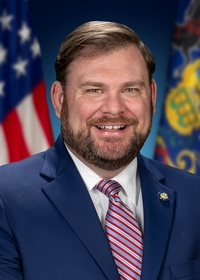
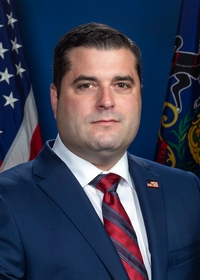
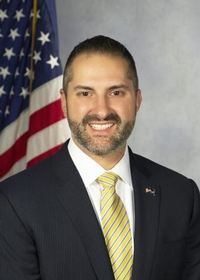
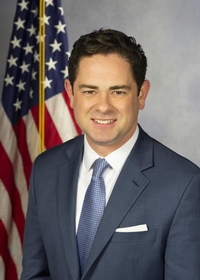
Legislator Party Stance Support rate Decisive votes
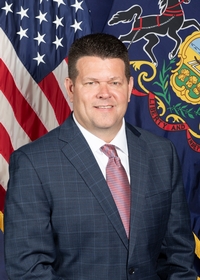
Joe Pittman
Joe Pittman Senate · District 41
R
Strong +
96% 24
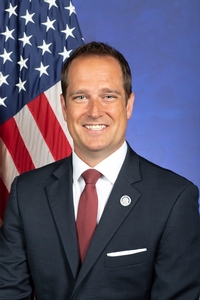
Bridget Malloy Kosierowski
Bridget Malloy Kosierowski House · District 114
D
Strong +
94% 113
Devlin Robinson
Devlin Robinson Senate · District 37
R
Strong +
93% 29
Steve Malagari
Steve Malagari House · District 53
D
Strong +
93% 95
Kyle Mullins
Kyle Mullins House · District 112
D
Strong +
92% 91
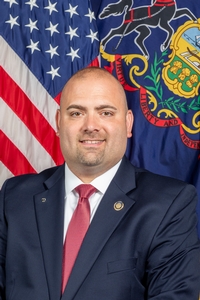
Eric Weaknecht
Eric Weaknecht House · District 5
R
Strong −
14% 66
Jamie Walsh
Jamie Walsh House · District 117
R
Strong −
14% 80
Scott Barger
Scott Barger House · District 80
R
Strong −
14% 72
Ryan Warner
Ryan Warner House · District 52
R
Strong −
14% 77
Joe Hamm
Joe Hamm House · District 84
R
Strong −
14% 76
Showing 351–360 of 672 bills

All healthcare bills

passed · Pennsylvania · House Apr 28, 2025

HB 269: An Act amending the act of April 14, 1972 (P.L.233, No.64), known as The Controlled Substance, Drug, Device and Cosmetic Act, further providing for drug overdose medication.

HB 269 amends Pennsylvania's Controlled Substance Act to improve access to overdose response information. It requires the Department of Health to develop free online training materials, posters, and pamphlets about recognizing opioid overdoses and using reversal medications (like naloxone), with the materials available in multiple languages upon request. Specific public entities - including Commonwealth agencies, transit authorities, municipalities, and local transportation organizations - must display the poster in conspicuous public locations, such as bathrooms or lobbies. The Department covers all printing and distribution costs, and entities already displaying equivalent materials may substitute them with prior notice. This bill focuses on education and resource accessibility, not changing drug laws or medication access.
Sub-Topics Substance Abuse
signed · Pennsylvania · House Jun 27, 2025

HB 1334: An Act making appropriations from the Workmen's Compensation Administration Fund to the Department of Labor and Industry and the Department of Community and Economic Development to provide for the expenses of administering the Workers' Compensation Act, The Pennsylvania Occupational Disease Act and the Office of Small Business Advocate for the fiscal year July 1, 2025, to June 30, 2026, and for the payment of bills incurred and remaining unpaid at the close of the fiscal year ending June 30, 2025.

HB 1334 allocates funding from the Workmen's Compensation Administration Fund to Pennsylvania's Department of Labor and Industry, Department of Community and Economic Development, and the Office of Small Business Advocate. It covers expenses for administering the Workers' Compensation Act, Pennsylvania Occupational Disease Act, and the Small Business Advocate program for fiscal year 2025-2026, including payments for unpaid bills from the prior fiscal year. The bill directly affects state agencies responsible for worker compensation, occupational disease claims, and small business support services. This is a routine appropriations measure to ensure ongoing operations of these programs, not a policy change. The bill was signed into law as Act No. 3A of 2025 on June 27, 2025.
in committee · Pennsylvania · House Nov 17, 2025

HB 2041: An Act amending the act of November 3, 2022 (P.L.2135, No.150), known as the Childhood Blood Lead Test Act, further providing for title of act, for legislative purpose, for definitions, for lead poisoning prevention, assessment and testing, for duties of department and for blood lead assessment and testing coverage.

HB 2041 amends Pennsylvania's Childhood Blood Lead Test Act to require health care practitioners to ensure children receive at least one blood lead test by 12 months of age and a second test by 24 months of age, with additional testing mandated between 24 and 72 months if not tested by age 2. The bill also requires blood lead testing for pregnant women who have at least one identified lead exposure risk factor. It clarifies that health insurance must cover these tests without cost-sharing, as defined in the bill. This law directly affects children under 72 months, pregnant women, and health care providers in Pennsylvania.
Sub-Topics Insurance
in committee · Pennsylvania · House Jul 23, 2025

HB 1757: An Act amending Title 35 (Health and Safety) of the Pennsylvania Consolidated Statutes, in miscellaneous provisions relating to emergency management services, providing for firefighter cancer registry.

HB 1757 creates a voluntary Pennsylvania firefighter cancer registry managed by the Department of Health. It requires collecting anonymized data from firefighters, including fire incident types, work history, health information, and demographics, to link with existing cancer registry data. The registry aims to identify cancer trends and regional disparities among firefighters, with annual reports to the Governor and legislature containing findings and recommendations. All data remains confidential and cannot be used in court or for disciplinary actions. The registry will also make de-identified data available for public research without fees.
passed · Pennsylvania · House Apr 21, 2025

HB 409: An Act amending the act of October 24, 2018 (P.L.719, No.112), known as the Patient Test Result Information Act, further providing for definitions, for test results and for duties of Department of Health.

HB 409 amends Pennsylvania's Patient Test Result Information Act to require healthcare providers to give patients written notice at the time of diagnostic imaging services (like X-rays, MRIs, and ultrasounds) about how to access their results, including online portals or mail (with a possible fee for mailing). It also mandates a follow-up notice within 20 days if a significant abnormality is found, including details like the test date and ordering doctor's name, unless exceptions apply. Exceptions include routine obstetrical ultrasounds, inpatient or emergency care, diagnostic radiographs (X-rays), and patients with chronic conditions who were previously notified. This bill directly affects patients receiving diagnostic imaging and the healthcare facilities performing these services.
in committee · Pennsylvania · House Apr 1, 2025

HR 160: A Resolution urging the Congress of the United States to expand the Sergeant First Class Heath Robinson Honoring Our Promise to Address Comprehensive Toxics (PACT) Act of 2022 to include the health impacts of exposure to toxic substances at the United States military base Camp Carroll, South Korea.

This Pennsylvania House resolution (HR 160) urges Congress to amend the PACT Act to include veterans exposed to toxic substances at Camp Carroll military base in South Korea. It specifically seeks to extend the PACT Act's health benefits - which currently cover veterans exposed to toxins at other sites - to veterans who served at Camp Carroll during the Vietnam War era and developed related illnesses like cancer or diabetes. The resolution cites a 2011 report confirming chemical burial at Camp Carroll and notes these veterans remain excluded from PACT Act benefits despite documented health impacts. It does not create new law but formally requests congressional action to correct this exclusion.
Sub-Topics Veteran Healthcare
in committee · Pennsylvania · House Feb 12, 2025

HB 602: An Act amending Title 35 (Municipalities Generally) of the Pennsylvania Consolidated Statutes, providing for opioid stewardship; establishing the Opioid Reparation and Accountability Fund and the Opiate Epidemic Response Advisory Council; and imposing duties on the Department of Health, the Department of Human Services and the Department of Drug and Alcohol Programs.

This bill establishes the Opioid Reparation and Accountability Fund, which will receive fees from opioid manufacturers and distributors, and creates the Opiate Epidemic Response Advisory Council. It requires opioid manufacturers/distributors to obtain licenses and pay $27,500 annually for licenses (with $2,500 for non-opioid drugs), plus an additional annual fee if they distribute over 2 million opioid units. The Department of Health, Human Services, and Drug and Alcohol Programs must implement new reporting requirements, manage the fund, and coordinate with the advisory council. The fund will support community programs addressing the opioid crisis, directly affecting opioid manufacturers, distributors, and state agencies responsible for oversight.
in committee · Pennsylvania · Senate Oct 17, 2025

SB 1055: An Act amending the act of September 27, 1961 (P.L.1700, No.699), known as the Pharmacy Act, further providing for pharmacy technician and pharmacy technician trainee registration, qualifications and supervision; providing for administration of injectable medications, biologicals and immunizations, for clinical laboratory certificate and for report on pharmacy-administered vaccines; and making a repeal.

SB 1055 updates Pennsylvania's Pharmacy Act to modernize requirements for pharmacy technicians and trainees, including registration, qualifications, and supervision standards. It specifically adds provisions allowing pharmacy technicians to administer injectable medications, biologicals, and vaccines under pharmacist supervision, and requires pharmacies to report vaccine administration data. This directly affects pharmacy technicians, pharmacists, and patients receiving vaccines or medications in pharmacy settings. The bill aims to clarify roles and reporting for pharmacy-based vaccine services while maintaining pharmacist oversight.
Sub-Topics Prescription Drugs
in committee · Pennsylvania · Senate Oct 21, 2025

SB 1018: An Act providing for voluntary mRNA vaccine requirement, for waivers and informed consent, for employer and entity penalties, for Pennsylvania National Guard requirements and for enforcement; and imposing penalties.

SB 1018 would establish a framework for voluntary mRNA vaccine requirements (like those for COVID-19), requiring employers and entities to obtain informed consent and offer waivers for individuals. It outlines specific penalties for employers or entities that fail to comply with these consent and waiver procedures. The bill also includes provisions related to Pennsylvania National Guard requirements for vaccine distribution or enforcement, though details are limited in the current context. This legislation directly affects employers, healthcare entities, and individuals receiving mRNA vaccines in Pennsylvania, focusing on consent processes rather than mandating vaccination. The bill is currently pending referral to the Health & Human Services committee for further review.
Sub-Topics Public Health
in committee · Pennsylvania · Senate Feb 20, 2025

SB 263: An Act amending the act of June 13, 2008 (P.L.182, No.27), known as the Clean Indoor Air Act, further providing for definitions and for prohibition.

SB 263 updates Pennsylvania's Clean Indoor Air Act by explicitly including electronic cigarettes in the definition of "smoking." It modifies restrictions for licensed gaming facilities, allowing them to increase smoking areas on gaming floors (up to a 50% maximum) if revenue per slot machine in smoking areas equals or exceeds that in non-smoking areas. Facilities must request quarterly revenue reports from the Department of Revenue to justify such increases and ensure compliance. This directly affects casinos and gaming venues operating under Pennsylvania's licensing rules.
Showing 351 to 360 of 672 bills
Previous 1 … 35 36 37 … 68 Next