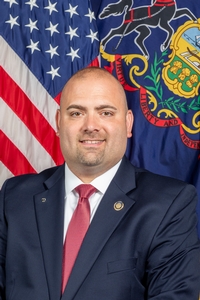
HB 1923 establishes new workplace safety requirements for meat packing and food processing facilities by mandating facility health and safety committees. It creates a dedicated workers' rights coordinator position within the Department of Labor and Industry to oversee compliance and address concerns. The bill also adds specific public health emergency protections for workers during outbreaks or crises, requiring employers to follow state health guidelines. These changes directly affect workers and employers in the meat and food processing industry across the state.
HB 1881 updates Pennsylvania's Pharmacy Act to modernize requirements for pharmacy technicians and trainees, including new registration qualifications and supervision rules by licensed pharmacists. It adds specific protocols for pharmacies administering injectable medications, biologicals (like vaccines), and immunizations, while requiring detailed reports on vaccine administration. The bill also establishes new standards for clinical laboratory certificates and repeals outdated sections of the original 1961 law. These changes directly affect pharmacies, pharmacy technicians, trainees, and pharmacists who oversee vaccine and medication administration.
This Pennsylvania House resolution (HR 382) urges Congress to extend expanded health insurance subsidies that currently help Pennsylvanians purchase coverage through Pennie, the state's health insurance marketplace. Without extension, these subsidies expire December 31, 2025, causing average premium increases of 102% for Pennie customers - projected to push 150,000 people to lose coverage. The resolution highlights that without the expanded credits, a couple earning $85,000 annually would pay $25,776 yearly for insurance (31% of their income), compared to lower costs under current subsidies. It cites Pennie's 2025 enrollment of nearly 500,000 customers and a 16% drop in new sign-ups since Open Enrollment 2026 as evidence of the need for continued support. The resolution has no legal force but requests congressional action to maintain affordability.
HB 1676 establishes Pennsylvania's Nursing Shortage Assistance Program, which provides state grants to "qualified nursing servicers" to help nursing students repay loans after graduation. The program requires partner hospitals to match state funds 1:1 for loan repayment and commit to hiring graduates, with grants only covering tuition expenses (not administrative costs). Nursing students working at participating hospitals may receive up to $10,000 annually or $30,000 total in loan repayment assistance. The Department of Labor and Industry administers the program, sets application rules, and reports annually on its effectiveness to the legislature.
HB 416 establishes a new Child Care Staff Recruitment and Retention Program to support early childhood educators and creates a Rural Health Transformation Program to improve healthcare access in underserved areas. It also streamlines permit processes for economic development projects through the Streamlining Permits for Economic Expansion and Development Program. These provisions are integrated into the 2025 state budget implementation, alongside administrative updates to tax collection procedures, state fund management, and reporting requirements for agencies like the Department of Revenue and Treasury. The bill does not alter existing tax rates or create new funding streams but modifies how current state financial systems operate.
HB 1828 requires health insurance plans in Pennsylvania to cover all recommended vaccines without requiring patients to pay out-of-pocket costs like copays or deductibles. It directly affects insurance companies by mandating this coverage and patients who rely on insurance for routine immunizations (e.g., childhood vaccines, flu shots). The bill adds penalties for insurers that fail to comply with the coverage requirement. This policy change ensures broader access to vaccines by removing financial barriers under insurance plans.
HB 157 creates state grants to help healthcare entities in rural counties or designated medically underserved areas cover the student loan debt of their employed healthcare practitioners. The grants would be paid directly to the healthcare facilities (like clinics or hospitals), not to individual providers, to offset the cost of practitioners' education debt. This aims to support recruitment and retention of healthcare workers in areas with limited access to medical services. The program would be funded through state appropriations, targeting facilities serving communities with significant healthcare access challenges.
HB 1697 amends Pennsylvania's Human Services Code to create a state-level False Claims Act, directly affecting healthcare providers, contractors, and organizations receiving state funds (like Medicaid or welfare programs). It makes individuals or entities liable for three times the damages plus penalties if they knowingly submit false claims, make false records, or conceal obligations to the state. The bill establishes "qui tam" lawsuits allowing whistleblowers to sue on behalf of the state and creates a Fraud Prevention and Recovery Account to hold recovered funds. These provisions align Pennsylvania's law with the federal False Claims Act to combat fraud in public spending.
HB 1234 amends Pennsylvania's Human Services Code to require public assistance programs to cover the cost of blood pressure monitors for eligible recipients. This change directly affects individuals enrolled in state public assistance programs who need blood pressure monitoring for health management. The bill adds blood pressure monitors to the list of covered medical equipment under the public assistance program, ensuring these devices are provided without cost to recipients. It does not change eligibility requirements but expands existing coverage to include this specific monitoring tool. The bill passed final passage on July 1, 2025, and was referred to the Health & Human Services committee.
SB 95 amends Pennsylvania's Pharmacy Act to create a 180-day provisional license for pharmacists moving from other states, allowing them to practice without demonstrating competency under Pennsylvania's requirements. It also permits emergency medical services providers to distribute naloxone dose packages for opioid overdose reversal under specific conditions, including a Department of Health standing order and voluntary distribution without liability. Additionally, the bill requires pharmacies to disclose prescription drug prices (brand vs. generic), cost-sharing amounts, and health insurance options upon customer request. These changes aim to improve pharmacist mobility, expand naloxone access, and increase price transparency for consumers.