Issue · Healthcare

Healthcare

Every healthcare bill, vote, and legislator stance in Pennsylvania, automatically classified by Maddy, our AI policy reader.

Total bills
59
2025-2026 Regular Session
Top supporter
Joe Pittman
96% support rate
Top opponent
Eric Weaknecht
14% support rate
Ranked legislators
10
5 support · 5 oppose
Key legislators

Who's moving healthcare in Pennsylvania

Legislators moving healthcare in Pennsylvania
Legislator Party Stance Support rate Decisive votes
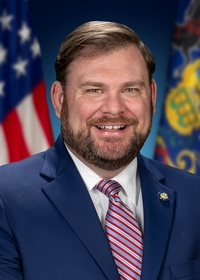
Joe Pittman
Joe Pittman Senate · District 41
R
Strong +
96% 24
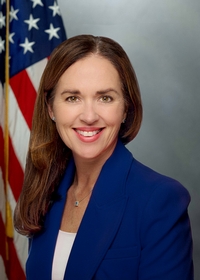
Bridget Malloy Kosierowski
Bridget Malloy Kosierowski House · District 114
D
Strong +
94% 113
Devlin Robinson
Devlin Robinson Senate · District 37
R
Strong +
93% 29
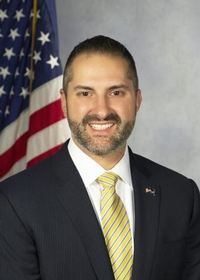
Steve Malagari
Steve Malagari House · District 53
D
Strong +
93% 95
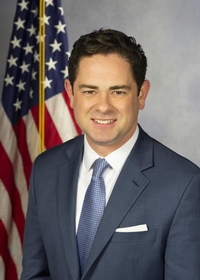
Kyle Mullins
Kyle Mullins House · District 112
D
Strong +
92% 91
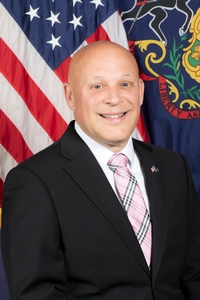
Eric Weaknecht
Eric Weaknecht House · District 5
R
Strong −
14% 66
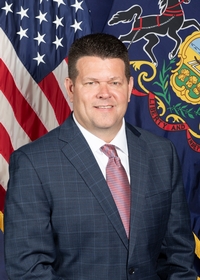
Jamie Walsh
Jamie Walsh House · District 117
R
Strong −
14% 80
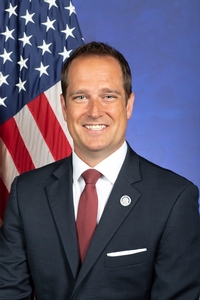
Scott Barger
Scott Barger House · District 80
R
Strong −
14% 72
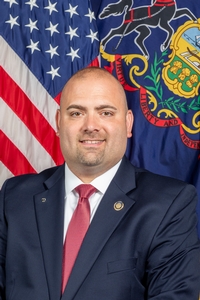
Ryan Warner
Ryan Warner House · District 52
R
Strong −
14% 77
Joe Hamm
Joe Hamm House · District 84
R
Strong −
14% 76
Showing 41–50 of 59 bills

All healthcare bills

passed both · Pennsylvania · Senate Nov 12, 2025

SB 731: An Act amending the act of August 26, 1971 (P.L.351, No.91), known as the State Lottery Law, in pharmaceutical assistance for the elderly, providing for short title of chapter and further providing for determination of eligibility and for the Pharmaceutical Assistance Contract for the Elderly Needs Enhancement Tier ; and making an editorial change.

SB 731 amends the existing Pharmaceutical Assistance Contract for the Elderly (PACE) program to add a new "Needs Enhancement Tier" for determining eligibility. This tier would allow more elderly residents to qualify for prescription drug assistance based on specific financial or health needs. The bill changes how eligibility is assessed under the program, making it easier for seniors with higher needs to access medication support. The bill recently passed final passage on November 12, 2025, and is now referred to Rules & Executive Nominations.
signed · Pennsylvania · House Nov 12, 2025

HB 416: An Act amending the act of April 9, 1929 (P.L.343, No.176), known as The Fiscal Code, providing for Child Care Staff Recruitment and Retention Program; in 911 Emergency Communication Services, further providing for surcharge; in Department of Revenue, further providing for exclusion from classes of income and providing for research and experimental expenditures and qualified production property, for report to General Assembly and for interest expense; in joint underwriting association, further providing for findings and for definitions, repealing provisions relating to sunset and providing for risk-based capital certification, for fund transfers, for association oversight and additional duties, for Joint Underwriting Association Board, for board meetings, for construction, for dissolution, for appropriations and for reports and hearings; in State Health Insurance Exchange Affordability Program, further providing for Exchange Affordability Assistance Account; providing for Rural Health Transformation Program; in Treasury Department, providing for waiver of interest, costs and fees; in procedure for disbursement of money from the State Treasury, further providing for use and appropriation of unused Commonwealth funds; in oil and gas wells, further providing for Oil and Gas Lease Fund; providing for advanced air mobility sites and for public transportation vehicles; in human services, further providing for resident care and related costs; in Attorney General, providing for home improvement contractor registration fee; providing for Rare Disease Advisory Council, for affordable housing tax credit and for working Pennsylvanians tax credit; in additional keystone opportunity expansion zones, providing for additional keystone opportunity expansion zones for certain counties of the fourth class; providing for additional extensions of keystone opportunity zones; in special funds, further providing for funding, for expiration and for other grants; in additional special funds and restricted accounts, further providing for establishment of special fund and account, for use of fund and for distributions from Pennsylvania Race Horse Development Fund and providing for refund of 2003 assessment by Insurance Department; in additional special funds and restricted accounts relating to Service and Infrastructure Improvement Fund, further providing for deposits and providing for Property Tax Relief Fund; in general budget implementation, further providing Executive Offices, for Department of Community and Economic Development, for Department of Environmental Protection, for Pennsylvania Fish and Boat Commission, for Pennsylvania Higher Education Assistance Agency and for Commonwealth Financing Authority, providing for stenography services, further providing for surcharges, for Federal and Commonwealth use of forest land and for Multimodal Transportation Fund and providing for State Sexual Offenders Assessment Board, for interest transfers, for fund transfers and for miscellaneous provisions; in 2024-2025 budget implementation, further providing for Department of Education, for Department of Environmental Protection and for Department of Human Services; in Streamlining Permits for Economic Expansion and Development Program, further providing for scope of article, for definitions and for the Streamlining Permits for Economic Expansion and Development Program, providing for review and determination of specific permits and for State agency permits and further providing for construction; providing for electricity load forecast accountability, for 2025-2026 budget implementation and for 2025-2026 restrictions on appropriations for funds and accounts; making repeals; and making editorial changes.

HB 416 establishes a new Child Care Staff Recruitment and Retention Program to support early childhood educators and creates a Rural Health Transformation Program to improve healthcare access in underserved areas. It also streamlines permit processes for economic development projects through the Streamlining Permits for Economic Expansion and Development Program. These provisions are integrated into the 2025 state budget implementation, alongside administrative updates to tax collection procedures, state fund management, and reporting requirements for agencies like the Department of Revenue and Treasury. The bill does not alter existing tax rates or create new funding streams but modifies how current state financial systems operate.
passed · Pennsylvania · House Nov 5, 2025

HB 446: An Act amending the act of July 19, 1979 (P.L.130, No.48), known as the Health Care Facilities Act, in licensing of health care facilities, providing for medication offered to patient.

HB 446 requires hospitals and ambulatory surgical facilities in Pennsylvania to offer patients unused, facility-provided medication at no additional cost upon discharge, if the prescriber determines it's clinically appropriate for continuing treatment. The bill specifies that this applies only to non-controlled, multi-dose medications like eye drops, creams, or inhalers (excluding IV drugs or controlled substances), and mandates clear discharge instructions with usage details and contact information. Providers acting in good faith are protected from liability for patient misuse, and such medication offers are exempt from standard outpatient dispensing rules. This directly affects patients discharged from hospitals or ambulatory facilities and the healthcare facilities providing their care.
passed · Pennsylvania · House Oct 29, 2025

HB 157: An Act providing for grant awards to entities in rural counties and designated medically underserved areas to pay for the education debt of practitioners employed at the entity.

HB 157 creates state grants to help healthcare entities in rural counties or designated medically underserved areas cover the student loan debt of their employed healthcare practitioners. The grants would be paid directly to the healthcare facilities (like clinics or hospitals), not to individual providers, to offset the cost of practitioners' education debt. This aims to support recruitment and retention of healthcare workers in areas with limited access to medical services. The program would be funded through state appropriations, targeting facilities serving communities with significant healthcare access challenges.
passed · Pennsylvania · House Jul 23, 2025

HB 564: An Act amending Title 35 (Health and Safety) of the Pennsylvania Consolidated Statutes, providing for mental health crisis response; and imposing duties on the Department of Human Services.

HB 564 updates Pennsylvania law to establish a new mental health crisis response system. It requires the Department of Human Services to create and operate this system, including training crisis responders and coordinating care. The bill directly affects individuals experiencing mental health crises and the state agencies responsible for emergency mental health services. Key provisions mandate specific duties for DHS to ensure timely, accessible crisis support statewide. The bill passed final passage on July 14, 2025, and is now under review by the Health & Human Services committee.
passed · Pennsylvania · House Jul 23, 2025

HB 1697: An Act amending the act of June 13, 1967 (P.L.31, No.21), known as the Human Services Code, providing for liability for false claims, for adoption of congressional intent of the Federal False Claims Act, for damages, costs and civil penalties, for powers of Attorney General, for qui tam actions and for civil investigative demands; and establishing the Fraud Prevention and Recovery Account.

HB 1697 amends Pennsylvania's Human Services Code to create a state-level False Claims Act, directly affecting healthcare providers, contractors, and organizations receiving state funds (like Medicaid or welfare programs). It makes individuals or entities liable for three times the damages plus penalties if they knowingly submit false claims, make false records, or conceal obligations to the state. The bill establishes "qui tam" lawsuits allowing whistleblowers to sue on behalf of the state and creates a Fraud Prevention and Recovery Account to hold recovered funds. These provisions align Pennsylvania's law with the federal False Claims Act to combat fraud in public spending.
signed · Pennsylvania · Senate Jul 21, 2025

SB 475: An Act amending Title 42 (Judiciary and Judicial Procedure) of the Pennsylvania Consolidated Statutes, in organization and jurisdiction of courts of common pleas, further providing for problem-solving courts; and, in sentencing, further providing for modification or revocation of order of probation.

SB 475 creates a framework for Pennsylvania courts to establish specialized "problem-solving" treatment courts (including veterans, drug, mental health, and DUI courts) and modifies probation rules. It allows courts to create "veterans tracks" within existing treatment programs and requires judges to consider a defendant's employment status when sentencing for technical probation violations. The bill specifically permits up to 30 days of incarceration to allow defendants to enter treatment courts instead of imposing full sentences for technical probation violations. This directly affects Pennsylvania courts, probation officers, and individuals on probation who commit minor violations.
passed · Pennsylvania · House Jul 17, 2025

HB 1527: An Act reenacting and amending the act of July 7, 2017 (P.L.285, No.14), entitled "An act establishing the Rare Disease Advisory Council and providing for its powers and duties; and providing for duties of the Department of Health, the Insurance Department, the Department of Human Services and the Department of Education."

HB 1527 updates the existing Rare Disease Advisory Council established in 2017, clarifying its structure and responsibilities. The bill directly affects patients with rare diseases and requires coordination among the Department of Health, Insurance Department, Department of Human Services, and Department of Education. Key provisions mandate the council to advise state agencies on rare disease research, treatment access, insurance coverage, and resource allocation. It also specifies how departments must collaborate on policies impacting rare disease patients, ensuring a unified state approach.
signed · Pennsylvania · House Jul 7, 2025

HB 309: An Act amending the act of October 5, 1978 (P.L.1109, No.261), known as the Osteopathic Medical Practice Act, further providing for power to license, for visiting team physician and for licenses, exemptions, nonresident practitioners, graduate students, biennial registration and continuing medical education.

HB 309 amends Pennsylvania's Osteopathic Medical Practice Act (1978) to update licensing rules for osteopathic physicians and related healthcare providers. It changes registration requirements from annual to biennial (every two years), clarifies rules for visiting team physicians at sports events, and adjusts continuing medical education requirements. The bill directly affects licensed osteopathic physicians, nonresident practitioners, medical students, and healthcare facilities employing osteopathic staff. Signed into law on July 7, 2025 (Act No. 29), it streamlines administrative processes without creating new licensing barriers.
signed · Pennsylvania · House Jun 30, 2025

HB 261: An Act amending the act of May 17, 1921 (P.L.682, No.284), known as The Insurance Company Law of 1921, in casualty insurance, further providing for conditions subject to which policies are to be issued and for group accident and sickness insurance; and, in community health reinvestment, further providing for definitions.

HB 261 amends Pennsylvania's 1921 Insurance Company Law to update coverage rules for dependents and clarify community health definitions. It requires insurers to continue health coverage for unmarried children with intellectual or physical disabilities (who became disabled before age 19 and remain dependent) past age 19, provided policyholders submit proof within 31 days of the child's 19th birthday. The bill also revises "community health reinvestment activity" to explicitly include programs for preventing/treating intellectual disabilities and mental health services. These changes apply to policies issued after January 1, 1968, affecting insurers, employers offering group plans, and policyholders with disabled dependents. The law took effect immediately upon signing in June 2025.

Showing 41 to 50 of 59 bills
Previous 1 … 4 5 6 Next