

Issue · Healthcare

Healthcare

Every healthcare bill, vote, and legislator stance in Pennsylvania, automatically classified by Maddy, our AI policy reader.

Total bills
26
2025-2026 Regular Session
Top supporter
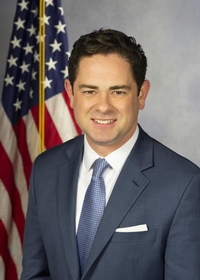
Joe Pittman
96% support rate
Top opponent
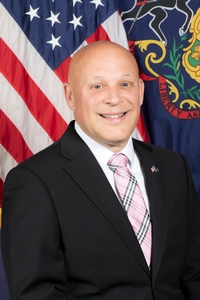
Eric Weaknecht
14% support rate
Ranked legislators
10
5 support · 5 oppose
Key legislators

Who's moving healthcare in Pennsylvania

Legislators moving healthcare in Pennsylvania
Legislator Party Stance Support rate Decisive votes
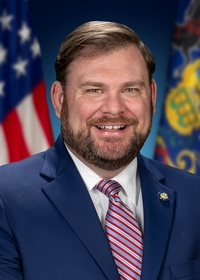
Joe Pittman
Joe Pittman Senate · District 41
R
Strong +
96% 24
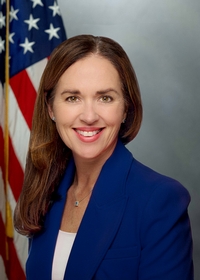
Bridget Malloy Kosierowski
Bridget Malloy Kosierowski House · District 114
D
Strong +
94% 113
Devlin Robinson
Devlin Robinson Senate · District 37
R
Strong +
93% 29
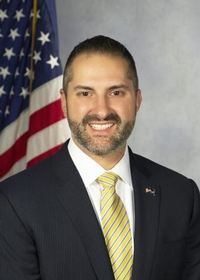
Steve Malagari
Steve Malagari House · District 53
D
Strong +
93% 95
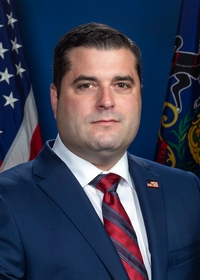
Kyle Mullins
Kyle Mullins House · District 112
D
Strong +
92% 91
Eric Weaknecht
Eric Weaknecht House · District 5
R
Strong −
14% 66
Jamie Walsh
Jamie Walsh House · District 117
R
Strong −
14% 80
Scott Barger
Scott Barger House · District 80
R
Strong −
14% 72
Ryan Warner
Ryan Warner House · District 52
R
Strong −
14% 77
Joe Hamm
Joe Hamm House · District 84
R
Strong −
14% 76
Showing 1–10 of 26 bills

All healthcare bills

signed · Pennsylvania · Senate Jul 12, 2026

SB 146: An Act amending the act of April 9, 1929 (P.L.343, No.176), known as The Fiscal Code, in emergency COVID-19 response, providing for extension of use of certain funds; in Child Care Staff Recruitment and Retention Program, further providing for Child Care Staff Recruitment and Retention Program; in cigarette sales and licensing, further providing for definitions and providing for allowable mode of operations for licensed cigarette stamping agents; in joint underwriting association, further providing for fund transfers; providing for food processing residuals; in financially distressed municipalities, further providing for financial recovery; in oil and gas wells, further providing for Oil and Gas Lease Fund and providing for deep wells and Utica Shale permits and for well plugging; providing for manufacturing and investment tax credit, for Innovate in PA 2.0 Tax Credit and for design build best value; in human services, further providing for medical assistance payments for institutional care, for resident care and related costs and for LIFE Program and providing for transition to chip-enabled access cards, for Medical Assistance Reentry Program, for Children's Trust Fund and for medical assistance pharmacy services; in additional keystone opportunity expansion zones, providing for additional zone for shipbuilding and for additional zones; providing for residential revitalization keystone opportunity zones and for violent incident clearance and technological investigative methods; in special funds, further providing for funding and for Pennsylvania Convention Center; in additional special funds and restricted accounts, providing for Veterans' Trust Fund Board and further providing for establishment of special fund and account, for use of fund and for distributions from Pennsylvania Race Horse Development Fund; in additional special funds and restricted accounts, further providing for deposits and providing for Professional Licensure Augmentation Account; in general budget implementation, further providing for Executive Offices, for Department of Agriculture, for Department of Corrections, for Department of Labor and Industry and for Department of Transportation, providing for Pennsylvania Emergency Management Agency and further providing for Commonwealth Financing Authority, for Federal and Commonwealth use of forest land, for Multimodal Transportation Fund, for School Safety and Security Fund, for State Gaming Fund, for State Employees' Retirement System Restricted Account and for Public School Employees' Retirement System Restricted Account; in retirement, providing for 2026 special ad hoc municipal police and firefighter postretirement adjustment, for supplemental annuities for public school employees commencing 2026, for supplemental annuities for State employees commencing 2026 and for payment of supplemental annuity and special ad hoc postretirement adjustment; in electricity load forecast accountability, providing for energy and water reporting and for advanced transmission technologies; in 2025-2026 budget implementation, further providing for Department of Agriculture, for Department of Human Services and for Pennsylvania Higher Education Assistance Agency; providing for 2026-2027 budget implementation and for 2026-2027 restrictions on appropriations for funds and accounts; in fiscal supplements to statutory programs, providing for amusement tax clarification, for situs for local sales tax for cities of the first class, for situs for local sales tax for counties of the second class, for net income and for housing; abrogating a regulation; making repeals; providing for suspension of pension actuarial notes; and making editorial changes.

SB 146 establishes a Veterans' Trust Fund Board to manage and oversee the State Veterans' Trust Fund under Pennsylvania law. The bill directly affects veterans' programs by creating a dedicated board to administer funds supporting veteran services, such as housing, healthcare, and employment initiatives. Key provisions include defining the board's structure, responsibilities, and governance for the Trust Fund, updating existing statutes to reflect these changes. The bill does not create new benefits but organizes the management of existing funding streams for veterans' support. (Note: As of the latest action, the bill was "Reported as amended" in committee and has not yet become law.)
passed · Pennsylvania · House Jun 25, 2026

HB 1127: An Act authorizing the Commonwealth of Pennsylvania to join the Dentist and Dental Hygienist Compact; and providing for the form of the compact.

HB 1127 authorizes Pennsylvania to join the Dentist and Dental Hygienist Compact, enabling dentists and dental hygienists licensed in Pennsylvania to practice in other participating states without obtaining separate licenses. The bill establishes a "Compact Privilege" that allows qualified professionals to practice across state lines while maintaining each state's regulatory authority over scope of practice and disciplinary actions. Key mechanisms include streamlined licensure pathways, shared disciplinary information between states, and protection of public health standards. This affects licensed dental professionals seeking to work in multiple compact states, particularly addressing workforce mobility and access to care.
passed · Pennsylvania · House Jun 18, 2026

HB 836: An Act protecting an individual's choice to use assisted reproductive technology.

HB 836 prohibits Pennsylvania from interfering with the use of medically appropriate assisted reproductive technology (ART), such as in vitro fertilization (IVF), ensuring individuals can access these services without state restrictions. The bill defines ART to include specific fertility procedures and requires that any new state laws must comply with this protection unless explicitly exempted by the legislature. It takes effect immediately, providing direct safeguards for individuals seeking ART services and healthcare providers offering them.
in committee · Pennsylvania · House Jun 17, 2026

HB 2136: An Act amending Title 61 (Prisons and Parole) of the Pennsylvania Consolidated Statutes, in medical services, providing for diagnoses prior to incarceration.

This bill requires Pennsylvania's Department of Corrections to recognize medical diagnoses made by healthcare providers before an individual is incarcerated. It prohibits the department from removing or ignoring such diagnoses, except when a healthcare provider (who made the diagnosis or has relevant expertise) submits a written recommendation for removal. The department may then choose to remove the diagnosis based on that recommendation. This change directly affects individuals entering state prisons by ensuring their pre-incarceration medical conditions are acknowledged in their records. The law takes effect 60 days after enactment.
passed · Pennsylvania · House Jun 5, 2026

HB 2254: An Act amending the act of April 17, 2016 (P.L.84, No.16), known as the Medical Marijuana Act, providing for compassionate access to medical marijuana; and imposing a penalty.

HB 2254 adds Chapter 14 to Pennsylvania's Medical Marijuana Act, allowing terminally ill patients to use medical marijuana within specific care facilities (like hospitals, nursing homes, and assisted living residences) under strict conditions. Facilities must create written guidelines within 180 days covering safe storage, patient safety, allowed forms of marijuana, and documentation. The bill imposes a $500 daily civil penalty for noncompliance, with penalties deposited into the Medical Marijuana Program Fund. It does not require facilities to provide certifications, administer marijuana, or permit use in emergency departments. This directly affects terminally ill patients seeking access in regulated care settings and facilities operating under the existing medical marijuana program.
in committee · Pennsylvania · House Jun 3, 2026

HR 393: A Resolution designating February 28, 2026, as "HIV is Not a Crime Awareness Day" in Pennsylvania.

This resolution designates February 28, 2026, as "HIV is Not a Crime Awareness Day" in Pennsylvania. It aims to raise public awareness about HIV criminalization - where individuals with HIV face criminal charges for non-transmission behaviors - and highlights how such laws disproportionately impact marginalized groups like people of color, women, and LGBTQ+ individuals. The resolution emphasizes current public health consensus that people with HIV who have an undetectable viral load cannot transmit the virus through sex, and that HIV treatment is prevention. It is a symbolic statement, not a law, intended to encourage education and dialogue about ending outdated HIV-related criminal penalties.
passed · Pennsylvania · House May 7, 2026

HB 2269: An Act amending the act of March 10, 1949 (P.L.30, No.14), known as the Public School Code of 1949, repealing provisions relating to medical education loan assistance.

This bill repeals the Pennsylvania Medical Education Loan Assistance Program, which previously provided financial incentives to students pursuing medical, nursing, biomedical, and life sciences education. The program allowed eligible students to access loans with favorable terms, including low interest rates and fees, to encourage them to practice medicine or nursing in Pennsylvania, particularly in underserved areas. By removing this legislation, the state will no longer administer this specific loan assistance program for medical education.
passed · Pennsylvania · House May 5, 2026

HR 203: A Resolution directing the Joint State Government Commission to conduct a study of reported patient safety events and issue a report with recommendations for reducing reportable patient safety events and improving patient safety.

HR 203 is a House Resolution directing Pennsylvania's Joint State Government Commission to study medication errors and patient safety. The Commission must form an advisory committee including health officials and stakeholder representatives (like pharmacists, nurses, and hospital associations) to examine how errors occur in hospitals, long-term care facilities, and pharmacies. The study will review current state laws, other states' policies, and best practices, with a report containing recommendations due to the House within 18 months. This resolution does not change laws but aims to inform future policy through a comprehensive review.
passed · Pennsylvania · House Apr 17, 2026

HB 1706: An Act amending the act of March 10, 1949 (P.L.30, No.14), known as the Public School Code of 1949, in school health services, providing for student mental health awareness.

HB 1706 requires Pennsylvania schools to integrate student mental health awareness into existing health education standards and school operations. It mandates the State Board of Education to update health standards, the Department of Health and Education to develop public guidelines on mental health warning signs for students and families, and schools to notify students and parents twice yearly about local mental health services. The bill also requires school entities to report student absences or injuries in activities to student assistance programs and directs the Pennsylvania Interscholastic Athletic Association to add mental health training to coach certification by the 2025-2026 school year. This bill directly affects all public, private, and parochial schools in Pennsylvania, their students, families, and athletic staff.
passed · Pennsylvania · House Apr 1, 2026

HB 200: An Act establishing family and medical leave benefits, the Paid Family and Medical Leave Account and the Paid Family and Medical Leave Grant Program; conferring powers and imposing duties on the Department of Labor and Industry; and imposing penalties.

This bill would create a state-funded paid family and medical leave program for eligible workers needing time off for health issues, childbirth, or family care. It establishes a dedicated state fund to cover leave costs, creates an advisory board to guide implementation, and assigns oversight to the Department of Labor. The program would directly affect employees in the state who qualify for these leave types, requiring employers to provide the benefits. The bill also specifies penalties for businesses failing to comply with the new requirements.
Showing 1 to 10 of 26 bills
1 2 3 Next