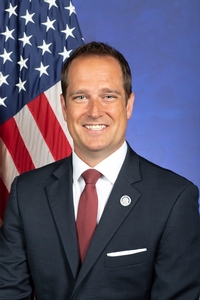
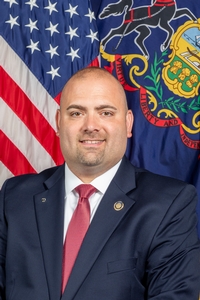
This bill designates the week of April 11 through 17, 2026, as "Black Maternal Health Week" in Pennsylvania to raise awareness about maternal health disparities affecting Black women. The resolution highlights statistics showing that Black women in the state face significantly higher pregnancy-related death rates compared to other groups, with many cases deemed preventable. It does not create new funding or policy requirements but serves as a symbolic gesture to focus public and legislative attention on the issue. The measure is sponsored by multiple representatives and referred to the Committee on Children and Youth for consideration.
This Pennsylvania House Resolution designates March 31, 2026, as "Black Midwives Day" to honor the contributions of Black midwives to maternal and infant health in the state. The resolution highlights the importance of midwifery in addressing maternal health disparities, particularly in Black communities where pregnancy-related mortality rates are significantly higher than national averages. It acknowledges the role of midwives in providing culturally sensitive care and reducing barriers to access in areas with limited maternity health resources. The measure serves as a symbolic recognition rather than establishing new laws or funding requirements.
HB 2175 requires businesses using AI chatbots to clearly disclose when consumers are interacting with artificial intelligence, especially for mental health support (e.g., chatbots claiming to treat anxiety or depression). It prohibits deceptive advertising, mandates protection of personal data shared with these tools, and gives Pennsylvania’s Attorney General’s Bureau of Consumer Protection authority to enforce these rules and impose penalties. The law directly affects companies offering AI chatbots that provide health-related advice to Pennsylvania residents. It does not cover scripted tools (like guided meditation) or AI that simply connects users with human professionals.
HB 554 would authorize Pennsylvania to join the Social Work Licensure Compact, a multi-state agreement that allows social workers licensed in one member state to practice in others without additional exams. The bill provides Pennsylvania with the legal framework to adopt the compact's standard terms, directly affecting licensed social workers seeking to practice across state lines. Key provisions include aligning Pennsylvania's licensing requirements with the compact's uniform standards, simplifying the process for social workers to obtain reciprocal licenses in participating states. This change would streamline professional mobility for social workers while maintaining consistent regulatory oversight.
HB 80 would authorize Pennsylvania to join the Audiology and Speech-Language Pathology Interstate Compact. This compact allows licensed audiologists and speech-language pathologists to practice in other participating states without obtaining separate licenses for each state. The bill directly affects these healthcare professionals and their patients, streamlining cross-state practice for providers. It creates a standardized process for reciprocity among member states, eliminating redundant licensing requirements.
HB 348 amends Pennsylvania's Human Services Code to require the state human services department to notify medical assistance applicants about their right to legal representation during application or eligibility reviews. This change directly affects individuals applying for medical assistance programs (like Medicaid) and the department responsible for processing these applications. The key provision mandates that applicants receive written notice detailing their option to seek legal help, which the department must provide before finalizing eligibility decisions. The bill focuses on improving transparency in the application process without altering eligibility criteria or benefit amounts.
HB 1530, the Genetic Information Privacy Act, requires direct-to-consumer genetic testing companies operating in Pennsylvania to protect residents' genetic data. Companies must obtain clear, separate consent for data collection, use, sharing, and retention; implement security measures; and provide consumers with access to or deletion of their data. The bill specifically prohibits sharing genetic data with insurers, employers, or third parties without explicit written consent. Violations could result in $2,500 civil penalties per incident, enforced by the Attorney General’s office. The law applies to Pennsylvania residents and covers genetic data like DNA test results, but excludes research data collected under federal health privacy rules.
This Pennsylvania House resolution (HR 382) urges Congress to extend expanded health insurance subsidies that currently help Pennsylvanians purchase coverage through Pennie, the state's health insurance marketplace. Without extension, these subsidies expire December 31, 2025, causing average premium increases of 102% for Pennie customers - projected to push 150,000 people to lose coverage. The resolution highlights that without the expanded credits, a couple earning $85,000 annually would pay $25,776 yearly for insurance (31% of their income), compared to lower costs under current subsidies. It cites Pennie's 2025 enrollment of nearly 500,000 customers and a 16% drop in new sign-ups since Open Enrollment 2026 as evidence of the need for continued support. The resolution has no legal force but requests congressional action to maintain affordability.
HB 923 amends the State Lottery Law to redirect lottery revenue toward providing pharmaceutical assistance for elderly residents. It directly affects seniors who qualify for prescription drug aid under state programs by modifying eligibility determination procedures. The key provision updates how income and asset thresholds are calculated to determine who qualifies for this assistance. The bill became law on November 24, 2025, after approval by both legislative chambers and the governor.
SB 88 amends Pennsylvania's Insurance Company Law to require health insurance plans sold in the state to cover specific breast imaging services without cost-sharing for policyholders. It mandates annual mammograms for women 40+ and physician-recommended mammograms for women under 40, plus MRI and other breast imaging for those at average or higher risk of breast cancer due to factors like family history, genetic mutations, or dense breast tissue. The law specifies coverage for screening, supplemental, and diagnostic exams but does not require coverage for mastectomies or override standard deductibles/copays beyond the minimum required services. This replaces prior requirements that allowed cost-sharing and excluded MRI coverage.