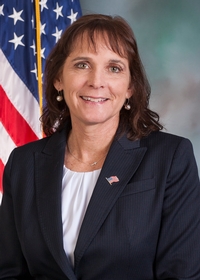
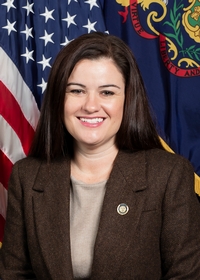
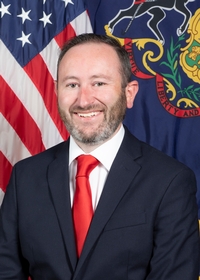
This bill is a House Resolution that formally recognizes April 2026 as "National Poetry Month" within Pennsylvania. It does not create new laws or change existing policies, but rather serves as an official statement of support for poetry and the literary arts. The resolution acknowledges the cultural and educational value of poetry, noting its role in education and community engagement. Sponsored by multiple legislators, it aims to honor the tradition of celebrating poetry during this designated month.
This resolution designates July 31, 2025, as "Intern Day" in Pennsylvania to recognize the value of internships for students, educational institutions, and employers. It aims to raise awareness about work-based learning opportunities that connect classroom education with workplace skills, aligning with national observances. The bill does not create new laws or funding but symbolically highlights Pennsylvania’s commitment to supporting internships as part of economic development. It directly affects students seeking career experience, career and technical centers, and businesses offering internships.
HB 2152 amends Pennsylvania's Public School Code to allow school districts to use state grant funds for shifting secondary school start times to no earlier than 8:30 a.m., requiring the new time to be at least 15 minutes later than current start times. School entities must adopt a policy for the later start time and inform communities about the health and academic benefits of adequate sleep for students before implementation. The Department of Education must provide guidance and support to schools planning this change, including public awareness campaigns. This applies to all Pennsylvania school districts and charter schools serving grades 7-12.
HB 2168 amends Pennsylvania's Early Intervention Services System Act to clarify how state funds support early intervention services for children in private special education schools. It specifies that for children not eligible for public kindergarten programs, the state covers the full cost of their services, while for children eligible for public kindergarten, the state covers only the extra cost (above what public schools would pay). This change ensures funding aligns with each child's eligibility for public school services. The bill directly affects children receiving early intervention services and the Department of Education's budgeting for these programs.
HB 2169 amends Pennsylvania's Fiscal Code to update terminology in funding provisions for special education schools. It replaces references to "approved private school" with "approved special education school" in Section 1923(5), which governs how funds from the Public School Code (Section 2509.8) are allocated. The bill directly affects approved special education schools with day tuition under $32,000, requiring funding to be no less than 175% of the 2015-2016 allocation. This is a technical correction to align statutory language with current educational terminology, with no change to the underlying funding mechanism or eligibility criteria.
HB 1768 establishes four new grant programs to support Pennsylvania's local food system. It provides incentives for schools and institutions to purchase local food (Local Food Purchasing Incentive Grant), offers financial assistance to farmers for production improvements (Keystone Producer Grant), supports food distribution networks (Keystone Assistance Grant), and funds school meal programs sourcing from local farms (Keystone Fresh Farm to School Account). The Department of Agriculture and Department of Education would administer these programs and manage the grant allocations. The bill directly affects Pennsylvania farmers, schools, food distributors, and local food businesses by creating new funding mechanisms to strengthen regional food systems.
HB 1405 amends Pennsylvania's Public School Code to create new pathways for veterans to become career and technical teachers in public schools. It allows veterans who served at least 8,000 hours (four years full-time) in an occupation they will teach to qualify for a Career and Technical Intern Certificate or Career and Technical Instructional I Certificate, bypassing some standard certification requirements. The bill specifically defines "veteran" as someone discharged under honorable conditions from U.S. Armed Forces, including National Guard or reserves. This directly affects veterans seeking teaching roles in career and technical education programs across Pennsylvania's public schools.
HB 1407 updates Pennsylvania's teacher certification rules, effective July 1, 2027. It establishes new grade spans for certificates: "Primary" (pre-K through grade 6), "Secondary" (grades 7-12), and "Specialized" (pre-K through grade 12). Current teachers with early childhood certificates can add grades 5-6 by passing an assessment or earning continuing education credits, while those with elementary/middle certificates can expand to grades 7-12 using similar pathways. The bill also requires teacher preparation programs to adjust coursework and field placements for early childhood certification, and abrogates outdated regulations inconsistent with these changes.
This bill converts an existing cosmetology training pilot program at career and technical centers (CTCs) into a permanent program under Pennsylvania's Public School Code. It requires participating CTCs and secondary schools to submit annual reports to the State Board of Cosmetology on training metrics. The legislation formalizes ongoing operations from the pilot phase, ensuring existing contracts, rules, and agreements remain valid without change. It directly affects career centers and schools offering cosmetology training within the state's public education system.
HB 1626 establishes a pilot program allowing career and technical centers (CTCs) and secondary schools in Pennsylvania to offer barber training under the State Board of Barber Examiners. The bill requires participating schools to report student and program data annually by June 30 through 2025. It specifies the pilot program expires three years after enactment (2025) but allows conversion to a permanent program without disrupting existing contracts or rules established during the pilot. This directly affects CTCs and schools participating in barber training, creating a structured pathway for students seeking barbering credentials.