Issue · Criminal Justice

Criminal Justice (Drug Policy)

Every criminal justice bill, vote, and legislator stance in Pennsylvania, automatically classified by Maddy, our AI policy reader.

Total bills
21
2025-2026 Regular Session
Top supporter
Nikil Saval
100% support rate
Top opponent
Kim Ward
0% support rate
Ranked legislators
10
5 support · 5 oppose
Key legislators

Who's moving drug policy in Pennsylvania

Legislators moving drug policy in Pennsylvania
Legislator Party Stance Support rate Decisive votes
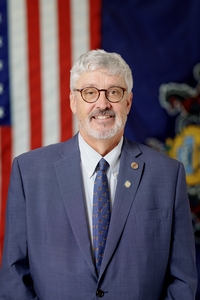
Nikil Saval
Nikil Saval Senate · District 1
D
Strong +
100% 8
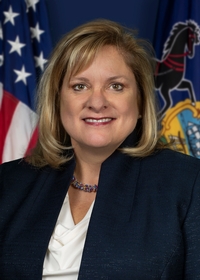
Carolyn Comitta
Carolyn Comitta Senate · District 19
D
Strong +
100% 3
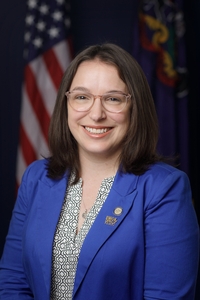
Lindsey Williams
Lindsey Williams Senate · District 38
D
Strong +
100% 3
Tim Kearney
Tim Kearney Senate · District 26
D
Strong +
100% 3
Vincent Hughes
Vincent Hughes Senate · District 7
D
Strong +
100% 3
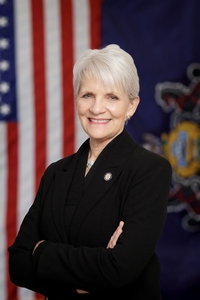
Kim Ward
Kim Ward Senate · District 39
R
Strong −
0% 9
Tracy Pennycuick
Tracy Pennycuick Senate · District 24
R
Strong −
0% 9
Cris Dush
Cris Dush Senate · District 25
R
Strong −
0% 8
Doug Mastriano
Doug Mastriano Senate · District 33
R
Strong −
0% 8
Gene Yaw
Gene Yaw Senate · District 23
R
Strong −
0% 8
Showing 1–10 of 21 bills

All criminal justice bills

in committee · Pennsylvania · House May 11, 2026

HB 2505: An Act amending the act of July 28, 1953 (P.L.723, No.230), known as the Second Class County Code, in second class county charter law, further providing for charter limitations.

This bill amends Pennsylvania's Second Class County Code to prohibit these counties from passing laws or taking actions that regulate firearms. Specifically, it removes the existing provision that allowed second-class counties to create ordinances regarding the transfer, ownership, transportation, or possession of guns. The change directly affects local governments in second-class counties by restricting their ability to implement their own gun control measures. The legislation becomes effective 60 days after it is passed.
Sub-Topics Drug Policy Firearms
in committee · Pennsylvania · House May 11, 2026

HB 2506: An Act amending Titles 18 (Crimes and Offenses) and 53 (Municipalities Generally) of the Pennsylvania Consolidated Statutes, in firearms and other dangerous articles, further providing for limitation on the regulation of firearms and ammunition; and, in general provisions, further providing for limitation on municipal powers.

HB 2506 prevents Pennsylvania counties, municipalities, and townships from passing local laws that restrict the ownership, possession, transfer, or transportation of firearms and ammunition, as long as those items are not already banned by state or federal law. The bill also stops local governments from suing gun manufacturers or dealers for damages related to how firearms are designed, manufactured, or sold to the public. Additionally, it removes the specific authority for municipalities to regulate firearms entirely, ensuring that gun policy remains a state-level responsibility rather than a local one.
Sub-Topics Drug Policy Firearms
in committee · Pennsylvania · House Jan 26, 2026

HB 2158: An Act amending the act of April 14, 1972 (P.L.233, No.64), known as The Controlled Substance, Drug, Device and Cosmetic Act, further providing for schedules of controlled substances.

HB 2158 amends Pennsylvania's Controlled Substance Act by adding specific kratom-related compounds to Schedule I, the most restrictive category for controlled substances. The bill prohibits possession, sale, or distribution of any product containing 7-hydroxymitragynine at 2% or more of total alkaloids, or synthetic versions of kratom alkaloids like mitragynine. This change directly affects businesses selling kratom products and individuals who use such substances, making them illegal without medical authorization. The policy change aligns with existing Schedule I criteria of high abuse potential and no accepted medical use.
Sub-Topics Drug Policy
passed · Pennsylvania · House Jun 18, 2026

HB 377: An Act amending the act of April 14, 1972 (P.L.233, No.64), known as The Controlled Substance, Drug, Device and Cosmetic Act, further providing for prohibited acts and penalties.

HB 377 adds tianeptine - a medication sometimes misused as an opioid substitute - to Pennsylvania's list of prohibited substances under the Controlled Substance Act. It makes it illegal for unregistered individuals or unlicensed practitioners to manufacture, deliver, or possess tianeptine with intent to distribute. Violators face felony charges punishable by up to five years in prison, a $15,000 fine, or both. The bill directly affects healthcare providers, pharmacies, and anyone handling tianeptine without proper authorization under state drug laws. This amendment updates existing penalties to address emerging misuse of tianeptine.
signed · Pennsylvania · House Dec 22, 2025

HB 1615: An Act amending Titles 42 (Judiciary and Judicial Procedure) and 75 (Vehicles) of the Pennsylvania Consolidated Statutes, in sentencing, further providing for sentence of total confinement; in licensing of drivers, further providing for notice of acceptance of Accelerated Rehabilitative Disposition, for the offense of driving while operating privilege is suspended or revoked and for ignition interlock limited license; in miscellaneous provisions relating to serious traffic offenses, further providing for homicide by vehicle while driving under influence; and, in driving after imbibing alcohol or utilizing drugs, further providing for the offense of driving under influence of alcohol or controlled substance, for grading, for penalties, for ignition interlock, for prior offenses and for Accelerated Rehabilitative Disposition.

HB 1615 amends Pennsylvania laws related to sentencing, driver licensing, and traffic offenses. It requires notice to drivers when their Accelerated Rehabilitative Disposition (ARD) for a traffic offense is accepted, and updates penalties for driving under the influence (DUI), including stricter grading for repeat offenses and enhanced penalties for homicide by vehicle while driving under the influence. The bill also revises procedures for licensing when a driver's privilege is suspended or revoked. These changes directly affect drivers facing traffic-related charges, courts processing these cases, and prosecutors seeking appropriate penalties. The bill is currently under review in the Transportation committee.
failed · Pennsylvania · House Oct 1, 2025

HB 1866: An Act amending Title 18 (Crimes and Offenses) of the Pennsylvania Consolidated Statutes, in inchoate crimes, further providing for prohibited offensive weapons.

HB 1866 would have expanded Pennsylvania's definition of "prohibited offensive weapons" under criminal law to include specific items like modified firearms and certain knives, making it a crime to attempt to obtain or possess them. The bill aimed to clarify that inchoate offenses (such as attempted possession) involving these weapons would be punishable under existing statutes. It directly affected individuals facing charges related to preparing to obtain or carry these weapons. However, the bill was defeated during final passage on October 1, 2025.
Sub-Topics Drug Policy
in committee · Pennsylvania · Senate Jul 31, 2025

SB 917: An Act amending Title 75 (Vehicles) of the Pennsylvania Consolidated Statutes, in serious traffic offenses, further providing for the offense of homicide by vehicle while driving under influence.

SB 917 requires Pennsylvania courts to impose higher sentences for drivers convicted of causing fatal accidents while driving under the influence of multiple drugs or a combination of alcohol and one or more drugs. The bill directs the Pennsylvania Commission on Sentencing to create a specific sentencing enhancement when a driver's blood or breath test shows multiple controlled substances (as defined by law) or alcohol plus at least one controlled substance. This change directly affects drivers found responsible for vehicular homicides involving these substance combinations, increasing their penalties. The law takes effect 60 days after enactment.
passed · Pennsylvania · Senate Jun 30, 2025

SB 739: An Act amending Title 18 (Crimes and Offenses) of the Pennsylvania Consolidated Statutes, in inchoate crimes, further providing for the offense of manufacture, distribution or possession of master keys for motor vehicles.

SB 739 creates new criminal offenses for manufacturing, distributing, selling, transferring, using, or possessing "illicit devices" for motor vehicles. These devices include physical keys adaptable to multiple vehicles or electronic tools that can unlock, start, or emulate vehicle key fobs. The law specifically targets devices that work across multiple vehicles, with penalties ranging from misdemeanors for first offenses to felonies for repeat violations. Legitimate businesses like dealers, locksmiths, rental agencies, manufacturers, and law enforcement are exempt from these restrictions when operating in their normal course of business.
Sub-Topics Drug Policy
in committee · Pennsylvania · House Feb 20, 2025

HB 622: An Act amending the act of April 14, 1972 (P.L.233, No.64), known as The Controlled Substance, Drug, Device and Cosmetic Act, further providing for prohibited acts and penalties.

HB 622 amends Pennsylvania's Controlled Substance Act to impose stricter penalties for violations involving fentanyl. It creates a new felony offense for knowingly violating specific drug provisions related to fentanyl, fentanyl analogues, or any substance containing trace amounts of fentanyl. Individuals convicted face up to 20 years in prison, a $500,000 fine, or both. The bill directly affects those distributing, selling, or possessing fentanyl-related substances in violation of existing law.
in committee · Pennsylvania · Senate Jan 22, 2025

SB 39: An Act amending Title 18 (Crimes and Offenses) of the Pennsylvania Consolidated Statutes, in inchoate crimes, providing for the offense of possession of firearm or other dangerous weapon in public recreation area.

SB 39 creates a new misdemeanor offense for knowingly possessing a firearm or dangerous weapon in a public recreation area (like a city park or public pool), with penalties ranging from a third-degree misdemeanor (for simple possession) to a first-degree misdemeanor (if intended for criminal use). It specifically excludes law enforcement officers, Pennsylvania Game Commission instructors, and veterans groups during ceremonial duties from this rule. The bill defines "dangerous weapon" to include items like knives with automatic blades or explosives, and clarifies that private recreation areas (e.g., privately owned parks) are not affected by this law. This bill directly impacts individuals entering public recreational spaces with weapons, while maintaining existing rights for private property owners.
Sub-Topics Drug Policy Firearms
Showing 1 to 10 of 21 bills
1 2 3 Next