Issue · Criminal Justice

Criminal Justice

Every criminal justice bill, vote, and legislator stance in Pennsylvania, automatically classified by Maddy, our AI policy reader.

Total bills
317
2025-2026 Regular Session
Top supporter
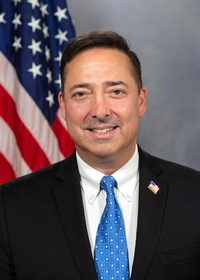
Lindsey Williams
85% support rate
Top opponent
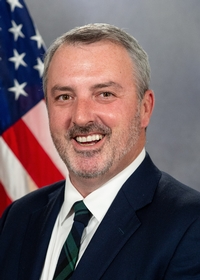
Dawn Keefer
14% support rate
Ranked legislators
10
5 support · 5 oppose
Key legislators

Who's moving criminal justice in Pennsylvania

Legislators moving criminal justice in Pennsylvania
Legislator Party Stance Support rate Votes
Lindsey Williams
Lindsey Williams Senate · District 38
D
Strong +
85% 36
Chris Pielli
Chris Pielli House · District 156
D
Strong +
84% 203
Tim Briggs
Tim Briggs House · District 149
D
Strong +
84% 199
Kyle Donahue
Kyle Donahue House · District 113
D
Strong +
84% 237
Melissa Shusterman
Melissa Shusterman House · District 157
D
Strong +
83% 220
Dawn Keefer
Dawn Keefer Senate · District 31
R
Strong −
14% 41
James Malone
James Malone Senate · District 36
D
Strong −
14% 23
Doug Mastriano
Doug Mastriano Senate · District 33
R
Strong −
15% 53
Scott Hutchinson
Scott Hutchinson Senate · District 21
R
Strong −
17% 31
Stephanie Borowicz
Stephanie Borowicz House · District 76
R
Strong −
17% 204
Showing 71–80 of 317 bills

All criminal justice bills

in committee · Pennsylvania · House Mar 13, 2025

HB 908: An Act amending Title 42 (Judiciary and Judicial Procedure) of the Pennsylvania Consolidated Statutes, in sentencing, providing for termination of long-term parole supervision.

This bill allows Pennsylvania courts to end long-term parole supervision for eligible individuals who have been under supervision for at least five consecutive years and are at least 40 years old. The process requires a formal petition filed by either the Department of Corrections or the parolee, which must be reviewed by the sentencing court. Courts must evaluate multiple factors including community safety risks, the individual's conduct history, financial hardship, and efficient use of department resources before deciding whether to terminate supervision. The law applies to all parole cases regardless of when the sentence was originally imposed and ensures victims, prosecutors, and relevant parties receive notice and an opportunity to be heard during the review process.
in committee · Pennsylvania · House Feb 5, 2026

HR 415: A Resolution directing the Joint State Government Commission to conduct a study on trauma-informed care training provided to law enforcement officers under Act 59 of 2020 and issue a report of its findings and recommendations to the House of Representatives.

This is a procedural resolution (not a law) directing Pennsylvania's Joint State Government Commission to study trauma-informed care training for law enforcement officers under Act 59 of 2020. The study must examine training content (including recognizing PTSD in officers and the public), frequency, provider qualifications, state comparisons, county-level participation data, and the training's impact on reducing violent incidents. The Commission must report findings and recommendations to the House of Representatives within one year. This resolution does not change existing law but seeks information to potentially improve training practices.
Sub-Topics Law Enforcement
in committee · Pennsylvania · House Jul 12, 2026

HB 2190: An Act amending the act of July 23, 1970 (P.L.563, No.195), known as the Public Employe Relations Act, in collective bargaining impasse, further providing for arbitration; and, in strikes, further providing for prohibited strikes.

HB 2190 amends Pennsylvania's Public Employe Relations Act to change how collective bargaining impasses are resolved for specific public safety and court staff. It requires binding arbitration for disputes involving prison guards, mental hospital staff, peace officers, and court employees when mediation fails - meaning the arbitrator's decision becomes final and enforceable. However, if an arbitration decision would require new legislation (e.g., changing pay rates or benefits), that part would only be advisory, not binding. The bill directly affects these public employee groups whose work is critical to security and court operations. This change streamlines dispute resolution while maintaining legislative oversight for policy changes.
in committee · Pennsylvania · House Feb 26, 2026

HB 2251: An Act amending Title 53 (Municipalities Generally) of the Pennsylvania Consolidated Statutes, in employees, further providing for reimbursement of expenses.

HB 2251 amends Pennsylvania law to update reimbursement rules for municipal police training costs. It requires the state commission to reimburse municipalities for 60% of police officers' regular salaries during approved training and for the full cost of tuition, living, and travel expenses. Municipalities must provide documentation and undergo annual audits to qualify for reimbursement. Additionally, the law mandates that at least 25% of state funds for this purpose be allocated to townships and boroughs with populations under 20,000 residents.
Sub-Topics Policing
in committee · Pennsylvania · Senate Feb 27, 2026

SR 225: A Resolution condemning the use of deadly force by officers of Federal immigration enforcement in incidents that raise serious constitutional and moral concerns.

Pennsylvania's Senate introduced Resolution 225 condemning federal immigration officers' use of deadly force in incidents raising constitutional concerns, specifically referencing two fatal shootings in Minnesota (Renée Good on January 7, 2026, and Alex Pretti on January 24, 2026). The resolution demands impartial investigations into these incidents, calls for federal agencies to review and reform enforcement practices, and urges Congress to strengthen accountability measures. It affirms that constitutional rights apply to all people regardless of immigration status and emphasizes that public safety requires respect for civil liberties. The resolution serves as a formal statement from Pennsylvania's Senate to federal officials, not a binding law.
Sub-Topics Enforcement Sanctuary Policies Tags Civil Liberties
in committee · Pennsylvania · Senate Feb 27, 2026

SB 1189: An Act amending Title 18 (Crimes and Offenses) of the Pennsylvania Consolidated Statutes, in abuse of office, providing for indiscriminate arrest.

SB 1189 amends Pennsylvania law to prohibit law enforcement officers from arresting or detaining individuals based on race, nationality, or immigration status without probable cause for an immigration violation. The bill defines "indiscriminate arrest" as using these factors to make arrests without a warrant, or to meet a quota, and makes such actions a misdemeanor of the first degree. This applies to all law enforcement officers, including federal officials and state peace officers, as defined in existing law. The law takes effect 60 days after enactment.
in committee · Pennsylvania · House Feb 20, 2026

HB 2232: An Act amending Title 44 (Law and Justice) of the Pennsylvania Consolidated Statutes, in law enforcement background investigations and employment information, further providing for maintenance of records.

HB 2232 amends Pennsylvania law to give law enforcement officers a formal process to challenge inaccurate background records maintained by their agencies. Specifically, it adds Section 7308(c)(1.1), allowing officers to appeal an agency's refusal to correct or remove disputed information under Pennsylvania's judicial review procedures (2 Pa.C.S. Ch. 7). This directly affects current and former law enforcement officers whose employment records contain errors. The bill does not change background investigation standards but establishes a new appeal pathway for record accuracy disputes. It takes effect 60 days after enactment.
Sub-Topics Law Enforcement
passed · Pennsylvania · House Jun 22, 2026

HB 2243: An Act amending Titles 18 (Crimes and Offenses) and 42 (Judiciary and Judicial Procedure) of the Pennsylvania Consolidated Statutes, in human trafficking, further providing for safe harbor for sexually exploited children; and, in juvenile matters, repealing provisions relating to dependency in lieu of delinquency.

HB 2243 expands protections for minors exploited through human trafficking in Pennsylvania. It amends Title 18 to provide "safe harbor" immunity from prosecution for non-violent offenses (like minor drug possession or disorderly conduct) committed as a direct result of trafficking victimization, for children under 18. The bill repeals the previous "dependency in lieu of delinquency" process (Section 6328), replacing it with immediate access to specialized services instead of criminal or juvenile justice proceedings. Law enforcement must detain trafficked youth only briefly to connect them with support services, not for punishment. This directly affects minors in trafficking situations by preventing them from being charged for crimes stemming from their exploitation.
passed · Pennsylvania · House Jun 18, 2026

HB 2252: An Act amending Title 18 (Crimes and Offenses) of the Pennsylvania Consolidated Statutes, in sexual offenses, further providing for the offense of unlawful dissemination of intimate image; and, in minors, further providing for the offense of sexual abuse of children.

HB 2252 makes it a crime to share someone's intimate image without consent, including AI-generated images that falsely depict them in nudity or sexual conduct. It directly affects individuals whose intimate images are shared non-consensually, whether the images are real or artificially created using AI or photo editing. The law establishes misdemeanor penalties (from second to first degree) based on factors like the victim's age, the sharer's intent (e.g., to harass, profit, or cause harm), and whether multiple images were shared. This bill updates Pennsylvania's sexual offenses law to specifically address the growing threat of AI-generated intimate images, ensuring they face the same legal consequences as real non-consensual image sharing.
in committee · Pennsylvania · House Feb 9, 2026

HB 2200: An Act amending Title 44 (Law and Justice) of the Pennsylvania Consolidated Statutes, providing for enforcement of civil immigration law and for prohibited use of funds.

This bill prohibits Pennsylvania State Police from stopping, detaining, or questioning individuals based solely on immigration status, except when necessary for unrelated criminal investigations. It bans prolonging detention due to immigration status or conducting immigration checks without a prior criminal arrest. Police must share immigration detainer information with federal authorities only if discovered during lawful detention for unrelated matters. The law directly affects all individuals interacting with Pennsylvania State Police, limiting state involvement in federal immigration enforcement.
Showing 71 to 80 of 317 bills
Previous 1 7 8 9 32 Next