Issue · Criminal Justice

Criminal Justice

Every criminal justice bill, vote, and legislator stance in Pennsylvania, automatically classified by Maddy, our AI policy reader.

Total bills
95
2025-2026 Regular Session
Top supporter
Lindsey Williams
85% support rate
Top opponent
Dawn Keefer
14% support rate
Ranked legislators
10
5 support · 5 oppose
Key legislators

Who's moving criminal justice in Pennsylvania

Legislators moving criminal justice in Pennsylvania
Legislator Party Stance Support rate Votes
Lindsey Williams
Lindsey Williams Senate · District 38
D
Strong +
85% 36
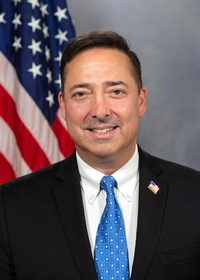
Chris Pielli
Chris Pielli House · District 156
D
Strong +
84% 203
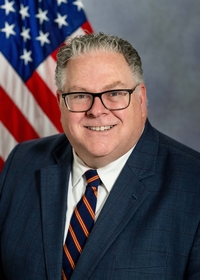
Tim Briggs
Tim Briggs House · District 149
D
Strong +
84% 199
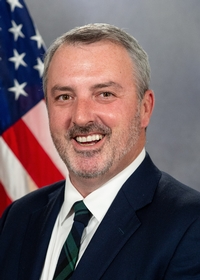
Kyle Donahue
Kyle Donahue House · District 113
D
Strong +
84% 237
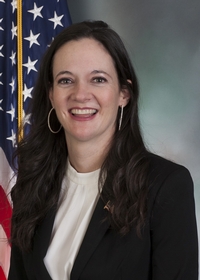
Melissa Shusterman
Melissa Shusterman House · District 157
D
Strong +
83% 220
Dawn Keefer
Dawn Keefer Senate · District 31
R
Strong −
14% 41
James Malone
James Malone Senate · District 36
D
Strong −
14% 23
Doug Mastriano
Doug Mastriano Senate · District 33
R
Strong −
15% 53
Scott Hutchinson
Scott Hutchinson Senate · District 21
R
Strong −
17% 31
Stephanie Borowicz
Stephanie Borowicz House · District 76
R
Strong −
17% 204
Showing 61–70 of 95 bills

All criminal justice bills

in committee · Pennsylvania · House Jan 27, 2025

HB 351: An Act amending Title 18 (Crimes and Offenses) of the Pennsylvania Consolidated Statutes, in obstructing governmental operations, providing for the offense of enforcement of State law.

HB 351 amends Pennsylvania law to create a new misdemeanor offense for municipal elected officials or public employees who undermine state law enforcement. Specifically, it prohibits officials from approving laws that decriminalize state-prohibited activities, altering penalties for state offenses, directing peace officers not to enforce state laws, or creating alternative enforcement methods. Any municipal law, regulation, or policy conflicting with state law is declared null and void. The bill excludes the Attorney General, district attorneys, and peace officers from these provisions.
Sub-Topics Law Enforcement
in committee · Pennsylvania · House Feb 4, 2025

HB 166: An Act amending Title 42 (Judiciary and Judicial Procedure) of the Pennsylvania Consolidated Statutes, in sentencing, further providing for sentencing procedure for murder of the first degree.

HB 166 amends Pennsylvania's sentencing rules for first-degree murder cases by changing jury instructions. It requires juries to unanimously find either: (1) at least one aggravating circumstance with no mitigating circumstances, or (2) that aggravating circumstances outweigh mitigating circumstances beyond a reasonable doubt, to impose the death penalty. If these conditions aren't met, the sentence must be life imprisonment. The bill directly affects defendants convicted of first-degree murder in Pennsylvania courts and modifies the procedural steps for jury sentencing decisions under Title 42. This is a procedural change to existing sentencing law, not a policy shift altering what constitutes murder or aggravating factors.
Sub-Topics Sentencing
in committee · Pennsylvania · House Feb 10, 2025

HB 523: An Act amending Title 18 (Crimes and Offenses) of the Pennsylvania Consolidated Statutes, in obstructing governmental operations, further providing for the offense of resisting arrest or other law enforcement.

HB 523 amends Pennsylvania's Title 18 statute (Section 5104) to clarify the offense of resisting arrest. It specifies that a person commits a misdemeanor if they intentionally create a *substantial risk of bodily injury* to law enforcement or others while resisting arrest, or use force requiring *substantial* force to overcome resistance. The bill directly affects individuals who resist police during arrests and law enforcement officers by setting clearer legal thresholds for when resistance becomes a crime. It does not change penalties but refines the definition of the offense to require a serious risk of harm or significant force. The amendment takes effect 60 days after enactment.
Sub-Topics Policing
in committee · Pennsylvania · House Feb 10, 2025

HB 530: An Act amending Titles 18 (Crimes and Offenses) and 42 (Judiciary and Judicial Procedure) of the Pennsylvania Consolidated Statutes, in arson, criminal mischief and other property destruction, further providing for the offense of criminal mischief; in burglary and other criminal intrusion, providing for removal of trespassers from real property; in particular rights and immunities, providing for an offense and civil action relating to trespass on real property; and imposing penalties.

HB 530 modifies Pennsylvania's criminal codes to adjust penalties for property damage crimes and create a new process for removing trespassers. It reclassifies criminal mischief as a felony if financial damage exceeds $1,000 (for building entry) or $5,000 (for public services), and as a misdemeanor for smaller losses. The bill also establishes a formal procedure allowing property owners to request law enforcement to remove trespassers by submitting a signed affidavit proving the person isn't a tenant, has been asked to leave, and lawful eviction occurred if applicable. This directly affects property owners seeking to remove unauthorized occupants, tenants facing potential unlawful removal, and law enforcement officers handling such requests. The law requires officers to provide individuals removed a chance to prove lawful occupancy and prohibits violations of Pennsylvania's Landlord and Tenant Act.
Sub-Topics Law Enforcement
passed · Pennsylvania · Senate Feb 10, 2025

SB 210: An Act amending Title 75 (Vehicles) of the Pennsylvania Consolidated Statutes, in miscellaneous provisions relating to operation of vehicles, providing for the offense of interference with operation or movement of a public transit vehicle.

SB 210 creates a new offense for interfering with public transit operators (like bus drivers or conductors) while they are performing their duties. It prohibits actions that cause serious injury or death to operators (felony first degree), lesser injury (felony third degree), or create fear of harm. The law applies to any public transit vehicle, including buses, trains, and streetcars, and covers both direct harm to operators and harm to passengers caused by the interference. Penalties range from serious felony charges for severe cases to lesser felonies for less severe violations.
in committee · Pennsylvania · House Feb 12, 2025

HB 599: An Act amending Title 18 (Crimes and Offenses) of the Pennsylvania Consolidated Statutes, in assault, providing for the offense of masked intimidation; and imposing penalties.

HB 599 would create a new crime called "masked intimidation" in Pennsylvania, making it illegal for someone to wear a facial covering while intentionally threatening or intimidating another person or group with the goal of causing them to fear for their physical safety. The offense would be punishable as a misdemeanor of the third degree, but the law includes specific exceptions for common uses of facial coverings, such as religious attire, safety gear during weather or sports, holiday costumes, or preventing illness spread. The bill also explicitly states it does not infringe on First Amendment rights and defines key terms like "facial covering" and "intimidate" to clarify the law's scope.
Sub-Topics Violent Crime
in committee · Pennsylvania · House Mar 13, 2025

HB 896: An Act amending Title 42 (Judiciary and Judicial Procedure) of the Pennsylvania Consolidated Statutes, in sentencing, further providing for sentencing procedure for murder of the first degree.

HB 896 requires Pennsylvania courts to impose the death penalty on defendants convicted of first-degree murder who are documented as undocumented migrants under U.S. immigration law (defined as violating 8 U.S.C. Ch. 12). The bill amends sentencing procedures to mandate this specific penalty after the court records the defendant's undocumented status, replacing standard sentencing considerations. It directly affects individuals facing first-degree murder charges who lack legal immigration status in the U.S.
in committee · Pennsylvania · Senate Mar 18, 2025

SB 464: An Act amending Title 42 (Judiciary and Judicial Procedure) of the Pennsylvania Consolidated Statutes, in sentencing, further providing for definitions and for sentencing procedure for murder of the first degree.

SB 464 amends Pennsylvania's sentencing laws for first-degree murder by adding new aggravating circumstances. Specifically, it expands the list of locations where a murder could trigger harsher penalties to include elementary/secondary schools, colleges, places of worship, professional sports facilities, and government offices. This change directly affects defendants convicted of first-degree murder committed in these specific locations, potentially leading to more severe sentences. The bill does not alter sentencing ranges but adds these locations as factors judges must consider during sentencing. The amendment becomes effective 60 days after enactment.
Sub-Topics Sentencing
in committee · Pennsylvania · House Mar 19, 2025

HB 975: An Act amending Title 18 (Crimes and Offenses) of the Pennsylvania Consolidated Statutes, in human trafficking, further providing for definitions and providing for the offense of trafficking in undocumented immigrants.

HB 975 creates a new state crime in Pennsylvania for trafficking undocumented immigrants. It makes it a third-degree felony to encourage or induce an undocumented immigrant to enter or remain in the state by concealing, harboring, or shielding them from law enforcement or federal immigration authorities, which violates federal law. The offense becomes a second-degree felony if it creates a substantial risk of serious harm, death, involves a minor, or involves knowledge of forced labor or sex work. This law directly affects individuals who facilitate undocumented immigrants' presence in Pennsylvania through concealment, clarifying that such actions are punishable under state law.
Sub-Topics Human Trafficking
in committee · Pennsylvania · House Jan 31, 2025

HB 436: An Act amending Title 18 (Crimes and Offenses) of the Pennsylvania Consolidated Statutes, in riot, disorderly conduct and related offenses, further providing for prohibition of ownership of certain animals.

This bill requires judges to ban convicted individuals of riot or disorderly conduct offenses from owning, possessing, or caring for animals for at least two years. It mandates completion of violence prevention counseling as part of sentencing, with failure to comply considered a separate offense. Violating the animal ownership ban results in escalating misdemeanor charges: third-degree for the first violation (adding one year to the ban), second-degree for a second violation (adding five years), and first-degree for third or subsequent violations (adding ten years). The law applies only to those convicted under specific provisions of Title 18, directly affecting offenders in these cases.
Sub-Topics Sentencing
Showing 61 to 70 of 95 bills
Previous 1 6 7 8 10 Next