Issue · Criminal Justice

Criminal Justice (Policing)

Every criminal justice bill, vote, and legislator stance in Pennsylvania, automatically classified by Maddy, our AI policy reader.

Total bills
69
2025-2026 Regular Session
Top supporter
Ben Sanchez
100% support rate
Top opponent
Jim Rigby
0% support rate
Ranked legislators
10
5 support · 5 oppose
Key legislators

Who's moving policing in Pennsylvania

Legislators moving policing in Pennsylvania
Legislator Party Stance Support rate Votes
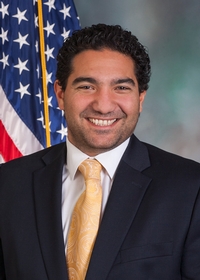
Ben Sanchez
Ben Sanchez House · District 153
D
Strong +
100% 9
Emily Kinkead
Emily Kinkead House · District 20
D
Strong +
100% 9
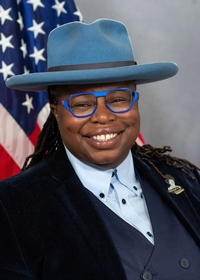
La'Tasha Mayes
La'Tasha Mayes House · District 24
D
Strong +
100% 9
Aerion Abney
Aerion Abney House · District 19
D
Strong +
100% 8
Kristine Howard
Kristine Howard House · District 167
D
Strong +
100% 8
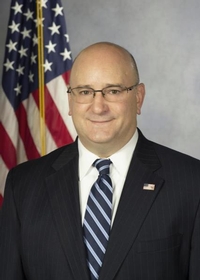
Jim Rigby
Jim Rigby House · District 71
R
Strong −
0% 9
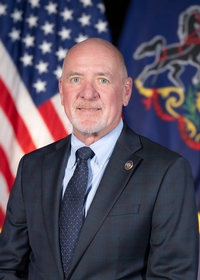
Josh Kail
Josh Kail House · District 15
R
Strong −
0% 9
Joe Hamm
Joe Hamm House · District 84
R
Strong −
0% 7
Rob Kauffman
Rob Kauffman House · District 89
R
Strong −
0% 7
Stephanie Borowicz
Stephanie Borowicz House · District 76
R
Strong −
0% 7
Showing 51–60 of 69 bills

All criminal justice bills

in committee · Pennsylvania · House Apr 13, 2026

HB 1247: An Act amending Title 42 (Judiciary and Judicial Procedure) of the Pennsylvania Consolidated Statutes, in rules of evidence, providing for prohibition of deception during custodial interrogation of individual with intellectual disability or autism.

HB 1247 prohibits law enforcement officers from using deception - such as false promises of leniency or misleading information - during custodial interrogations of individuals with intellectual disabilities or autism. Any confession obtained through such deception would be presumed inadmissible in criminal or juvenile court cases for offenses that would be misdemeanors or felonies if committed by an adult. The state (Commonwealth) must prove the confession was voluntary by a preponderance of evidence to overcome this presumption, shifting the burden of proof from the defense to the prosecution. This applies to all custodial interrogations conducted at police stations or other detention facilities.
in committee · Pennsylvania · Senate Jan 22, 2025

SB 46: An Act providing for adoption by the Attorney General of a Statewide model policy related to the prevention of excessive force by law enforcement officers and school security personnel.

SB 46 requires Pennsylvania's Attorney General to develop a statewide model policy within 120 days to prevent excessive force by law enforcement officers and school security personnel, after consulting with agencies, associations, and community groups. The policy must include specific standards for de-escalation tactics, reasonable alternatives to force, and prohibitions on chokeholds. All law enforcement agencies and school entities must adopt this model policy within 60 days or create a comparable policy meeting its minimum standards. Failure to comply risks loss of state funding, with annual training and biennial policy reviews mandated to ensure ongoing compliance.
in committee · Pennsylvania · House Jun 25, 2025

HB 1665: An Act amending Title 44 (Law and Justice) of the Pennsylvania Consolidated Statutes, in DNA data and testing, further providing for policy, for definitions, for State DNA Data Base, for State Police recommendation of additional offenses and annual report and for DNA sample required upon conviction, delinquency adjudication and certain ARD cases, providing for request for modified DNA search and further providing for DNA data base exchange, for expungement and for mandatory cost; and making an editorial change.

HB 1665 expands Pennsylvania's DNA collection requirements to include individuals convicted of specific misdemeanors (like simple assault, indecent exposure, or certain sex offense-related offenses) in addition to felony sex offenses and criminal homicide. It clarifies that DNA samples must be collected upon conviction, delinquency adjudication, or certain Accelerated Rehabilitative Disposition (ARD) cases for these offenses. The bill establishes a "modified DNA search" mechanism allowing law enforcement to use familial DNA matching (with scientific standards) to identify close relatives of individuals in the DNA database. It also requires the State Police to submit annual reports detailing demographics of collected DNA samples, fiscal impacts, testing timelines, and recommendations for expanding or removing offenses requiring DNA collection.
in committee · Pennsylvania · Senate Jun 30, 2025

SB 896: An Act amending the act of November 24, 1998 (P.L.882, No.111), known as the Crime Victims Act, in compensation, further providing for determination of claims and for awards.

SB 896 amends Pennsylvania's Crime Victims Act to expand how victims can prove a crime occurred for compensation claims, allowing medical records, protection orders (like those under 23 Pa.C.S. §61), or sexual violence orders (42 Pa.C.S. §62A) instead of requiring police reports. It requires hospitals, funeral homes, and crime scene cleaners to stop billing victims while claims are processed, with a 45-day window after a claim decision. The bill also increases the cap for crime scene cleanup costs from $500 to $1,500 and maintains a $35,000 total award limit. This directly affects victims filing claims and service providers waiting for payment under the compensation program.
in committee · Pennsylvania · Senate Feb 25, 2025

SB 279: An Act amending Title 53 (Municipalities Generally) of the Pennsylvania Consolidated Statutes, in employees, providing for use of force and deadly force policy for law enforcement agencies; imposing duties on the Municipal Police Officers' Education and Training Commission; and making an editorial change.

This bill requires all Pennsylvania municipal law enforcement agencies to create and implement written policies governing the use of force and deadly force by officers. The policies must include specific decision-making criteria for when force can be used (such as threats to safety or possession of weapons), prohibit choke holds except when deadly force is authorized, and mandate public posting online and physical availability upon request. The Municipal Police Officers' Education and Training Commission must certify each agency's policy biennially and provide non-compliance lists to the Pennsylvania State Police. This law directly affects municipal law enforcement agencies and their officers by standardizing force guidelines and increasing transparency around use-of-force incidents.
in committee · Pennsylvania · Senate Mar 6, 2025

SB 368: An Act amending Title 44 (Law and Justice) of the Pennsylvania Consolidated Statutes, providing for investigations; and imposing duties on the Pennsylvania State Police and the Municipal Police Officers' Education and Training Commission.

SB 368 establishes new standards for eyewitness identification procedures used by Pennsylvania law enforcement. It directly affects police departments, the Pennsylvania State Police, and the Municipal Police Officers' Education and Training Commission by requiring blind lineups (where administrators don't know the suspect's identity), documenting eyewitness descriptions before lineups, and using at least five fillers in both live and photo lineups. The bill mandates prelineup instructions for eyewitnesses about the importance of eliminating innocent people and not feeling pressured to identify someone. It also prohibits administrators from commenting on identifications and sets specific rules for lineup composition and show-up procedures to reduce misidentification risks.
Sub-Topics Policing
in committee · Pennsylvania · Senate Feb 26, 2025

SB 319: An Act amending Title 42 (Judiciary and Judicial Procedure) of the Pennsylvania Consolidated Statutes, in commencement of proceedings, providing for execution of warrants.

SB 319 requires Pennsylvania law enforcement officers to knock and announce their presence before forcibly entering a home during warrant execution and wait at least 15 seconds for occupants to respond. Officers must wear body cameras recording searches for five minutes before and after execution, and be clearly identifiable in uniform. The bill mandates new training on warrant procedures, establishes escalating sanctions (including certification suspension for repeated violations), and allows individuals harmed by intentional non-compliance to sue for damages. These requirements apply to all officers executing warrants under Pennsylvania law.
Sub-Topics Policing
in committee · Pennsylvania · Senate Mar 6, 2025

SB 370: An Act amending Title 44 (Law and Justice) of the Pennsylvania Consolidated Statutes, in preliminary provisions, adopting the Uniform Electronic Recordation of Custodial Interrogations Act; requiring recordings of interrogations; and imposing functions on the Attorney General.

SB 370 requires Pennsylvania law enforcement to electronically record (with audio) all custodial interrogations related to "crimes of violence" (serious offenses that would be violent if committed by an adult). Exceptions include immediate danger, a person refusing to be recorded, equipment failure, or interrogations conducted by another jurisdiction. If recording isn't done, officers must write a report explaining why and summarizing the interrogation. This directly affects police departments, officers conducting interrogations, and individuals questioned about violent crimes in Pennsylvania.
Sub-Topics Policing
in committee · Pennsylvania · Senate Jan 24, 2025

SB 182: An Act amending Title 18 (Crimes and Offenses) of the Pennsylvania Consolidated Statutes, in falsification and intimidation, further providing for the offense of false reports to law enforcement authorities.

SB 182 amends Pennsylvania law to address false reports made to police based solely on a person's race or ethnicity. It specifies that if someone falsely reports a crime to law enforcement without actual suspicion of a crime - only because of the alleged perpetrator's race or ethnicity - the offense becomes a first-degree misdemeanor. This change grades such reports more severely than other false reports, distinguishing them based on the discriminatory motive. The bill directly affects individuals who make intentionally false police reports motivated by racial or ethnic bias. The law takes effect 60 days after enactment.
Sub-Topics Civil Rights Policing
in committee · Pennsylvania · House Aug 22, 2025

HB 1817: An Act amending Title 18 (Crimes and Offenses) of the Pennsylvania Consolidated Statutes, in obstructing governmental operations, providing for the offense of interfering or impeding a first responder's duties.

HB 1817 would amend Pennsylvania's criminal code to create a specific offense for interfering with or impeding first responders - such as police, firefighters, or paramedics - while they are performing emergency duties. The bill would add this as a new provision under the section on obstructing governmental operations, defining prohibited actions like physically blocking, threatening, or hindering emergency personnel. This change would make such interference a distinct criminal violation, potentially subjecting offenders to penalties under state law. The bill is currently under review by the Judiciary committee.
Sub-Topics Policing
Showing 51 to 60 of 69 bills
Previous 1 5 6 7 Next