Issue · Criminal Justice

Criminal Justice (Policing)

Every criminal justice bill, vote, and legislator stance in Pennsylvania, automatically classified by Maddy, our AI policy reader.

Total bills
69
2025-2026 Regular Session
Top supporter
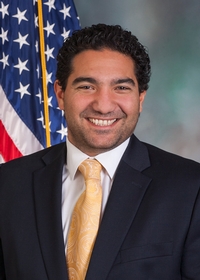
Ben Sanchez
100% support rate
Top opponent
Jim Rigby
0% support rate
Ranked legislators
10
5 support · 5 oppose
Key legislators

Who's moving policing in Pennsylvania

Legislators moving policing in Pennsylvania
Legislator Party Stance Support rate Votes
Ben Sanchez
Ben Sanchez House · District 153
D
Strong +
100% 9
Emily Kinkead
Emily Kinkead House · District 20
D
Strong +
100% 9
La'Tasha Mayes
La'Tasha Mayes House · District 24
D
Strong +
100% 9
Aerion Abney
Aerion Abney House · District 19
D
Strong +
100% 8
Kristine Howard
Kristine Howard House · District 167
D
Strong +
100% 8
Jim Rigby
Jim Rigby House · District 71
R
Strong −
0% 9
Josh Kail
Josh Kail House · District 15
R
Strong −
0% 9
Joe Hamm
Joe Hamm House · District 84
R
Strong −
0% 7
Rob Kauffman
Rob Kauffman House · District 89
R
Strong −
0% 7
Stephanie Borowicz
Stephanie Borowicz House · District 76
R
Strong −
0% 7
Showing 41–50 of 69 bills

All criminal justice bills

in committee · Pennsylvania · House Jun 16, 2025

HB 1612: An Act amending Title 18 (Crimes and Offenses) of the Pennsylvania Consolidated Statutes, in firearms and other dangerous articles, further providing for definitions, for persons not to possess, use, manufacture, control, sell or transfer firearms, for sale or transfer of firearms and for Pennsylvania State Police.

HB 1612 requires Pennsylvania firearm dealers to conduct background checks that include the federal terrorist screening database during gun sales. It adds individuals listed on this database to the existing list of people prohibited from purchasing firearms. The law updates background check procedures to mandate this check alongside criminal history, juvenile records, and mental health records, with dealers paying a $2 fee per check. The Pennsylvania State Police must provide immediate results during the transaction, either blocking the sale or issuing a unique approval number.
in committee · Pennsylvania · House Apr 30, 2025

HB 1360: An Act requiring persons convicted of arson and related offenses to register with local authorities; providing for duties of the Pennsylvania State Police and the Pennsylvania Parole Board; and imposing a penalty.

HB 1360, the Convicted Arsonist Registry Act, requires individuals convicted of arson under Pennsylvania law (18 Pa.C.S. § 3301(a), (c), (d), or (f)) to register with the Pennsylvania State Police. Registrants must provide personal details - including name, Social Security number, current/residential addresses, student enrollment information, and photographs/fingerprints - and update this information within 14 days of release, parole, probation, or arrival in Pennsylvania. Local fire chiefs and law enforcement officers receive this registration data to aid investigations and public safety. Registration is mandatory for life for most offenders, or until age 25 for juvenile offenders, with records destroyed upon reaching that age.
passed · Pennsylvania · House May 7, 2026

HB 1098: An Act amending the act of November 22, 1978 (P.L.1166, No.274), referred to as the Pennsylvania Commission on Crime and Delinquency Law, providing for Investigation and Prosecution of Internet Crimes Against Children Program.

HB 1098 establishes a new program under Pennsylvania's Commission on Crime and Delinquency to combat internet crimes against children. It directs the Commission to provide grants to law enforcement task forces for investigating and prosecuting internet-related crimes against minors under 18, specifically violations of Pennsylvania laws covering sexual offenses, human trafficking, and child exploitation (18 Pa.C.S. §§ 30, 31, 6312, 6318, 6320). The grants will support local police teams, supplement federal child exploitation grants, and fund specialized training for investigators. This program operates alongside existing federal and state funding without replacing it, directly affecting law enforcement agencies working on these cases.
in committee · Pennsylvania · House Jan 14, 2025

HB 104: An Act amending Title 23 (Domestic Relations) of the Pennsylvania Consolidated Statutes, in protection from abuse, further providing for definitions and for relief.

HB 104 amends Pennsylvania's protection from abuse law to define "electronic monitoring device" and allow courts to mandate its use for high-risk defendants. The bill defines a GPS-enabled device worn on the wrist or ankle that continuously tracks location within 100 miles, with data retained indefinitely by police. Courts may require this device for defendants found to pose a substantial risk of violating protection orders or committing crimes against victims, setting specific distance limits and restricted locations. The device must stay in place for the full duration of the protection order unless removed for "good cause" with notification to the victim. This directly affects individuals subject to abuse protection orders who are deemed high-risk by courts.
in committee · Pennsylvania · Senate Mar 10, 2025

SB 415: An Act amending Title 18 (Crimes and Offenses) of the Pennsylvania Consolidated Statutes, in computer offenses, providing for the offense of ransomware; and imposing duties on the Office of Administration.

SB 415 creates new criminal penalties for ransomware attacks targeting Pennsylvania state government systems. It prohibits possessing, using, or threatening to use ransomware (defined as software blocking access or encrypting data for payment demands) with penalties ranging from misdemeanors to felonies based on the ransom amount ($10,000+ triggers felony charges). The law requires managed IT service providers to notify state agencies within one hour of detecting ransomware, and agencies to report attacks to police within two hours. These provisions aim to prevent, detect, and respond to cyberattacks on Commonwealth agencies while mandating public notification after incidents.
Sub-Topics Policing Cybersecurity
in committee · Pennsylvania · House Oct 1, 2025

HB 1912: An Act amending Title 18 (Crimes and Offenses) of the Pennsylvania Consolidated Statutes, in falsification and intimidation, providing for the offense of swatting.

HB 1912 would create a new criminal offense in Pennsylvania for "swatting," defined as making a false emergency report to law enforcement to provoke a high-risk police response (like sending a SWAT team) at a victim's location. The bill directly affects individuals who intentionally submit false reports for the purpose of causing fear, harm, or disruption to others. It amends Pennsylvania’s criminal code (Title 18) to specifically address swatting under the section on falsification and intimidation. This would provide a clear legal standard for prosecuting such acts, which currently may not be adequately covered under existing laws.
Sub-Topics Policing
in committee · Pennsylvania · House Feb 10, 2025

HB 523: An Act amending Title 18 (Crimes and Offenses) of the Pennsylvania Consolidated Statutes, in obstructing governmental operations, further providing for the offense of resisting arrest or other law enforcement.

HB 523 amends Pennsylvania's Title 18 statute (Section 5104) to clarify the offense of resisting arrest. It specifies that a person commits a misdemeanor if they intentionally create a *substantial risk of bodily injury* to law enforcement or others while resisting arrest, or use force requiring *substantial* force to overcome resistance. The bill directly affects individuals who resist police during arrests and law enforcement officers by setting clearer legal thresholds for when resistance becomes a crime. It does not change penalties but refines the definition of the offense to require a serious risk of harm or significant force. The amendment takes effect 60 days after enactment.
Sub-Topics Policing
in committee · Pennsylvania · House Jun 2, 2026

HB 434: An Act providing for the Ebony Alert System; imposing duties on the Pennsylvania State Police; and imposing a penalty.

HB 434, the "Ebony Alert System Act," requires the Pennsylvania State Police to establish a system providing public alerts for missing young people of color (ages 12-25) under specific circumstances, including abduction, suspicious disappearance, or if they have disabilities. Law enforcement must consider eight factors - such as the individual's age, race, disability, or safety risks - before activating an alert. The system is funded by a $25 assessment on individuals convicted of kidnapping (18 Pa.C.S. Ch. 29), and falsely impersonating the alert system carries a $5,000 civil penalty. It directly affects law enforcement agencies, public safety systems, and vulnerable missing persons cases.
Sub-Topics Policing
in committee · Pennsylvania · House Feb 3, 2025

HB 449: An Act amending Title 42 (Judiciary and Judicial Procedure) of the Pennsylvania Consolidated Statutes, in commencement of proceedings, further providing for arrest without warrant.

HB 449 requires Pennsylvania police officers to issue a warning or citation ordering individuals to stop specific minor unlawful conduct before making an arrest without a warrant. It applies to offenses like disorderly conduct, public drunkenness, obstructing highways, and liquor violations under Title 18. The bill mandates that officers must first warn individuals to cease the conduct, and only arrest if they refuse or fail to comply. Additionally, police departments must establish written guidelines for officers before implementing these warrantless arrests. The law takes effect 60 days after enactment.
Sub-Topics Policing
passed · Pennsylvania · Senate Apr 1, 2025

SB 490: An Act amending Title 42 (Judiciary and Judicial Procedure) of the Pennsylvania Consolidated Statutes, in bonds and recognizances, providing for bail of persons posing threat to public safety.

SB 490 restricts unsecured bail or release on recognizance for defendants charged with specific offenses deemed a threat to public safety, including assaulting police, violent crimes within five years, or certain drug offenses involving fentanyl. It requires judges to detain such individuals before trial if they pose a community risk, while preserving the presumption of innocence and the right to request bail modifications. The bill applies directly to defendants facing charges under defined categories in Pennsylvania law, such as those involving violent crimes or fentanyl-related drug offenses exceeding 10 grams. It does not eliminate bail options but prohibits unsecured release in these specific cases. The law takes effect 60 days after passage.
Sub-Topics Policing
Showing 41 to 50 of 69 bills
Previous 1 4 5 6 7 Next