Issue · Criminal Justice

Criminal Justice

Every criminal justice bill, vote, and legislator stance in Pennsylvania, automatically classified by Maddy, our AI policy reader.

Total bills
95
2025-2026 Regular Session
Top supporter
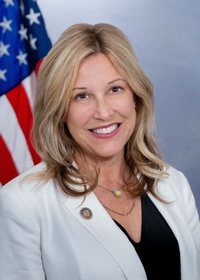
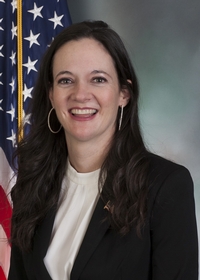
Lindsey Williams
85% support rate
Top opponent
Dawn Keefer
14% support rate
Ranked legislators
10
5 support · 5 oppose
Key legislators

Who's moving criminal justice in Pennsylvania

Legislators moving criminal justice in Pennsylvania
Legislator Party Stance Support rate Votes
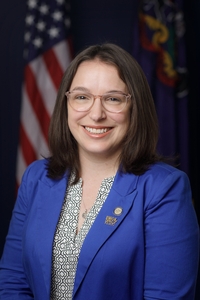
Lindsey Williams
Lindsey Williams Senate · District 38
D
Strong +
85% 36
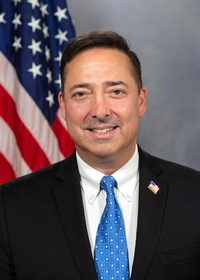
Chris Pielli
Chris Pielli House · District 156
D
Strong +
84% 203
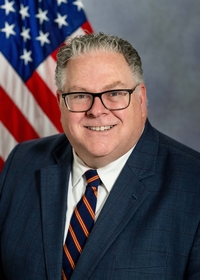
Tim Briggs
Tim Briggs House · District 149
D
Strong +
84% 199
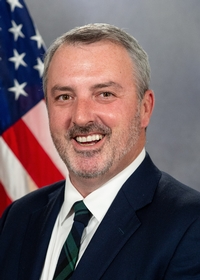
Kyle Donahue
Kyle Donahue House · District 113
D
Strong +
84% 237
Melissa Shusterman
Melissa Shusterman House · District 157
D
Strong +
83% 220
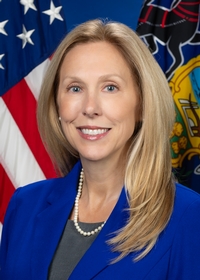
Dawn Keefer
Dawn Keefer Senate · District 31
R
Strong −
14% 41
James Malone
James Malone Senate · District 36
D
Strong −
14% 23
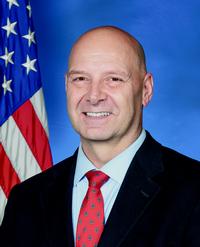
Doug Mastriano
Doug Mastriano Senate · District 33
R
Strong −
15% 53
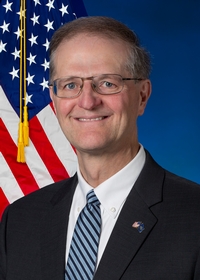
Scott Hutchinson
Scott Hutchinson Senate · District 21
R
Strong −
17% 31
Stephanie Borowicz
Stephanie Borowicz House · District 76
R
Strong −
17% 204
Showing 41–50 of 95 bills

All criminal justice bills

in committee · Pennsylvania · House Mar 10, 2025

HB 849: An Act amending Titles 18 (Crimes and Offenses) and 42 (Judiciary and Judicial Procedure) of the Pennsylvania Consolidated Statutes, in falsification and intimidation, providing for the offense of failure to comply with child abuse offender registration requirements; in sentencing, providing for registration of child abuse offenders; and imposing penalties.

HB 849 creates a new felony offense for child abuse offenders who fail to comply with registration requirements under Pennsylvania law. It makes it a felony of the second degree (or first degree for repeat violations) to miss registration deadlines, provide inaccurate information, fail to verify address or employment, or skip required counseling. The bill requires offenders to register with the Pennsylvania State Police, update details regularly, and provide complete personal information, with police authorized to arrest without a warrant for violations. This directly affects individuals convicted of child abuse offenses who are subject to registration under existing law.
Sub-Topics Policing Sentencing
in committee · Pennsylvania · House Mar 18, 2025

HB 957: An Act amending Title 18 (Crimes and Offenses) of the Pennsylvania Consolidated Statutes, in other offenses, further providing for the offense of invasion of privacy.

HB 957 amends Pennsylvania's invasion of privacy law to increase penalties for repeated violations and require convicted individuals to destroy related recordings. It upgrades the offense to a third-degree felony if there are multiple violations (previously a second-degree felony), while single violations remain a first-degree misdemeanor. The bill also adds a new requirement that anyone convicted under this law must delete or destroy all associated recordings (photos, videos, etc.) they possess; failing to do so becomes a separate third-degree felony. This directly affects individuals convicted of privacy violations involving recorded media, such as secretly filming or sharing intimate images without consent. The changes take effect 60 days after enactment.
Sub-Topics Data Privacy
passed · Pennsylvania · Senate Jul 1, 2026

SB 362: An Act amending the act of June 13, 1967 (P.L.31, No.21), known as the Human Services Code, in public assistance, further providing for false statements, investigations and penalty.

SB 362 creates new criminal penalties for using counterfeit payment cards that mimic public assistance benefits (like food stamps or cash aid). It classifies offenses as second-degree felonies for $1,000+ in fraud (third-degree for less), requires offenders to pay full restitution, and permanently bans convicted individuals from receiving cash assistance. The bill directly affects people who commit fraud using fake cards tied to assistance programs and strengthens state enforcement against such fraud. Key provisions include clear penalty tiers based on the amount defrauded and a four-year statute of limitations for prosecution.
Sub-Topics Victims' Rights
passed · Pennsylvania · Senate Jun 30, 2025

SB 739: An Act amending Title 18 (Crimes and Offenses) of the Pennsylvania Consolidated Statutes, in inchoate crimes, further providing for the offense of manufacture, distribution or possession of master keys for motor vehicles.

SB 739 creates new criminal offenses for manufacturing, distributing, selling, transferring, using, or possessing "illicit devices" for motor vehicles. These devices include physical keys adaptable to multiple vehicles or electronic tools that can unlock, start, or emulate vehicle key fobs. The law specifically targets devices that work across multiple vehicles, with penalties ranging from misdemeanors for first offenses to felonies for repeat violations. Legitimate businesses like dealers, locksmiths, rental agencies, manufacturers, and law enforcement are exempt from these restrictions when operating in their normal course of business.
Sub-Topics Drug Policy
in committee · Pennsylvania · Senate Jul 31, 2025

SB 915: An Act amending Title 18 (Crimes and Offenses) of the Pennsylvania Consolidated Statutes, in riot, disorderly conduct and related offenses, further providing for the offense of riot.

This Pennsylvania bill amends the state's riot law by defining when group actions become a third-degree felony. It targets participants who act with intent to commit crimes, block government actions, or use weapons (including firearms), and organizers who coordinate, control, or fund riots involving two or more people. Organizers causing death face first-degree felony charges instead of third-degree. The law directly affects individuals involved in organized group disturbances meeting these criteria. It takes effect 60 days after enactment.
in committee · Pennsylvania · House Feb 20, 2025

HB 622: An Act amending the act of April 14, 1972 (P.L.233, No.64), known as The Controlled Substance, Drug, Device and Cosmetic Act, further providing for prohibited acts and penalties.

HB 622 amends Pennsylvania's Controlled Substance Act to impose stricter penalties for violations involving fentanyl. It creates a new felony offense for knowingly violating specific drug provisions related to fentanyl, fentanyl analogues, or any substance containing trace amounts of fentanyl. Individuals convicted face up to 20 years in prison, a $500,000 fine, or both. The bill directly affects those distributing, selling, or possessing fentanyl-related substances in violation of existing law.
in committee · Pennsylvania · Senate Jan 22, 2025

SB 39: An Act amending Title 18 (Crimes and Offenses) of the Pennsylvania Consolidated Statutes, in inchoate crimes, providing for the offense of possession of firearm or other dangerous weapon in public recreation area.

SB 39 creates a new misdemeanor offense for knowingly possessing a firearm or dangerous weapon in a public recreation area (like a city park or public pool), with penalties ranging from a third-degree misdemeanor (for simple possession) to a first-degree misdemeanor (if intended for criminal use). It specifically excludes law enforcement officers, Pennsylvania Game Commission instructors, and veterans groups during ceremonial duties from this rule. The bill defines "dangerous weapon" to include items like knives with automatic blades or explosives, and clarifies that private recreation areas (e.g., privately owned parks) are not affected by this law. This bill directly impacts individuals entering public recreational spaces with weapons, while maintaining existing rights for private property owners.
Sub-Topics Drug Policy Firearms
passed · Pennsylvania · Senate Apr 3, 2025

SB 347: An Act amending the act of April 14, 1972 (P.L.233, No.64), known as The Controlled Substance, Drug, Device and Cosmetic Act, further providing for prohibited acts and penalties.

SB 347 prohibits clinics or establishments from knowingly providing space for individuals to use controlled substances illegally under Pennsylvania law. It creates criminal penalties, including up to 20 years in prison or $500,000 in fines (up to $2 million for non-individuals), and civil penalties of up to $250,000 for violations. The law grants district attorneys and the Attorney General authority to investigate and prosecute these violations, with strict limits on challenging the Attorney General's role. It specifically exempts medical marijuana use under Pennsylvania’s existing Medical Marijuana Act (2016) and lawful prescription practices. The bill amends Pennsylvania’s Controlled Substance Act to clarify these prohibitions and penalties.
signed · Pennsylvania · Senate Jun 30, 2025

SB 255: An Act amending Title 42 (Judiciary and Judicial Procedure) of the Pennsylvania Consolidated Statutes, in sentencing, further providing for sexual offenses and tier system.

SB 255 classifies "sexual assault by sports official, volunteer or employee of nonprofit association" (18 Pa.C.S. § 3124.3) as a Tier II sexual offense under Pennsylvania sentencing law. This change directly affects individuals convicted of this specific type of sexual assault who work in sports organizations or nonprofit settings. Tier II classification requires longer mandatory registration periods and stricter supervision for offenders. The bill amends Title 42 of Pennsylvania law to add this offense to the existing Tier II list, effective immediately upon the Governor's approval on June 30, 2025.
in committee · Pennsylvania · Senate Mar 21, 2025

SB 494: An Act amending Title 18 (Crimes and Offenses) of the Pennsylvania Consolidated Statutes, in sexual offenses, further providing for the offense of statutory sexual assault.

SB 494 amends Pennsylvania's statutory sexual assault law by raising the age threshold from 16 to 18 years. It makes it a felony for an adult who is 11 or more years older than an 18-year-old to engage in sexual intercourse with them, unless they are married. The bill establishes two felony levels: a second-degree felony for those 4-7 years older, and a first-degree felony for those 11+ years older. This change directly affects individuals in age-gap relationships with 18-year-olds where the age difference meets the specified thresholds.
Sub-Topics Violent Crime
Showing 41 to 50 of 95 bills
Previous 1 4 5 6 10 Next