Issue · Criminal Justice

Criminal Justice (Drug Policy)

Every criminal justice bill, vote, and legislator stance in Pennsylvania, automatically classified by Maddy, our AI policy reader.

Total bills
48
2025-2026 Regular Session
Top supporter
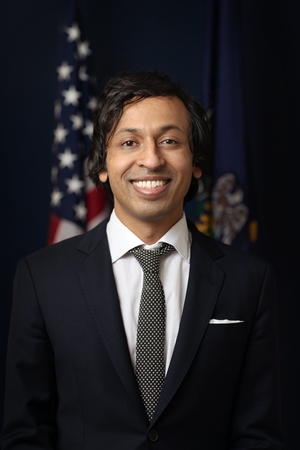
Nikil Saval
100% support rate
Top opponent
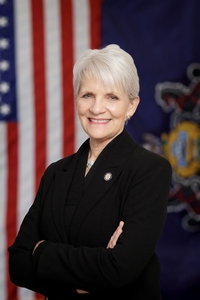
Kim Ward
0% support rate
Ranked legislators
10
5 support · 5 oppose
Key legislators

Who's moving drug policy in Pennsylvania

Legislators moving drug policy in Pennsylvania
Legislator Party Stance Support rate Votes
Nikil Saval
Nikil Saval Senate · District 1
D
Strong +
100% 8
Carolyn Comitta
Carolyn Comitta Senate · District 19
D
Strong +
100% 3
Lindsey Williams
Lindsey Williams Senate · District 38
D
Strong +
100% 3
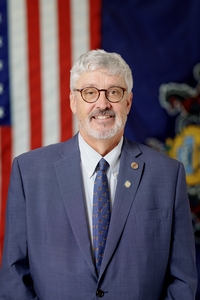
Tim Kearney
Tim Kearney Senate · District 26
D
Strong +
100% 3
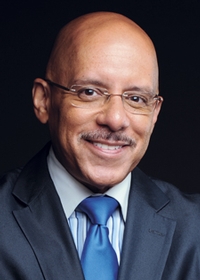
Vincent Hughes
Vincent Hughes Senate · District 7
D
Strong +
100% 3
Kim Ward
Kim Ward Senate · District 39
R
Strong −
0% 9
Tracy Pennycuick
Tracy Pennycuick Senate · District 24
R
Strong −
0% 9
Cris Dush
Cris Dush Senate · District 25
R
Strong −
0% 8
Doug Mastriano
Doug Mastriano Senate · District 33
R
Strong −
0% 8
Gene Yaw
Gene Yaw Senate · District 23
R
Strong −
0% 8
Showing 21–30 of 48 bills

All criminal justice bills

in committee · Pennsylvania · House Feb 20, 2025

HB 622: An Act amending the act of April 14, 1972 (P.L.233, No.64), known as The Controlled Substance, Drug, Device and Cosmetic Act, further providing for prohibited acts and penalties.

HB 622 amends Pennsylvania's Controlled Substance Act to impose stricter penalties for violations involving fentanyl. It creates a new felony offense for knowingly violating specific drug provisions related to fentanyl, fentanyl analogues, or any substance containing trace amounts of fentanyl. Individuals convicted face up to 20 years in prison, a $500,000 fine, or both. The bill directly affects those distributing, selling, or possessing fentanyl-related substances in violation of existing law.
in committee · Pennsylvania · Senate Jan 22, 2025

SB 39: An Act amending Title 18 (Crimes and Offenses) of the Pennsylvania Consolidated Statutes, in inchoate crimes, providing for the offense of possession of firearm or other dangerous weapon in public recreation area.

SB 39 creates a new misdemeanor offense for knowingly possessing a firearm or dangerous weapon in a public recreation area (like a city park or public pool), with penalties ranging from a third-degree misdemeanor (for simple possession) to a first-degree misdemeanor (if intended for criminal use). It specifically excludes law enforcement officers, Pennsylvania Game Commission instructors, and veterans groups during ceremonial duties from this rule. The bill defines "dangerous weapon" to include items like knives with automatic blades or explosives, and clarifies that private recreation areas (e.g., privately owned parks) are not affected by this law. This bill directly impacts individuals entering public recreational spaces with weapons, while maintaining existing rights for private property owners.
Sub-Topics Drug Policy Firearms
in committee · Pennsylvania · Senate Jan 22, 2025

SB 63: An Act amending Title 75 (Vehicles) of the Pennsylvania Consolidated Statutes, in driving after imbibing alcohol or utilizing drugs, further providing for definitions, for driving under influence of alcohol or controlled substance and for authorized use not a defense.

SB 63 amends Pennsylvania's DUI law to clarify that non-commercial drivers using medical marijuana lawfully under the 2016 Medical Marijuana Act are exempt from the prohibition against having Schedule I controlled substances (including medical marijuana) in their blood. However, driving under the influence of medical marijuana or any impairing drug remains illegal, and possessing a medical marijuana card does not by itself justify a chemical test or arrest. The bill defines "medical marijuana" as per the state's Medical Marijuana Act and specifies that legal use of medical marijuana is not a defense against DUI charges. This change directly affects non-commercial drivers with medical marijuana cards and modifies law enforcement procedures for DUI cases involving medical marijuana.
Sub-Topics Drug Policy
passed · Pennsylvania · Senate Apr 3, 2025

SB 347: An Act amending the act of April 14, 1972 (P.L.233, No.64), known as The Controlled Substance, Drug, Device and Cosmetic Act, further providing for prohibited acts and penalties.

SB 347 prohibits clinics or establishments from knowingly providing space for individuals to use controlled substances illegally under Pennsylvania law. It creates criminal penalties, including up to 20 years in prison or $500,000 in fines (up to $2 million for non-individuals), and civil penalties of up to $250,000 for violations. The law grants district attorneys and the Attorney General authority to investigate and prosecute these violations, with strict limits on challenging the Attorney General's role. It specifically exempts medical marijuana use under Pennsylvania’s existing Medical Marijuana Act (2016) and lawful prescription practices. The bill amends Pennsylvania’s Controlled Substance Act to clarify these prohibitions and penalties.
in committee · Pennsylvania · House Jun 24, 2025

HB 1647: An Act amending Title 18 (Crimes and Offenses) of the Pennsylvania Consolidated Statutes, in sexual offenses, providing for the offense of possession, trafficking or importing a child sex doll.

HB 1647 makes it a third-degree felony in Pennsylvania to possess, traffic, or import a "child sex doll" - defined as an anatomically correct doll resembling a child under 12 years old and intended for sexual use. The bill creates specific offenses for possessing such dolls, trafficking them (including manufacturing or selling), and importing them into the state, with possession of two or more dolls creating a legal presumption of trafficking intent. It includes an exception for common carriers (like shipping companies) who lack knowledge of the dolls' contents. This law directly affects individuals involved in handling these dolls, imposing criminal penalties without changing existing statutes on child sexual abuse.
in committee · Pennsylvania · Senate Jan 22, 2025

SB 75: An Act amending the act of April 14, 1972 (P.L.233, No.64), known as The Controlled Substance, Drug, Device and Cosmetic Act, further providing for prohibited acts and penalties.

SB 75 amends Pennsylvania's Controlled Substance Act to decriminalize minor marijuana offenses. It removes criminal penalties for possessing up to 30 grams of marijuana (or 8 grams of hashish) for personal use, distributing small amounts without intent to sell, or smoking small amounts in public spaces. Instead of misdemeanor charges, these violations now carry only minor fines: $25 for possession or non-sale distribution, and $100 for public smoking. The bill explicitly states these offenses will not trigger license suspensions under Pennsylvania law. This change directly affects individuals caught with small amounts of marijuana for personal use or non-commercial distribution.
Sub-Topics Drug Policy
in committee · Pennsylvania · House May 1, 2025

HB 1363: An Act amending Title 18 (Crimes and Offenses) of the Pennsylvania Consolidated Statutes, in assault, providing for the offense of assault of emergency responder.

This bill creates new felony offenses for assaulting emergency responders (like police, EMTs, or firefighters) by exposing them to fentanyl or its derivatives. Intentionally throwing fentanyl at a responder while they are on duty (and knowing they are a responder) is a felony of the second degree. Unlawfully possessing fentanyl and causing a responder to come into contact with it is a felony of the third degree. The law defines "emergency responder" using existing Pennsylvania law and takes effect 60 days after enactment.
in committee · Pennsylvania · House Mar 20, 2025

HB 983: An Act amending Title 18 (Crimes and Offenses) of the Pennsylvania Consolidated Statutes, in firearms and other dangerous articles, further providing for persons not to possess, use, manufacture, control, sell or transfer firearms and for sale or transfer of firearms and providing for Gun Violence Task Force in cities of the first class.

HB 983 establishes a Gun Violence Task Force in each of Pennsylvania's cities of the first class (such as Philadelphia and Pittsburgh), under the Attorney General's authority. The task force will investigate and prosecute violations of state laws prohibiting illegal firearm possession and sales. It will include members from local district attorneys, city police, state police, and other law enforcement agencies. The task force will be funded through state appropriations and requires member agencies to notify it of relevant arrests within 48 hours.
in committee · Pennsylvania · Senate Jan 29, 2025

SB 195: An Act amending Titles 18 (Crimes and Offenses) and 42 (Judiciary and Judicial Procedure) of the Pennsylvania Consolidated Statutes, providing for the offense of unlawful possession and sale or lease of property and for the offense of unauthorized occupancy of dwellings.

SB 195 creates new criminal offenses related to property occupancy and transactions in Pennsylvania. It defines unlawful possession of dwellings (e.g., entering with criminal intent or causing $1,000+ damage) as a felony of the third degree (§ 3601), and fraudulent sales/leases of residential property as a felony of the second degree (§ 3603). The bill also establishes a streamlined process for removing unauthorized occupants (defined as "squatters" without lease or authorization) via a sworn affidavit to law enforcement, requiring proof of notice and absence of litigation (Chapter 68A). These provisions directly affect individuals occupying properties without legal right and those engaging in deceptive property transactions.
Sub-Topics Drug Policy
in committee · Pennsylvania · Senate Jun 19, 2025

SB 872: An Act amending Title 61 (Prisons and Parole) of the Pennsylvania Consolidated Statutes, in Nonnarcotic Medication Assisted Substance Abuse Treatment Grant Pilot Program, further providing for definitions, repealing provisions relating to establishment of pilot program, providing for establishment and further providing for county participation requirements, for use of grant funding, for powers and duties of department, for report to General Assembly and for construction; imposing duties on the Pennsylvania Commission on Crime and Delinquency; and making an editorial change.

SB 872 replaces Pennsylvania’s temporary "Nonnarcotic Medication Assisted Substance Abuse Treatment Grant Pilot Program" with a permanent "Medication-Assisted Substance Abuse Treatment Grant Program" administered by the Pennsylvania Commission on Crime and Delinquency. The bill requires counties with correctional facilities offering substance abuse treatment to apply for grants, enabling them to provide medication-assisted treatment (MAT) combined with counseling to eligible offenders both during incarceration and after release. Key provisions mandate county assessments to identify suitable candidates, individualized treatment plans, access to MAT, and coordination with probation/parole, while requiring biennial reports to the legislature on program effectiveness. The law prioritizes nonnarcotic MAT funding and prohibits using grant money to replace existing programs.
Showing 21 to 30 of 48 bills
Previous 1 2 3 4 5 Next