Issue · Criminal Justice

Criminal Justice (Courts)

Every criminal justice bill, vote, and legislator stance in Pennsylvania, automatically classified by Maddy, our AI policy reader.

Total bills
59
2025-2026 Regular Session
Top supporter
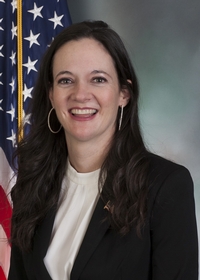
Ben Sanchez
94% support rate
Top opponent
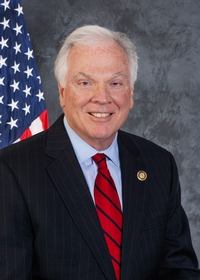
John Lawrence
0% support rate
Ranked legislators
10
5 support · 5 oppose
Key legislators

Who's moving courts in Pennsylvania

Legislators moving courts in Pennsylvania
Legislator Party Stance Support rate Votes
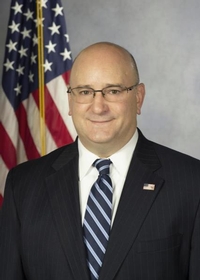
Ben Sanchez
Ben Sanchez House · District 153
D
Strong +
94% 17
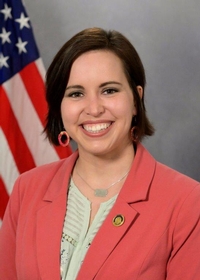
Emily Kinkead
Emily Kinkead House · District 20
D
Strong +
94% 17
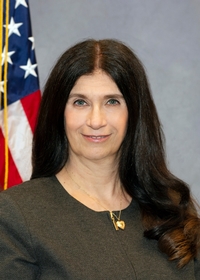
Kristine Howard
Kristine Howard House · District 167
D
Strong +
94% 17
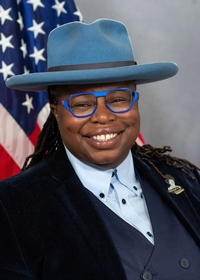
La'Tasha Mayes
La'Tasha Mayes House · District 24
D
Strong +
94% 17
Liz Hanbidge
Liz Hanbidge House · District 61
D
Strong +
94% 17
John Lawrence
John Lawrence House · District 13
R
Strong −
0% 6
Josh Kail
Josh Kail House · District 15
R
Strong −
6% 17
Joe Hamm
Joe Hamm House · District 84
R
Strong −
7% 15
Stephanie Borowicz
Stephanie Borowicz House · District 76
R
Strong −
7% 15
Tim Bonner
Tim Bonner House · District 17
R
Strong −
7% 15
Showing 21–30 of 59 bills

All criminal justice bills

in committee · Pennsylvania · Senate May 22, 2025

SB 774: An Act amending Title 75 (Vehicles) of the Pennsylvania Consolidated Statutes, in miscellaneous provisions relating to operation of vehicles, further providing for homicide by vehicle while driving under influence.

SB 774, known as the Legacy Law, requires courts to order drivers convicted of vehicular homicide while driving under the influence to pay financial support to minor children or dependents whose parent or legal guardian died in the incident. The law mandates that restitution covers the child’s needs until age 18 (or 19 if pursuing a high school diploma), considering factors like the child’s living standard, custody arrangements, and educational needs. Payments must be made directly to the surviving parent or guardian or through the court, with special provisions for incarcerated offenders who have one year after release to begin payments. This applies specifically to cases where the victim was a parent or legal guardian of a minor under 18.
in committee · Pennsylvania · House Apr 9, 2025

HB 1186: An Act amending Title 42 (Judiciary and Judicial Procedure) of the Pennsylvania Consolidated Statutes, in general provisions relating to criminal proceedings, establishing the Adjunct Prosecutor Division within the Office of Attorney General; providing for its powers and duties; and establishing the Adjunct Prosecutor Division Restricted Account.

This bill creates the Adjunct Prosecutor Division within Pennsylvania's Office of Attorney General to assist district attorneys with criminal investigations and prosecutions. District attorneys can request adjunct prosecutors (qualified bar members) to work under their direction on specific cases, including grand jury proceedings, court litigation, and evidence review. The division is funded through a new "Adjunct Prosecutor Division Restricted Account" in the State Treasury, which receives annual appropriations from the General Assembly. The bill establishes clear procedures for requesting assistance, assigning prosecutors, and defines their scope of authority while requiring district attorney oversight.
Sub-Topics Courts
in committee · Pennsylvania · Senate Feb 20, 2025

SB 262: An Act amending Title 42 (Judiciary and Judicial Procedure) of the Pennsylvania Consolidated Statutes, in actions, proceedings and other matters generally, providing for extreme risk protection orders.

Pennsylvania's SB 262 creates a legal process for courts to temporarily remove firearms from individuals who pose a significant risk of harming themselves or others with a firearm. Family members, household members, or law enforcement can petition a court if they reasonably believe a person has firearms and is at risk of violence, requiring specific evidence like recent threats or acts. The court must hold a hearing within 14 days, and if it finds the risk is "more likely than not," it issues a one-year order requiring the person to surrender all firearms. The bill prohibits fees or bonds for petitioners and mandates law enforcement to enforce firearm surrender, with clear procedures for service, notice, and reporting.
Sub-Topics Courts Firearms
in committee · Pennsylvania · Senate Jan 29, 2025

SB 136: An Act amending Titles 42 (Judiciary and Judicial Procedure) and 61 (Prisons and Parole) of the Pennsylvania Consolidated Statutes, in sentencing, repealing provisions relating to transfer of inmates in need of medical treatment; and, in Pennsylvania Board of Probation and Parole, providing for parole for reasons of age or illness and for medical parole due to public or disaster emergency related to health or contagious disease outbreak.

SB 136 replaces Pennsylvania's current process for temporarily transferring terminally ill inmates to hospitals or hospices with two new parole options. It eliminates the existing requirement for courts to approve transfers based on "clear and convincing proof" of terminal illness, risk factors, and facility agreements. Instead, the bill creates parole eligibility for inmates due to age or chronic illness, and establishes medical parole during public health emergencies like disease outbreaks. This change directly affects incarcerated individuals facing serious health conditions or age-related frailty, streamlining their release without requiring court petitions.
in committee · Pennsylvania · Senate Feb 3, 2025

SB 219: An Act providing for School-Based Youth Court Pilot Program and for awarding grants; establishing the Youth Court Program Account; and making a transfer.

SB 219 establishes Pennsylvania's School-Based Youth Court Pilot Program, creating a three-year initiative to replace traditional disciplinary actions with restorative justice approaches in schools. The bill provides grants of up to $250,000 per school to help schools develop youth courts staffed by students under 21, using trauma-informed methods to address minor misconduct through restorative sanctions like community service, workshops, or mediated conversations. It requires the Department of Education to create an Education and Justice Resource Center to train participants, collect data, and oversee program implementation. The program directly affects schools, students under 21 involved in disciplinary cases, and local education agencies seeking to reduce suspensions through restorative practices.
in committee · Pennsylvania · House Jan 27, 2025

HB 277: An Act amending Title 18 (Crimes and Offenses) of the Pennsylvania Consolidated Statutes, in human trafficking, further providing for civil causes of action.

HB 277 allows victims of sex trafficking to sue individuals or entities that recruit, profit from, or advertise for sex trade activities. The bill amends Pennsylvania's criminal code to create a civil legal pathway for victims to seek remedies in court, specifically targeting those who recruit victims, maintain them in sex trade acts, or cause bodily harm during such acts. It directly affects victims of sex trafficking and those who exploit them through recruitment, advertising, or financial gain. The law does not change criminal penalties but adds a civil remedy for victims to pursue compensation.
in committee · Pennsylvania · House Jan 28, 2025

HB 383: An Act amending Title 23 (Domestic Relations) of the Pennsylvania Consolidated Statutes, in alimony and support, further providing for alimony.

HB 383 prevents a spouse convicted of a personal injury crime against their partner from receiving alimony, unless a court determines it is necessary to avoid manifest injustice. It also allows victims to recover alimony paid before the conviction. The bill modifies Pennsylvania's alimony guidelines by excluding marital misconduct after separation but requires courts to consider abuse during marriage (defined under state law). This directly affects divorce cases involving domestic violence convictions.
in committee · Pennsylvania · House Jun 18, 2025

HR 214: A Resolution recognizing the month of May 2025 as "National Treatment Court Month" in Pennsylvania.

HR 214 is a non-binding resolution designating May 2025 as "National Treatment Court Month" in Pennsylvania. It formally recognizes treatment courts, which provide specialized judicial oversight for individuals with substance use disorders or mental health needs, and encourages public awareness of these programs. The resolution does not create new laws or allocate funds; it serves solely as a symbolic gesture to highlight the work of treatment courts statewide. This resolution affects Pennsylvania by directing state officials and the public to acknowledge these courts during May 2025.
Sub-Topics Courts
in committee · Pennsylvania · House Nov 17, 2025

HB 384: An Act amending Title 18 (Crimes and Offenses) of the Pennsylvania Consolidated Statutes, in burglary and other criminal intrusion, further providing for the offense of criminal trespass.

HB 384 adds a new requirement for Pennsylvania courts: when someone is convicted of criminal trespass at a licensed gambling facility (like a casino) or video gaming area while on a self-exclusion list, the court may order an evaluation to assess if they have a gambling disorder and need treatment. This applies specifically to individuals who violated self-exclusion rules at gambling venues, as defined by Pennsylvania law. The evaluation, conducted by a court-appointed clinician, must determine the need for counseling or treatment as part of sentencing or pretrial diversion. The bill does not change the trespass offense itself but adds this assessment step for a specific subset of cases involving gambling venues.
Sub-Topics Courts Sentencing
in committee · Pennsylvania · House Nov 17, 2025

HB 1385: An Act amending Title 42 (Judiciary and Judicial Procedure) of the Pennsylvania Consolidated Statutes, in juvenile matters, further providing for definitions and for disposition of delinquent child.

HB 1385 amends Pennsylvania's juvenile justice laws to clarify definitions and update how courts handle cases involving young people who commit offenses. It directly affects juvenile offenders, courts, and child welfare agencies by standardizing terms like "delinquent child" and specifying court procedures for dispositions. Key provisions include revising legal definitions to reduce ambiguity and establishing clearer guidelines for court decisions on supervision, treatment, or other outcomes for minors. The bill aims to create more consistent and transparent processes within the juvenile justice system. (Note: The bill is currently "laid on the table" and not actively moving forward in the legislative process.)
Showing 21 to 30 of 59 bills
Previous 1 2 3 4 6 Next