Issue · Criminal Justice

Criminal Justice (Juvenile Justice)

Every criminal justice bill, vote, and legislator stance in Pennsylvania, automatically classified by Maddy, our AI policy reader.

Total bills
44
2025-2026 Regular Session
Top supporter
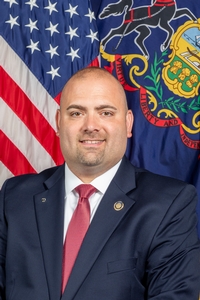
Kristine Howard
83% support rate
Top opponent
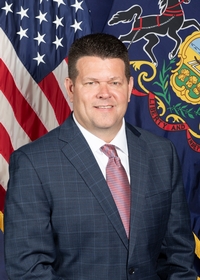
Stephanie Borowicz
13% support rate
Ranked legislators
10
5 support · 5 oppose
Key legislators

Who's moving juvenile justice in Pennsylvania

Legislators moving juvenile justice in Pennsylvania
Legislator Party Stance Support rate Decisive votes
Kristine Howard
Kristine Howard House · District 167
D
Strong +
83% 18
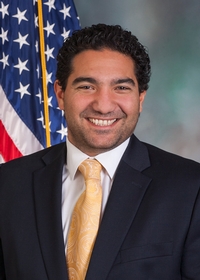
Ben Sanchez
Ben Sanchez House · District 153
D
Strong +
81% 16
Emily Kinkead
Emily Kinkead House · District 20
D
Strong +
81% 16
La'Tasha Mayes
La'Tasha Mayes House · District 24
D
Strong +
81% 16
Liz Hanbidge
Liz Hanbidge House · District 61
D
Strong +
80% 20
Stephanie Borowicz
Stephanie Borowicz House · District 76
R
Strong −
13% 15
Joe Hamm
Joe Hamm House · District 84
R
Strong −
20% 15
Charity Krupa
Charity Krupa House · District 51
R
Oppose
21% 14
Jamie Walsh
Jamie Walsh House · District 117
R
Oppose
23% 13
Josh Kail
Josh Kail House · District 15
R
Oppose
25% 16
Showing 21–30 of 44 bills

All criminal justice bills

in committee · Pennsylvania · House Mar 26, 2025

HB 591: An Act amending the act of November 22, 1978 (P.L.1166, No.274), referred to as the Pennsylvania Commission on Crime and Delinquency Law, further providing for definitions and for powers and duties of the commission; and establishing the Constable William Davidson Reward Fund.

This bill establishes the Constable William Davidson Reward Fund to provide rewards of up to $50,000 for information leading to the arrest and conviction of individuals who kill or cause the death of a law enforcement officer in Pennsylvania. It amends the Pennsylvania Commission on Crime and Delinquency Law to authorize the commission to administer the fund and offer these rewards for crimes covered under state murder and criminal homicide statutes targeting officers. The fund, which will be non-lapsing and funded by state appropriations, is intended to encourage public cooperation in solving violent crimes against law enforcement personnel.
in committee · Pennsylvania · House Apr 30, 2025

HB 1341: An Act amending Title 42 (Judiciary and Judicial Procedure) of the Pennsylvania Consolidated Statutes, in budget and finance, further providing for Commonwealth portion of fines, etc.

HB 1341 changes how Pennsylvania distributes revenue from vehicle fines. It requires municipalities to provide at least 40 hours per week of police services (via their own department, regional department, or contracted services) to receive a share of these fines. Municipalities that don’t meet this service requirement will no longer qualify for the funds, which will instead be transferred to the Pennsylvania Commission on Crime and Delinquency. This commission will then distribute the funds to programs supporting regional police department accreditation and collaboration across the state. The bill takes effect 60 days after enactment.
in committee · Pennsylvania · House Mar 3, 2025

HB 742: An Act amending Title 44 (Law and Justice) of the Pennsylvania Consolidated Statutes, in DNA data and testing, further providing for policy, for definitions, for DNA sample required upon conviction, delinquency adjudication and certain ARD cases, for collection from persons accepted from other jurisdictions, for expungement and for mandatory cost.

HB 742 amends Pennsylvania law to expand DNA collection requirements beyond felony sex offenses. It defines "other specified offenses" for adults (including certain felonies, misdemeanors like assault, and offenses requiring sex offender registration) and for juveniles (such as murder, aggravated assault, or terrorism when tried as an adult). The bill mandates DNA sampling upon conviction, delinquency adjudication, or certain ARD cases for these offenses, applies to individuals transferred from other jurisdictions, and includes provisions for expungement and mandatory costs. This affects individuals convicted of specified crimes who may now have DNA collected for the state database.
in committee · Pennsylvania · Senate Mar 26, 2025

SB 452: An Act amending the act of April 9, 1929 (P.L.343, No.176), known as The Fiscal Code, in additional special funds and restricted accounts, providing for Safe Path Restricted Account; and making a transfer.

SB 452 establishes the "Safe Path Restricted Account" within Pennsylvania's General Fund, transferring $50 million for fiscal year 2025-2026. The Pennsylvania Commission on Crime and Delinquency will use these funds to award grants to political subdivisions and nonprofits operating safe passage programs. These programs aim to improve safety for youth and adults traveling to and from schools and community centers. Priority is given to applicants in areas with high gun violence rates, as determined by the Commission.
in committee · Pennsylvania · House Jun 16, 2025

HB 1612: An Act amending Title 18 (Crimes and Offenses) of the Pennsylvania Consolidated Statutes, in firearms and other dangerous articles, further providing for definitions, for persons not to possess, use, manufacture, control, sell or transfer firearms, for sale or transfer of firearms and for Pennsylvania State Police.

HB 1612 requires Pennsylvania firearm dealers to conduct background checks that include the federal terrorist screening database during gun sales. It adds individuals listed on this database to the existing list of people prohibited from purchasing firearms. The law updates background check procedures to mandate this check alongside criminal history, juvenile records, and mental health records, with dealers paying a $2 fee per check. The Pennsylvania State Police must provide immediate results during the transaction, either blocking the sale or issuing a unique approval number.
in committee · Pennsylvania · House Apr 30, 2025

HB 1360: An Act requiring persons convicted of arson and related offenses to register with local authorities; providing for duties of the Pennsylvania State Police and the Pennsylvania Parole Board; and imposing a penalty.

HB 1360, the Convicted Arsonist Registry Act, requires individuals convicted of arson under Pennsylvania law (18 Pa.C.S. § 3301(a), (c), (d), or (f)) to register with the Pennsylvania State Police. Registrants must provide personal details - including name, Social Security number, current/residential addresses, student enrollment information, and photographs/fingerprints - and update this information within 14 days of release, parole, probation, or arrival in Pennsylvania. Local fire chiefs and law enforcement officers receive this registration data to aid investigations and public safety. Registration is mandatory for life for most offenders, or until age 25 for juvenile offenders, with records destroyed upon reaching that age.
passed · Pennsylvania · House May 7, 2026

HB 1098: An Act amending the act of November 22, 1978 (P.L.1166, No.274), referred to as the Pennsylvania Commission on Crime and Delinquency Law, providing for Investigation and Prosecution of Internet Crimes Against Children Program.

HB 1098 establishes a new program under Pennsylvania's Commission on Crime and Delinquency to combat internet crimes against children. It directs the Commission to provide grants to law enforcement task forces for investigating and prosecuting internet-related crimes against minors under 18, specifically violations of Pennsylvania laws covering sexual offenses, human trafficking, and child exploitation (18 Pa.C.S. §§ 30, 31, 6312, 6318, 6320). The grants will support local police teams, supplement federal child exploitation grants, and fund specialized training for investigators. This program operates alongside existing federal and state funding without replacing it, directly affecting law enforcement agencies working on these cases.
in committee · Pennsylvania · House Nov 17, 2025

HB 1385: An Act amending Title 42 (Judiciary and Judicial Procedure) of the Pennsylvania Consolidated Statutes, in juvenile matters, further providing for definitions and for disposition of delinquent child.

HB 1385 amends Pennsylvania's juvenile justice laws to clarify definitions and update how courts handle cases involving young people who commit offenses. It directly affects juvenile offenders, courts, and child welfare agencies by standardizing terms like "delinquent child" and specifying court procedures for dispositions. Key provisions include revising legal definitions to reduce ambiguity and establishing clearer guidelines for court decisions on supervision, treatment, or other outcomes for minors. The bill aims to create more consistent and transparent processes within the juvenile justice system. (Note: The bill is currently "laid on the table" and not actively moving forward in the legislative process.)
in committee · Pennsylvania · House Mar 17, 2025

HB 925: An Act amending the act of April 9, 1929 (P.L.343, No.176), known as The Fiscal Code, in additional special funds and restricted accounts, providing for Safe Path Restricted Account; and making a transfer.

HB 925 creates a new "Safe Path Restricted Account" within Pennsylvania's General Fund, initially funded by a $50 million transfer for fiscal year 2024-2025. The Pennsylvania Commission on Crime and Delinquency will manage these funds to award grants to local governments and nonprofits. These grants will support safe passage programs improving safety for people traveling to and from schools and community centers. Priority for funding will be given to communities with high gun violence rates, as determined by the commission.
in committee · Pennsylvania · Senate Mar 25, 2025

SB 513: An Act amending Title 46 (Legislature) of the Pennsylvania Consolidated Statutes, providing for racial impact statements in consideration of legislation.

SB 513 requires Pennsylvania's Commission on Sentencing to create racial impact statements when legislators request them for bills affecting criminal justice laws. These statements must analyze how proposed legislation might change racial and ethnic demographics in the criminal offender population, juvenile court system, and among crime victims, using clear methodology. The bill mandates that such statements be attached before certain legislative actions (like second consideration or amendments) can proceed, with a 10-day deadline for the Commission. If the Commission misses the deadline, the legislation moves forward as if the statement existed. This applies specifically to bills creating new criminal offenses, changing existing ones, or modifying sentencing laws under 18 Pa.C.S. or 42 Pa.C.S. Chapter 97.
Showing 21 to 30 of 44 bills
Previous 1 … 2 3 4 … 5 Next